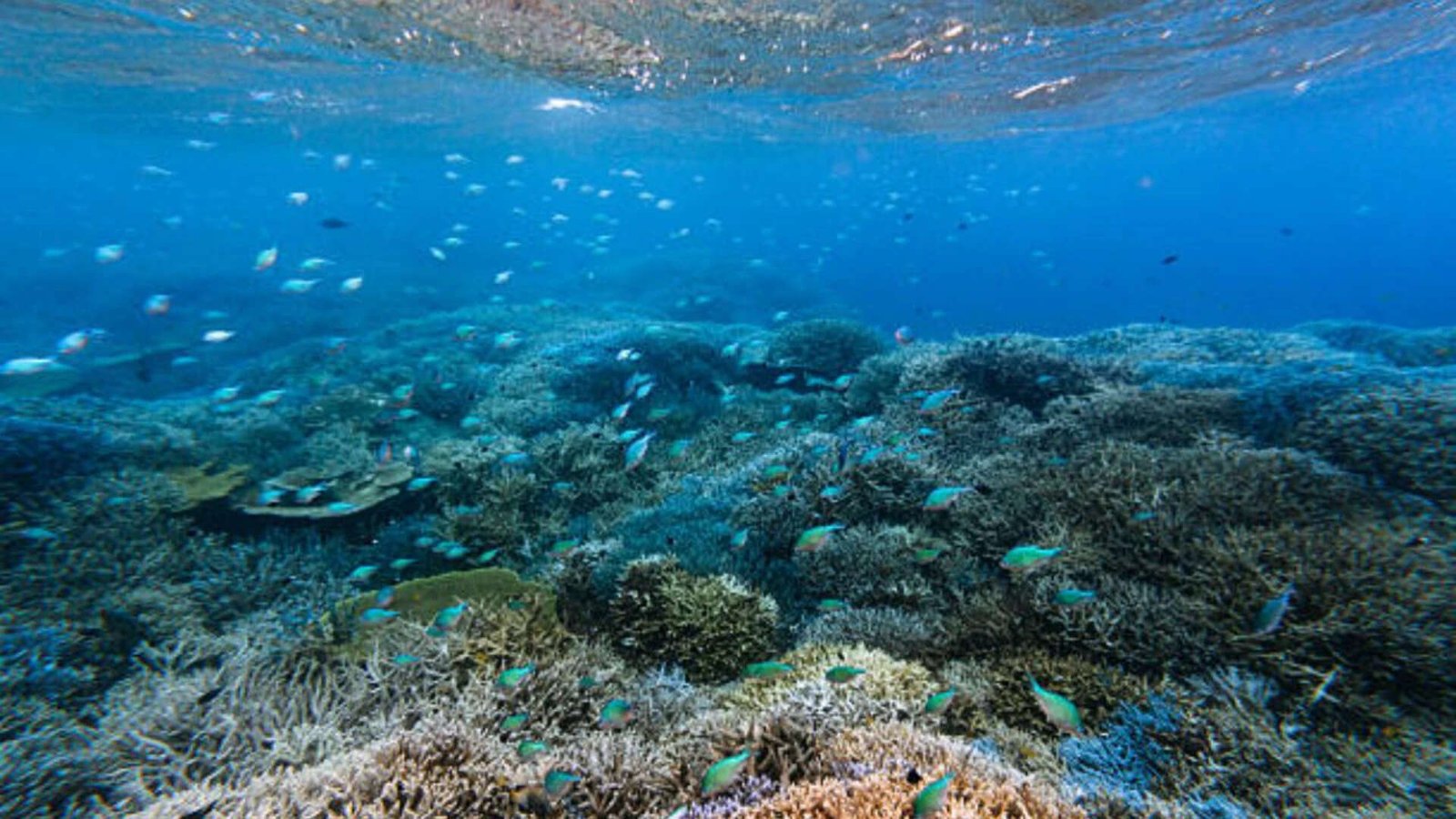
Before major surgeries and operations, doctors often detect diseases in humans using minimally invasive methods like a blood or urine test, before symptoms become severe. Now, researchers at the Woods Hole Oceanographic Institution (WHOI) are applying a similar concept to coral reefs. They have shown that the water surrounding reefs contains chemical and microbial signals that could reveal changes in ecosystem health long before these changes become visible.In a new study, WHOI scientists combined the principles of chemistry, biology and ocean physics to examine how dissolved molecules, microorganisms and water movement interact across coral reefs and a nearby seagrass meadow in the American Virgin Islands. The findings have revealed that each sample site has its own distinct chemical and microbial signature and that ocean currents play a major role in shaping those patterns on timescales as short as a few hours.For the research, researchers collected seawater from two neighbouring coral reefs and a nearby seagrass meadow over four days, sampling at dawn and midday. They measured dissolved compounds known as metabolites, or small molecules produced and consumed by marine organisms, alongside microbial communities. They combined the data with a high-resolution computer model that tracked where the water had travelled before reaching each site and also how and when it travelled between sites.Although the sites were separated by less than a quarter mile, they behaved very differently. The sheltered seagrass meadow maintained relatively stable water conditions and accumulated a unique suite of dissolved compounds, while one reef experienced a daily influx of offshore water that reshaped its chemistry and microbial community.“If you don’t understand the physics of how water moves through a coastal ecosystem, you’re missing a huge part of the story,” said Elizabeth Kujawinski, a senior scientist at WHOI and a co-author of the study. The chemistry and microbes in seawater provide a snapshot of everything happening within the reef. “By combining those measurements with computer-generated ocean circulation, we are beginning to understand the hidden processes that drive ecosystem health.““Coral reefs are incredibly dynamic ecosystems,” said Amy Apprill, a co-author of the study, in WHOI’s Marine Chemistry and Geochemistry department and inaugural director of the WHOI Schiller Centre of Reef Solutions. “When we first looked at the data, some of the patterns didn’t make sense. Bringing ocean physics into the study helped explain how water movement was shaping the chemistry and microbes at each reef. That kind of interdisciplinary approach gives us a much more complete picture of reef health.”The study leveraged a chemical-tagging method developed at WHOI that allows researchers to quantify the composition of biologically available small molecules released by marine microorganisms. Originally used to understand ocean chemistry better, the technique is now helping researchers identify potential indicators of reef condition and ecosystem change.“In human medicine, we use minimally invasive tests to look for early warning signs of disease,” said Brianna Garcia, a postdoctoral investigator in WHOI’s Marine Chemistry and Geochemistry department. “We’re beginning to think about reef water in much the same way. Instead of waiting until corals show obvious signs of stress, we can look for subtle chemical and microbial changes in the surrounding water that may signal that something is changing. It’s an exciting example of how ideas from human health research can help us better understand, and eventually protect, ocean ecosystems.”More work is needed before these measurements become routine monitoring tools but the consistency of the chemical and microbial patterns observed over several days suggests they may provide a reliable baseline against which future disturbances, such as disease outbreaks, pollution, or heat stress, could be detected.“Healthy coral reefs are essential to both ocean life and the people who depend on them,” said Apprill. “Meeting the challenges they face requires bold thinking across disciplines. The Schiller Centre creates opportunities for scientists and engineers to pursue high-risk, high-reward research that can lead to entirely new approaches for protecting and restoring reefs.”