
A tiny turtle with unusually pale colouring has hatched in Bolivia’s Manuripi Amazon National Wildlife Reserve, creating a rare and eye-catching moment for conservationists. The hatchling is a yellow-spotted Amazon river turtle, but unlike most of its kind, it was born with very little pigment, making it stand out instantly against the dark, muddy setting of the forest.Bolivia’s National Service of Protected Areas announced the discovery on June 13, calling it an exceptional record. The sighting is notable not only because of the turtle’s striking appearance, but also because it draws attention to the fragile future of a species already under pressure across the country.
Why this hatchling stands out
Yellow-spotted Amazon river turtles usually have dark green, brown and yellow tones that help them blend into their surroundings. Their natural colouring is well suited to riverbanks, wet logs and the shifting shadows of Amazon waterways.This hatchling looks very different. Its shell is much lighter than normal, and its skin shows far less pigment, leaving white and yellow shades far more visible than the species’ usual colours. According to conservation group Shimanu, the pale appearance is the result of albinism, which reduces pigmentation and can make blood vessels more visible through the skin, reported EcoNews.That makes the turtle unusual, but not a separate species. It is still a yellow-spotted Amazon river turtle, just born with a rare colour condition that is not often seen in the wild.
A rare record in Manuripi
SERNAP said similar cases are extremely uncommon. Only three were recorded in 2024, and none were reported in 2025 before this new hatchling appeared. That means the discovery is more than just a striking photo opportunity; it is also a reminder of how closely conservation teams are watching turtle reproduction in the reserve.The hatchling’s sex, size and longer-term health have not yet been reported, so it is too early to say how it will fare. Still, even without those details, the find is important because rare hatchlings are one sign that monitoring systems are working and that nesting areas are being checked carefully.In a place as vast and biologically rich as the Amazon, a small turtle like this can easily be missed. The fact that it was noticed at all says a lot about the attention being paid to these river systems.
The species behind the story
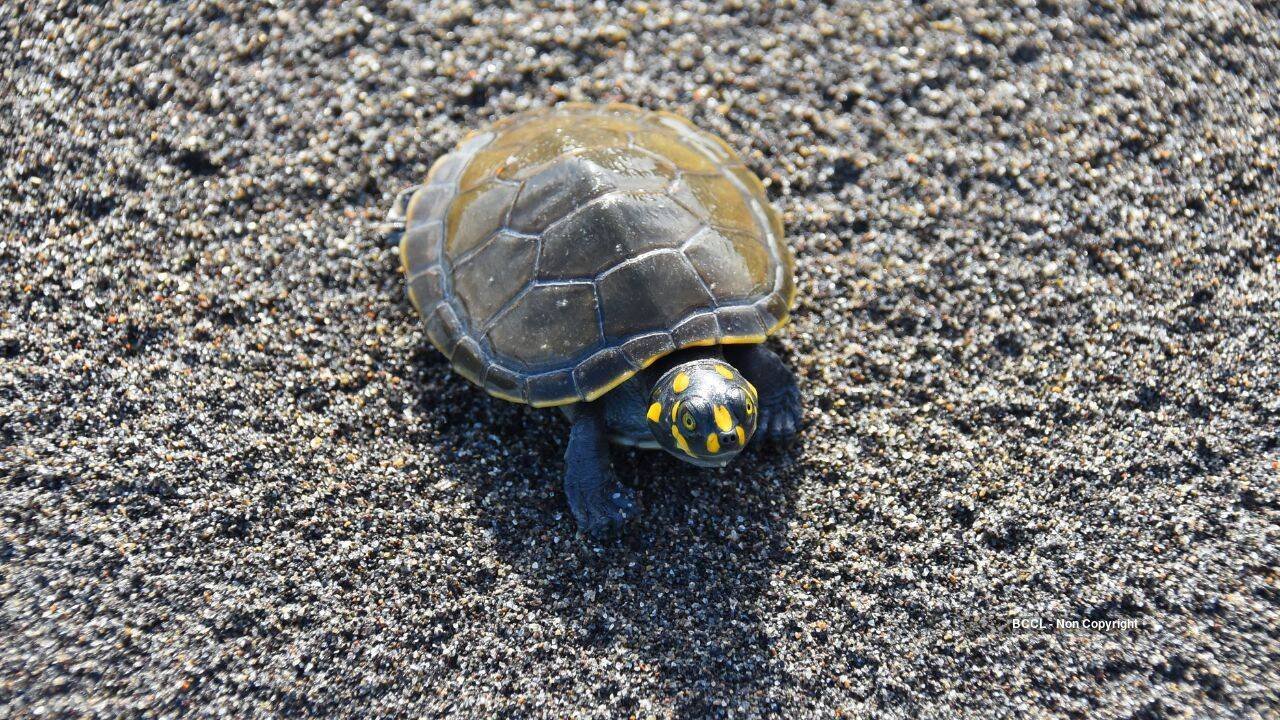
Yellow-spotted Amazon river turtle
The yellow-spotted Amazon river turtle lives in rivers, lagoons and seasonally flooded areas across the Amazon basin. In Bolivia, the species is found in Beni, Cochabamba, La Paz, Pando and Santa Cruz.Female turtles can grow quite large, reaching around 20 inches in length, and during the dry season they lay an average of 29 eggs. That reproductive cycle is one reason nesting beaches are so important. If those sites are disturbed, flooded or targeted by poachers, the next generation can be lost before it even reaches the water.The species also has some unusual traits. It is a side-necked turtle, which means it cannot pull its head straight back into its shell the way many other turtles do. And although the name suggests bright spots across the body, the yellow markings are most obvious in hatchlings and males, while females tend to lose them as they age.
Conservation pressure is real
The pale hatchling has generated interest, but the larger picture is more serious. Bolivia’s 2025 Red Book of Vertebrates still lists Podocnemis unifilis as vulnerable, a status the species has held since 1996.The same national assessment warns that 15 of Bolivia’s 16 native turtle species face some level of risk. The main pressures include habitat loss, climate change, consumption by people and illegal trade in meat, eggs and live animals.Those threats are not abstract. Reports from Bolivia have documented the trafficking of river turtle eggs and live animals in Amazon departments such as Pando, with some of the trade moving toward Peru and Brazil. That means a nesting beach can hold both hope and danger at the same time: new hatchlings on one hand, and traffickers on the other.
Why monitoring matters
One important lesson from this story is that conservation is often built on slow, careful work rather than dramatic rescues. Rangers and researchers have to track nests, protect eggs, record hatchlings and compare what happens from one season to the next.That is especially true for river turtles, which can be vulnerable at many stages of life. Even if a hatchling makes it out of the sand, it still has to survive predation, environmental change and human pressure before it can become an adult and reproduce.Research from elsewhere in the Amazon basin has suggested practical ways to help, including monitoring nesting beaches, rescuing nests threatened by flooding and using managed hatching programs where needed. Those approaches do not solve every problem, but they show that targeted intervention can make a difference.
What Manuripi’s program shows
The new turtle follows two other albino yellow-spotted river turtles that hatched in 2024 through Manuripi’s River Turtle Repopulation Program, although those births were only made public in 2026. That means the reserve has now recorded several rare hatchlings in a relatively short period.But one unusual hatchling does not mean the species is safe. The real measure of success is whether the reserve can keep producing healthy young turtles year after year, and whether those turtles can survive long enough to replenish wild populations.That is why the less visible work matters so much. Protecting nesting areas, counting hatchlings and enforcing rules against illegal capture may not sound dramatic, but those tasks are what keep a population going.
A small turtle with a bigger message
This albino hatchling is remarkable because it looks so different from the turtles people expect to see in the Amazon. Its pale shell and faint colouring make it an instant standout.But the more important story is not about colour alone. It is about whether protected areas like Manuripi can keep giving these turtles a chance to survive in a region where habitat loss and trafficking still pose serious risks.The little turtle may be rare, but its message is not. Conservation only works when nesting beaches are protected, waterways stay healthy and rare births are treated as signs to keep going, not reasons to stop.