Nature’s anomaly
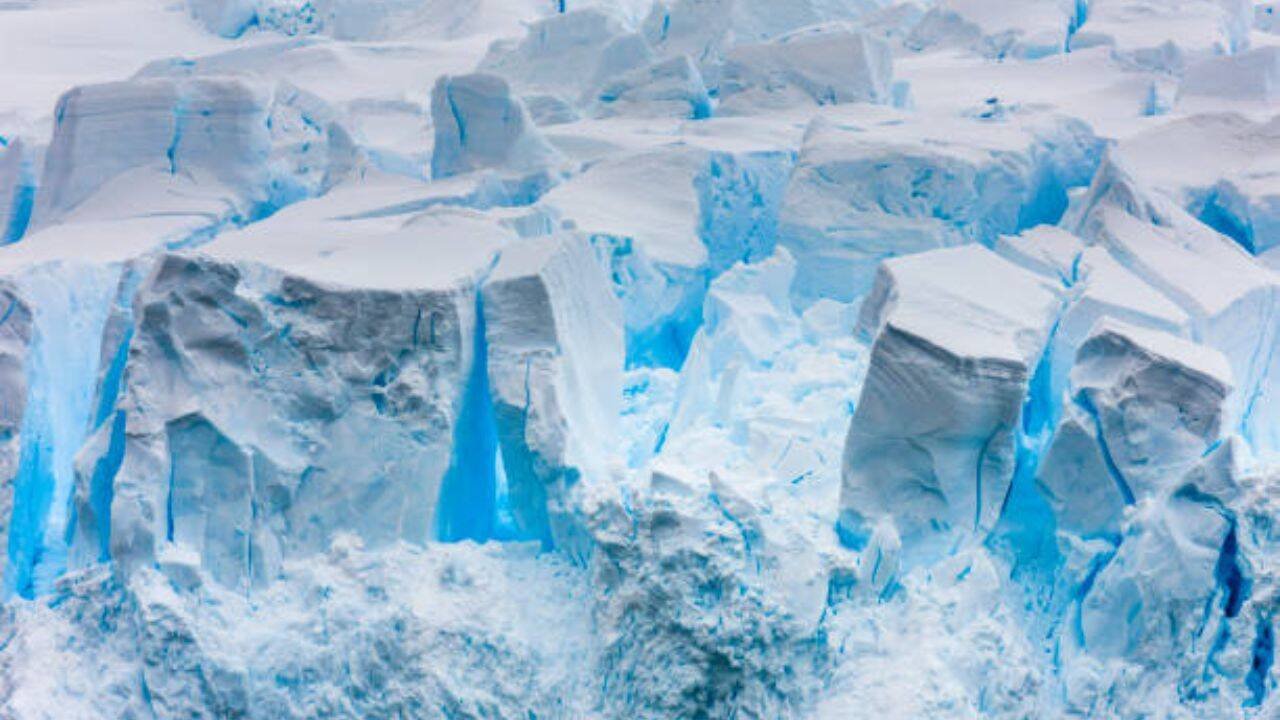
Lake Vostok is roughly 230 to 250 kilometres long and about 50 kilometres across at its widest point
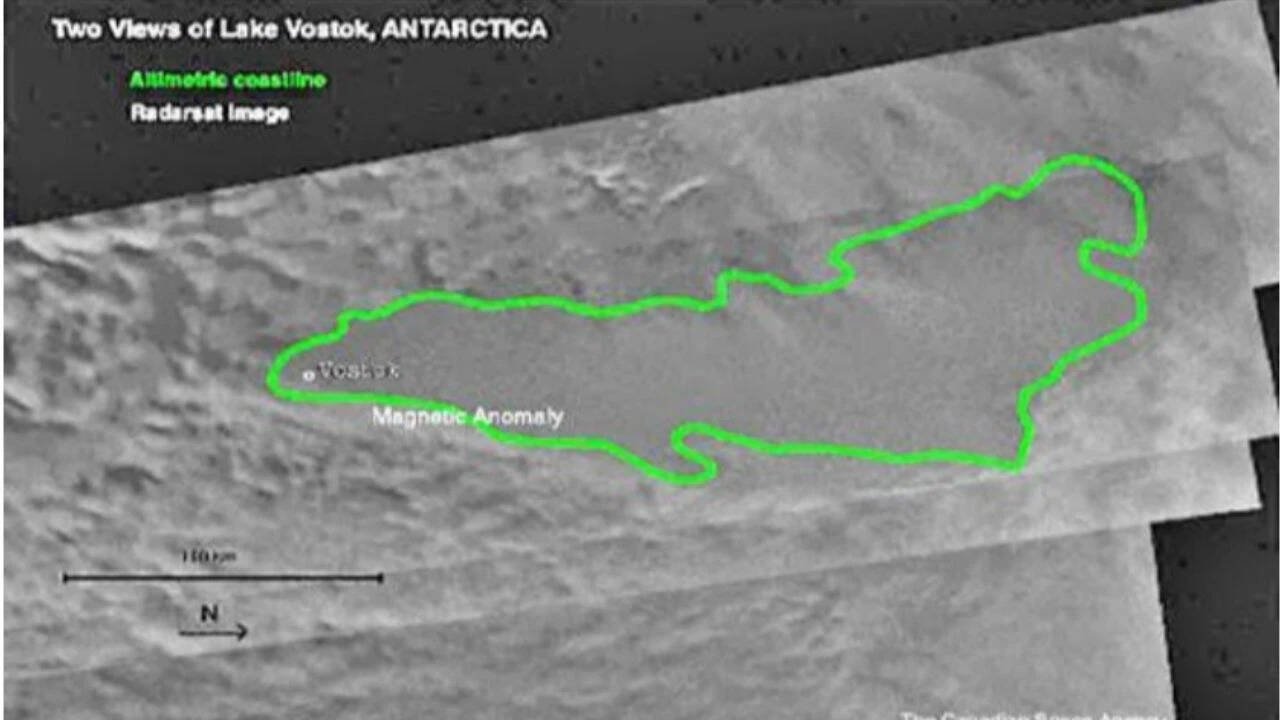
Lake Vostok is roughly 230 to 250 kilometres long and about 50 kilometres across at its widest point. Estimates of its exact area and depth vary as radar coverage and models improve, but its scale is comparable to Lake Ontario. It may hold substantially more water since much of its basin is deeper.The secret behind the lake staying liquid is a balance of ordinary physics operating at an unusual scale. The ice above insulates it from the surface, pressure lowers the melting point and a small but persistent flow of heat rises from Earth’s interior. But it is important to note that nothing about the lake is warm. The water is expected to sit near minus 3 degrees Celsius.
In comparison to Lake Ontario
The comparison of Lake Vostok to Lake Ontario is approximate. A National Academies review of Antarctic subglacial environments gives Lake Vostok an area of about 14,000 square kilometres, compared with roughly 19,000 square kilometres for Lake Ontario. Other published estimates range higher or lower depending on how the lake boundary is defined.The volume comparison runs the other way. Lake Ontario has an average depth of 86 metres and a maximum of 244 metres. Lake Vostok’s bathymetry is less certain, but estimates put its deepest water at several hundred metres and possibly close to one kilometre. Published volume estimates therefore place it well above Lake Ontario even when its surface area is smaller.Lake Vostok occupies a deep bedrock depression under the East Antarctic Ice Sheet. Its water surface is invisible from above. Soviet geographer Andrey Kapitsa used seismic soundings from expeditions in 1959 and 1964 to infer unusual conditions beneath the ice. Airborne radio-echo surveys in the 1970s later identified a broad, exceptionally flat reflector. Satellite radar altimetry then showed a flat patch in the ice surface, the subtle expression of an ice sheet floating over water.Russian and British researchers combined those observations in a 1996 Nature paper that established the lake’s scale. The discovery was not a view through a borehole. It was an inference assembled from seismic waves, radar reflections and the shape of the overlying ice.
The science of the lake
At Lake Vostok’s ceiling, freshwater can remain liquid at temperatures around minus 2.5 to minus 3 degrees Celsius.Source: X
Four kilometres of ice sounds like a giant mass and source of cold but this cold does not seep downwards. Heat moves along a temperature gradient. The cold surface extracts energy from the ice sheet, while its great thickness slows the rate at which heat can be conducted away from the base.Moreover, the ice does not remain still. Snow accumulating at the surface is compressed and carried slowly downwards and across the continent. That motion transports cold ice, while deformation within the sheet and heat conducted from below help set the temperature profile. The resulting thermal balance can place the bottom of a thick ice sheet at its melting point even while the top remains tens of degrees colder.A source of heat also lies deep beneath the surface. Radioactive decay and residual heat inside Earth produce a geothermal flux through the crust. At Lake Vostok, models commonly use a value around 0.05 watts per square metre. That is tiny compared with sunlight at Earth’s surface, but the lake has no direct contact with the Antarctic air and the input continues over geological time.The weight of almost four kilometres of ice produces pressure of roughly 34 megapascals at the lake roof or about 340 times atmospheric pressure at sea level. For the ordinary form of ice found in an ice sheet, increasing pressure lowers the melting temperature. At Lake Vostok’s ceiling, freshwater can remain liquid at temperatures around minus 2.5 to minus 3 degrees Celsius.The pressure-melting temperature is not uniform across the lake because the underside of the ice sheet slopes. Radar-based research archived by NASA shows that variations in ice thickness and the pressure-dependent melting point produce distinct zones of melting and freeze-on across the lake roof. Where the ice is thicker, the lower pressure-melting temperature favours melting. Water then circulates through the lake, carrying heat. Beneath shallower ice, the melting point is slightly higher and lake water can freeze onto the underside of the ice sheet.This refrozen material is called accretion ice. More than 200 metres of it has been identified at the bottom of the Vostok ice core. It differs from the glacial ice above, which began as snowfall. The moving ice sheet carries accretion ice away while fresh basal ice melts elsewhere, creating a slow exchange between lake and glacier. Geothermal heating also encourages convection. Warmer water near the bed becomes buoyant relative to surrounding water and rises, while cooling and freezing at the roof alter density. Earth’s rotation can organise the resulting flow into columns and eddies. Lake Vostok is not an unmoving pocket preserved without change. It has circulation, melting, freezing and a roof sliding slowly above it.
An ancient relic?
East Antarctica has probably kept Lake Vostok continuously covered for about 15 million years, although estimates of its longer history differ. That makes it isolated from direct sunlight and from ordinary exchange with the modern atmosphere. This does not mean every water molecule has remained in place for 15 million years.Ice flows across the lake, melts into it and freezes back onto its roof. Published estimates for the replacement or residence time of the water span thousands to more than one hundred thousand years. One often cited model gives about 13,300 years for the lake’s volume to be renewed.Biological evidence in the lake remains difficult to interpret. Since the lake does not receive sunlight, photosynthesis is unavailable. But melting glacial ice can release trapped gases into the water. Under the lake’s pressure, oxygen may accumulate in dissolved form or in gas-water structures called clathrates.Researchers have reported microbial cells and genetic sequences in accretion ice. A review in Nature concluded that small quantities of microbes had been detected and that dissolved oxygen should be available near the lake surface. Moreover, it is not essential that they are naturally occurring since they may have entered from the drilling equipment, drilling fluid, laboratory or overlying glacial ice.But Lake Vostok remains in discussions since it stands as a symbol of possibility. It demonstrates that liquid water can persist without sunlight beneath a thick frozen shell. It also demonstrates that detecting water is easier than sampling it cleanly, and that habitability is not the same as evidence of inhabitants.