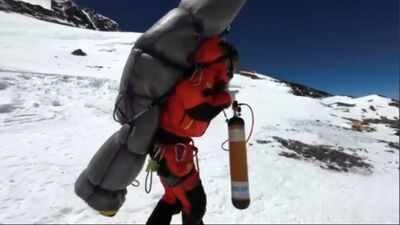
While social media has been one of the greatest inventions made by humankind, it is also one of the cruellest. From restricting to blocking and even adding someone to close friends, people have multiple steps they can take to filter the importance of people in their lives and at times, it can hurt others. Most importantly, if you risked your own life to save another man’s, carried his lifeless body through heavy snow for six hours and later got blocked by him on Instagram instead of being profusely thanked and honoured.In 2023, a video took social media by storm. It showed 30-year-old Gelje Sherpa descending Everest with a climber strapped to his back, a rescue under impossible circumstances. The climber was later identified as Malaysian national Ravichandran Tharumalingam. The heroic incident, at the world’s tallest peak, turned into an embarrassment for the climber who was rescued.Soon, users on X went up in arms against Ravichandran for not crediting Gelje Sherpa. In fact, the climber was accused of blocking the Sherpa’s Instagram account and deleting any negative comments against him for a while. People also pointed out several loopholes in the narrative put forth by Ravi and even questioned his successful summit claims.
What happened?
Gelje was guiding a Chinese client to summit Everest when he saw a climber holding onto a rope and shivering at “the balcony”.
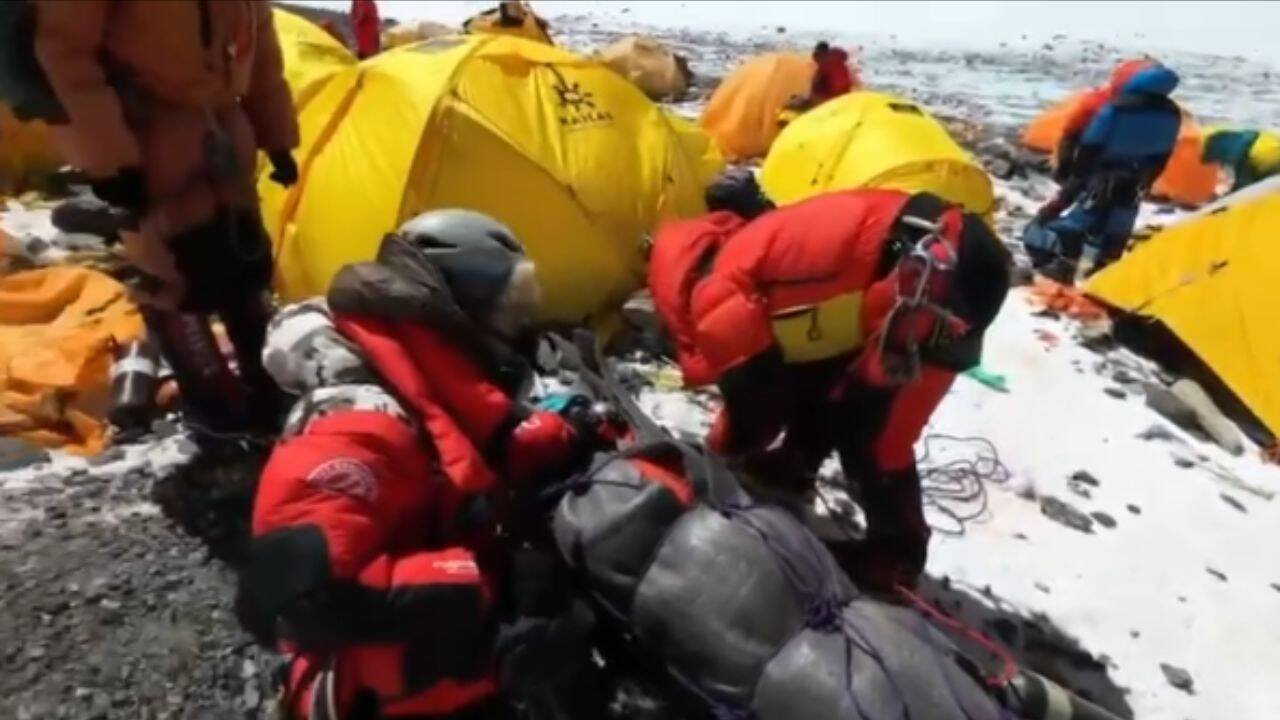
On the night of May 18, Gelje Sherpa of AGA Adventures found a climber incapacitated in the “death zone” or “the Balcony”, the area close to the Mt Everest summit. Gelje was guiding a Chinese client to summit Everest when he saw a climber holding onto a rope and shivering at “the balcony”. In later interviews, Gelje said that the climber looked like he was near death. The climber (Ravi) had no bottled oxygen on him or any guides. “No one was helping him, no friends, no oxygen, no Sherpas with him, no guides – so this is quite dangerous for him,” he told CNN at the time.Gelje also said that no other group was willing to help him as they were also focused on making it to the summit. Also, it is nearly impossible and even dangerous for the rescuer to rescue someone from the death zone. In what is known as the Everest death zone at an altitude above 26,247ft (8,000 m), the human body is literally dying slowly. Without an oxygen supplement, breathing even for a few minutes is difficult. Only very experienced mountaineers can achieve the feat of climbing Everest without any oxygen. This is also the place where most die while trying to ascend or descend Everest.Rather than continuing his journey ahead, Gelje convinced his Chinese client to forgo the summit, a very expensive decision, to save the climber Ravi. He wrapped Ravi in his sleeping mat and carried him down to Everest Camp 4 all by himself, a journey that took six hours. At Camp 4 he found other sherpas to assist him. From there, the sherpas took turns carrying him in rocky places where he couldn’t be dragged.From Camp 4, Ravi was taken to Camp 3, where he was airlifted by a helicopter to a hospital. In earlier reports, the climber was not named. Reuters reported that Tashi Lakhpa Sherpa of the Seven Summit Treks company, the climber’s partner company declined to name him citing his privacy.
The social media storm
However, upon reaching Malaysia, the climber Ravi went on to give numerous interviews to local media outlets about his journey to the summit and the rescue with absolutely no mention of Gelje. With regards to his rescue, most of Ravi’s social media posts only thanked his partner teams and made no mention of Gelje. In one Instagram post after the rescue, he wrote: “I am alive today because I had the best and dedicated Partners – The 14th Peaks Expedition Co and Global Rescue Inc.”This narrative contrasted with what Gelje mentioned in the beginning about no one helping out Ravi. Even Gelje shared stories by other people on his Instagram account, criticising Ravi for his ungrateful behaviour and lack of gratitude towards a man who carried him to safety and back to life.Twitter and Instagram users also questioned the veracity of Ravi’s claims, in which he said his partner company sent for his rescue when Gelje said that he was found alone and decided to save him of his own accord. Others asked how Ravi was allowed to summit alone and whether his claims are true since the Nepal government doesn’t allow anyone to summit alone. When people began asking Ravi about Gelje’s role in his rescue, he seemed to have blocked the sherpa on Instagram.“You are alive today because a sherpa and his friend took you down to safety and it was documented for everyone to see. Acknowledge that,” commented Instagram user @tristupe on the climber’s post. @tristupe later claimed “he [@ravieverest] has been deleting comments not suiting the narrative.”Including his 2023 summit (if verified), Ravi has made three successful Mt Everest summits. This behaviour was coming for the 58-year-old Malaysian, who was a veteran mountaineer himself at the time. Ravi lost eight fingers to frostbite during his Everest expedition in 2007. He told Channel News Asia in 2022, after his third summit and first after his disfiguration: “I was so desperate to prove a point, I was pushing myself too much that I ignored the pain in my fingers.” He said he wanted to “conquer old demons”. After heavy backlash and call-outs online, Ravi did name Gelje, but netizens accused him of making it sound like he was part of his partner companies. In an unusually lengthy Instagram post, Ravichandran finally acknowledged Gelje, while also maintaining in the comments that he had thanked the sherpa two weeks ago.“Sherpas are people who are so committed and dedicated to their clients especially coming from 14 Peaks Expedition Co & The Seven Summit Expedition Co. They never leave you behind. I experienced it this year. When descending the summit I had difficulty. Tashi heard that I was in trouble, he organised the rescue team (Mingma Tendi, Gelje Sherpa, Nima Dorchi, Nima Tashi, Dawa and Dipen Bhote). They are high-altitude sherpas who make lots of sacrifices for their clients. They brought me to 7300 metres for Heli pick-up for a quick Heli flight to the hospital,” Ravichandran continued. “Sherpas are important in my 8000-meter expeditions.”“Thank you [prayer emoji]. I hope you are recovering well,” responded Gelje in the comments.Gelje, who grew up near Everest in a small village, started out as a porter, which he says is a “relentless job with small pay.” He has also worked as a Khumbu icefall “doctor” – “possibly the most dangerous job known to man”, and has carried out more than 55 rescues to date. But he said the 18 May rescue of the Malaysian climber was the “hardest in my life”.