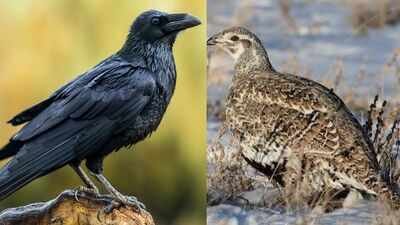
Common ravens are among the most intelligent birds in the world. Over the years, raven numbers have increased in many places because they benefit from food and nesting sites linked to human activity. According to USGS research, from 1966 to 2018, raven numbers across North America rose by about 1.5% a year, with local densities doubling in under two decades in some western regions.That rise in raven populations has created problems for several vulnerable bird species. One of them is the greater sage-grouse, a ground-nesting bird found in the sagebrush ecosystems of western North America. Ravens prey on the bird’s eggs and chicks.A new study has found that egg oiling can help reduce raven reproduction and inturn help sage-grouse survive. Researchers found that treating raven eggs with mineral oil reduced local raven numbers and also led to higher nesting success and population growth in sage-grouse.The findings were published in The Journal of Wildlife Management and reported by Science X. The researchers say the method works well on a local scale, but they also stress that it is not a complete solution because the human activities that support large raven populations still need to be addressed.
What is egg oiling?
Egg oiling is a technique to prevent bird eggs from developing. Instead of removing or breaking the eggs, researchers coat them with a non-toxic mineral oil.The oil blocks the exchange of gases through the eggshell and kills the embryo.Meanwhile, adult ravens continue incubating the eggs, believing they are still developing. Because of this, they quickly lay another set of eggs which further helps reduce the number of young ravens produced during the breeding season.
How ravens affect sage-grouse
Common ravens are omnivores. They eat both plants and animals. Their diet includes insects, small animals, eggs and young birds.Rven populations have increased because human activities provide them with food and nesting opportunities. Settlements, roads, rubbish, landfills and other structures are all factors that help raven population.
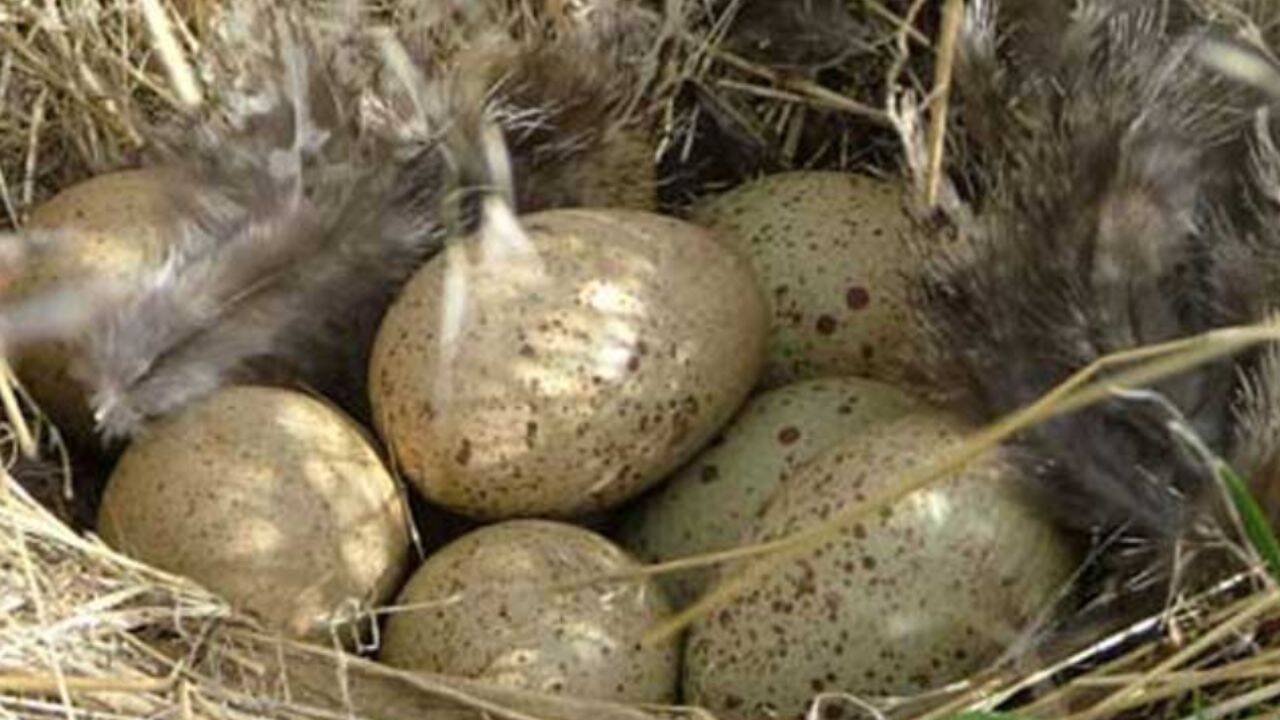
Sage grouse hens lay 7-8 eggs at a time
As raven numbers grow, they put greater pressure on vulnerable species that already face other challenges. The greater sage-grouse is one such species.Sage-grouse build their nests on the ground which makes their eggs easier for predators such as ravens to find. If too many nests are destroyed, fewer chicks survive each year, causing the population to decline.Because of this, researchers wanted to test whether reducing raven reproduction could improve the chances of sage-grouse nesting successfully.
Reduced ravens helped sage-grouse
The researchers monitored areas where raven nests were treated with mineral oil and compared them with similar areas where no egg oiling was carried out.The results showed clear differences. Sage-grouse nest survival more than doubled in areas where raven nests were treated. The researchers also found that the relative abundance of sage-grouse increased by 44% compared with populations in untreated areas.The study also showed that reducing raven reproduction lowered the number of ravens in the local area, which likely reduced the pressure on nesting sage-grouse.
A bigger challange
Lead author of the study, Steven Mathews-Sanchez, who conducted the research while at the US Geological Survey Western Ecological Research Center, cautions that the method alone cannot solve the wider problem.“Although highly effective at a local scale, egg oiling does not address the anthropogenic sources driving raven population growth, which must ultimately be addressed to protect sage-grouse and other sensitive species, nor does it address critical habitat required for sage-grouse to persist long term.”The researchers say the study supports the use of egg oiling as a practical management tool in places where ravens are putting heavy pressure on vulnerable wildlife. But underlying reasons for increasing raven populations remain. Human activities continue to provide food and nesting opportunities that help ravens thrive. Researchers say these factors will also need to be managed if conservation efforts are to succeed over the long term.The scientists also said protecting and restoring suitable habitat for greater sage-grouse remains as important. They noted that reducing raven numbers alone was not enough and Greater sage-grouse still needed healthy sagebrush habitats where they could nest, find food and raise their young.