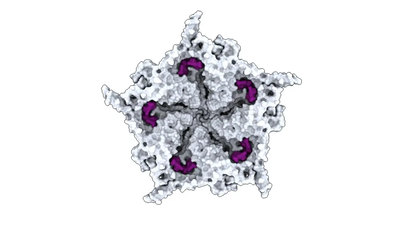
Scientists have used artificial intelligence to design viruses that exist nowhere in nature, and 16 of them turned out to be fully functional killers of bacteria. The work, published Thursday in the journal Science by a team at Stanford University and the Arc Institute in California, is the first time an AI model has written the complete instruction manual for a living thing rather than just one piece of it. The viruses in question only attack bacteria and cannot infect people, animals or plants.That last bit is the reassuring part, and everyone involved knows how thin it sounds. The same study that promises a new weapon against superbugs also proves that software trained on DNA can now dream up a working virus from a blank page. Two researchers at Johns Hopkins, Thomas Inglesby and Moritz Hanke, put it plainly in a commentary published alongside it: the ability to write viral genomes with AI now exists, and the rules to control it do not.
How AI learned to write DNA like it writes sentences
The models, called Evo 1 and Evo 2, work a lot like ChatGPT. ChatGPT guesses which word comes next. Evo guesses which chemical letter comes next in a strand of DNA, which uses an alphabet of just four letters: A, C, G and T. Feed it enough genetic code and it starts picking up the grammar of life the way a chatbot picks up English.The team, led by Stanford’s Brian Hie, trained it on millions of natural genomes, then focused it on one very well-studied virus called ΦX174 and its relatives. Evo spat out hundreds of thousands of possible designs. The researchers picked around 300, had the DNA physically made in a lab, and slipped it into bacteria—which obediently read the instructions and built the viruses themselves.
How scientists confirmed the AI-designed viruses were actually alive
Graduate student Samuel King spotted it in the early hours of the morning. Bacteria growing on a petri dish form a cloudy film, and when a virus is chewing through them, clear spots appear. The spots appeared. When he told the rest of the team, Hie recalls, “the room spontaneously burst into applause.”The 16 that survived were not weak imitations. Some multiplied faster than the natural virus they were modelled on. And in the most useful result of the lot, a mix of the AI-designed viruses wiped out E. coli that had already learned to resist the natural version. A comparable mix of viruses collected from nature could not. Bacteria evolve to survive whatever we throw at them—this suggests we can now design new threats faster than they can adapt.
What the researchers did to keep this from going wrong
They kept anything dangerous out of the training data. No viruses that infect humans, animals, plants or fungi went in, so the model has never seen what a human pathogen looks like. They used a harmless strain of E. coli and worked in a secure lab. Hanke called the caution commendable, while noting the team had no official rulebook to follow.
The gap between what AI can do and what anyone regulates
A new US health policy issued last week bans making biological agents more dangerous, but it doesn’t cover work done on a computer. And Evo 2 is open source, free for anyone to download, which has alarmed plenty of people.Others say the panic is early. Tom Ellis at Imperial College London called this the smallest, simplest genome anyone could have attempted. Size backs him up: this virus needs about 5,400 letters of code. The simplest living cell needs 500,000. Hie says going bigger would be “a lot of work, but not impossible”—which isn’t exactly comforting.