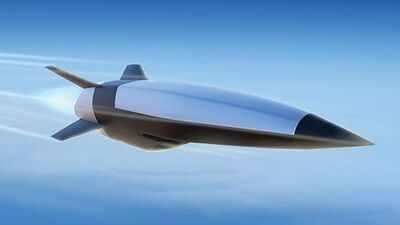
The US is looking beyond its first generation of hypersonic weapons, with the Pentagon’s research agency seeking industry proposals for a new hypersonic cruise missile designed to deliver a major jump in speed, range, altitude and survivability.The Defense Advanced Research Projects Agency (DARPA) issued a request for information for a potential Next Generation Hypersonic Cruise Missile (NGHCM) programme, calling for a fully integrated demonstrator that could form the foundation of a future operational weapon.The effort comes as the US moves existing hypersonic systems towards production and service. DARPA says previous technology demonstrators have established the basic viability of air-breathing hypersonic weapons, but many existing designs offer only incremental improvements and remain too expensive and complex for large-scale production.The agency is therefore looking for what it describes as a “revolutionary leap” in overall system performance, including greater range, cruise speed and/or altitude, along with improved manoeuvrability and a lower overall signature to help the weapon survive increasingly capable enemy air-defence networks.Unlike a conventional missile, a hypersonic cruise missile is designed to sustain flight above Mach 5 using an air-breathing scramjet engine. The agency is also interested in different launch configurations, ranging from weapons carried internally or externally by fighter aircraft to larger systems launched from bombers, ground platforms or palletised launch systems.A major focus is survivability against increasingly sophisticated air-defence systems. DARPA is looking for a weapon that can operate in contested environments where advanced sensors and interceptors could threaten conventional stand-off missiles.DARPA is also putting unusual emphasis on affordability and production scale. The agency wants to move beyond hypersonic systems that are technically successful but difficult or expensive to manufacture in large numbers. The NGHCM effort is therefore intended to explore technologies and designs that could provide substantially better performance without creating an unaffordable weapon.The agency is also seeking ideas for innovative testing and evaluation methods, indicating that the programme is not limited to the missile itself.US hypersonic missile programmesThe new DARPA effort comes as the US is already developing and fielding several hypersonic weapons across the air force, army and navy. The main programmes include the Hypersonic Attack Cruise Missile (HACM), the army’s Dark Eagle and the navy’s Conventional Prompt Strike (CPS).The HACM is the US air force’s main air-launched hypersonic cruise missile programme. It uses an air-breathing propulsion system, designed to be launched from aircraft and then use its scramjet propulsion to sustain hypersonic flight toward its target. US air force’s FY2027 budget documents show continued major investment in the programme, with more than $800 million requested for HACM-related research and development.The army’s Dark Eagle, formerly known as the Long-Range Hypersonic Weapon, takes a different approach. It uses a rocket booster and hypersonic glide body, rather than a scramjet-powered cruise missile. The booster accelerates the glide body to hypersonic speed before it separates and travels toward its target. In March 2026, the army awarded a $2.7 billion contract supporting the system.The US navy’s Conventional Prompt Strike (CPS) is another major boost-glide hypersonic programme. It shares the underlying Common-Hypersonic Glide Body technology with the army’s Dark Eagle but is being adapted for naval platforms. The navy plans to deploy the capability from Zumwalt-class destroyers and later on Virginia-class submarines, giving the US a sea-based conventional hypersonic strike option.