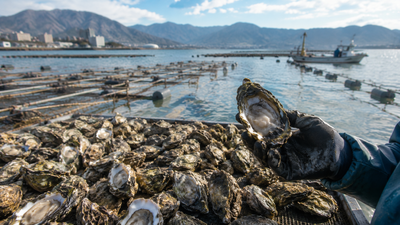
Oyster farmers across Hiroshima Prefecture are pulling up their rafts this season to find that most of what they cultivated has not survived. In several coastal districts, mortality rates have reached as high as 90%, far above the usual seasonal loss of 30% to 50%. Producers in the city of Higashihiroshima have reported losses at this scale, a situation serious enough to bring Japan’s agriculture minister, Norikazu Suzuki, to the region in person. The neighbouring city of Kure has fared no better, with farms reporting similarly steep losses and unable to fulfil seasonal gift orders. Hiroshima Prefecture supplies close to 60% of Japan’s farmed oysters, and the wider Seto Inland Sea, running from Hiroshima through to Hyogo, accounts for around 80% of national production. Officials are still investigating the cause, examining rising sea temperatures, reduced rainfall and other environmental factors, while scientists have pointed to a combination of unusually high temperatures, reduced rainfall, high salinity, low oxygen and reduced food availability, with climate change potentially increasing the likelihood of such conditions.
Why are Hiroshima oysters dying: Rising sea temperatures linked to oyster losses
Producer Tatsuya Morio in Higashihiroshima told officials fewer than one in ten of his oysters survived to harvest, and in Kure farmer Shuji Yamane reported losses above 90%, leaving nothing for the season’s gift orders. Kure’s local government paused applications under the furusato nozei hometown tax scheme, which normally sends fresh oysters to donors, and has reached out to more than 1,700 contributors to arrange alternatives. Officials are weighing whether warmer seas, a drier season or a combination of factors is responsible.Hiroshima University professor Kazuhiko Koike has linked the losses to higher water and air temperatures, dwindling oxygen and reduced nutrients, noting that warmer surface water no longer mixes with cooler layers below, starving oysters near the seabed of oxygen. Shoichi Yokouchi of the Hiroshima prefectural government added that extended heat weakens oysters and leaves them prone to disease. According to Fish Focus, Japan’s hottest summer on record occurred last year, with temperatures 2.36 degrees Celsius above normal, a pattern also seen in coastal waters during the cultivation window. Hiroshima’s 2023 output came to close to 89,000 tonnes, and the strain was visible at this year’s Kure oyster festival, where Nobuyuki Miyaoka remarked on how much smaller the oysters had become.
PC: Canva
Hiroshima oyster production hit by major losses as farmers report smaller oysters
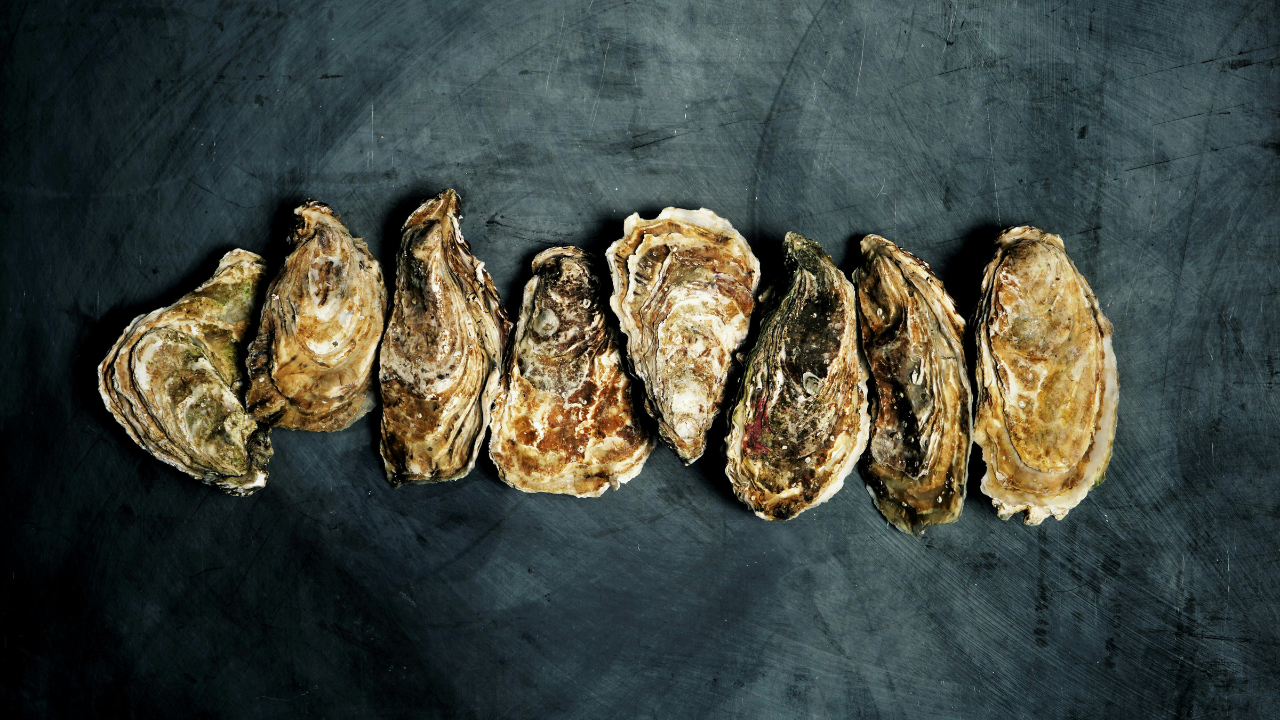
Hiroshima alone produced close to 89,000 tonnes of oysters in 2023, underlining how central the prefecture is to the national supply. At this year’s Kure oyster festival, the strain was already visible. Festivalgoer Nobuyuki Miyaoka said the oysters had become noticeably smaller, adding that they were fine until this year but are now much harder to find at their usual size.Farmer Taketoshi Niina described the season as a disaster, with around 80% of his oysters dead by harvest and many survivors too small or poor in quality to sell. Tatsuya Morio, who has farmed oysters for more than 20 years, said he had never experienced anything like it in his career.
Japan’s oyster crisis threatens restaurants, tourism and local jobs in Hiroshima
Restaurants reliant on a steady oyster supply are closing earlier due to shortages. According to The Japan Times, a manager at an oyster shack in Hiroshima city’s Minami Ward said procurement was steady for now but expressed worry over securing enough stock as prices rise, noting that the peak season alone requires around a ton of oysters a month to keep up with demand. According to Natural World Fund, Tomonori Uemoto of Kure’s fisheries promotion office said oyster production supports jobs in distribution and food tourism beyond fishing, meaning the die-offs will likely have a wider impact on the local economy. Traditional offerings tied to the industry, including oyster gifts distributed through local tax donation programmes, are also being scaled back this year as supply tightens further.Japan’s fisheries agency has introduced low-interest loans and financial aid programmes to support affected aquaculture businesses through the shortfall. Suzuki said the government would move quickly to determine what assistance could be offered under the existing framework, while investigations into the underlying cause continue alongside the relief effort. Officials have acknowledged that these measures offer only short-term support and do not address the root environmental cause behind the losses.Koike has suggested moving oyster rafts to cooler waters or greater depths as a longer-term adaptation if these conditions return in future seasons, though he has also noted that reversing the broader pattern of warming seas is far more difficult. For farmers like Niina, whose son had hoped to take over the family business, the concern now extends well beyond this year’s harvest, towards whether oyster farming in the region has a stable future at all.