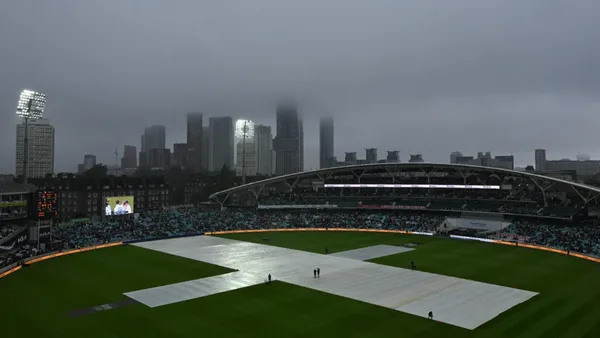
 Bad light is one of the common reasons for a stoppage in Test cricket. It usually becomes an issue late in the day when natural light starts to fade. Poor visibility can make it harder for batters to pick up the ball and for fielders to track it safely.
The problem is more serious in Test cricket because fast bowlers can deliver the ball at high speed. If a batter cannot see the ball clearly, reacting to a short-pitched delivery or movement off the pitch becomes difficult.
What Do the Laws Say About Bad Light?
Law 2.7, Fitness for Play, gives the umpires responsibility for deciding whether ground, weather or light conditions are dangerous or unreasonable for play. The conditions do not have to be perfect, but play can be stopped when continuing would create a safety risk or would not be sensible.
Under Law 2.8 of the ICC Test Match Playing Conditions, the umpires can suspend play if they agree that the light or other conditions are dangerous or unreasonable. The decision belongs to the umpires, with consultation with the ICC Match Referee where required.
How Is Light Measured?
ICC match officials are provided with light meters. The readings are used as a guideline rather than as an automatic point at which play must stop. Umpires can use the readings to identify whether the light has deteriorated or improved and can use them as benchmarks for the rest of the match.
Why Can’t Players Simply Continue?
A batter needs enough visibility to judge the line, length and speed of the ball. Poor light can make the ball harder to see, increasing the risk of mistimed shots, late reactions and injuries.
The same problem affects fielders, particularly those standing close to the batter or attempting to catch a hard-hit ball. Player safety is the main reason bad light can lead to a suspension.
Can Floodlights Be Used?
Yes. Under the ICC Test playing conditions, if natural light becomes too poor, the umpires can authorise the ground authority to use available artificial lighting so that play can continue in acceptable conditions.
This does not mean floodlights automatically prevent every bad-light stoppage. The umpires still have to decide whether the overall light is suitable for safe play.
What Happens After Play Is Stopped?
Once play is suspended, the umpires continue to monitor the conditions and make inspections when appropriate. If they agree that the light and other conditions have improved enough, they call the players back onto the field.
Why Is Bad Light More Common in Test Cricket?
Test matches can run until the scheduled close of play, so the final session often takes place as natural light fades. This is especially noticeable at venues where sunset comes earlier or weather conditions reduce visibility.
Unlike limited-overs cricket, Test matches have no fixed number of overs that must be completed each day. Lost time because of bad light can therefore reduce the amount of cricket played and affect the match’s result.
Has Cricket Tried to Reduce Lost Play?
The ICC announced in June 2026 that it would trial the use of a pink ball in Test matches, with agreement from both teams, when bad light is expected. The ICC also announced research into lighting technology for officials and venues to reduce lost playing time caused by poor light.
Does Bad Light Give One Team an Advantage?
It can affect the match situation. A batting team may benefit if play stops before a difficult period, while a bowling team may lose the chance to take wickets when conditions are favourable. The rules are designed to avoid making the decision based on the match situation. The umpires must judge whether the conditions are dangerous or unreasonable, rather than whether stopping play benefits one side.
Bad light is not simply about whether the sky looks dark. It is a playing-condition and safety issue covered by the Laws of Cricket and ICC Test playing conditions. The umpires have the final say on whether play can continue. Light meters provide useful measurements, while artificial lights can help in some situations. The aim is to keep play going when it is safe, while preventing players from competing when visibility becomes dangerous or unreasonable.