Winning a World Cup is the ultimate dream for every country and players participating in this historic competition, and lifting that golden globe, held by three silver columns, requires the ultimate team effort. India made history in 2011 by winning that prestigious trophy for the second time, ending a 28-year drought since they first held it in 1983. The MS Dhoni-led side wrote its name in the history books, becoming the first team to win a World Cup on home soil. While the triumph brought joy to 1.5 billion people across the nation, the success also came at the cost of a few tough and debatable selection calls.
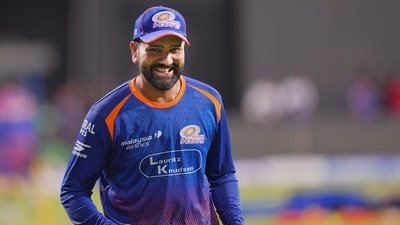
One such name, despite his growing performances in ODI cricket at the time, was omitted from representing his national colours on the prestigious stage. Rohit Sharma missed out, but despite the setback, he went on to become one of the most prolific batters produced by India in white-ball cricket. However, the omission was not due to doubts over his ability to perform at the highest level. BCCI’s chairman of selectors during that period, Kris Srikkanth, revealed that the decision was based purely on team dynamics and the specific profile required for the squad to compete in that World Cup. He highlighted that the management followed a blueprint similar to that of the 1983 triumph, focusing on players with multi-dimensional skills rather than specialists.
Also Read: Rohit Sharma in line for 2027 World Cup – As all roads lead to South Africa, Agarkar call awaits after Colonel’s approval
“I feel bad for him even today. I told Rohit last year, I am sorry, ‘I am sorry’: Former BCCI selector apologises to Rohit Sharma. It’s not by purpose, but it’s just that we want to take those half all-rounders. Our thought process was similar to that of the 1983 World Cup,” Srikkanth said in an interview with The Week, admitting that the decision still weighs heavily on him to this date.
India’s team balance the bigger picture
Srikkanth’s approach focused on building the batting depth while ensuring enough bowling options in the lineup to step into the mix when needed, a strategy similarly seen in India’s recent T20 World Cup 2026 triumph. Despite Rohit’s omission, the strategy paid off, with Indian all-rounders having a massive impact throughout the 2011 tournament. Yuvraj Singh stood out, scoring 362 runs and taking 15 wickets across nine matches, earning the Player of the Tournament award. His performances, despite battling then-undiagnosed cancer, helped India cross the line in crunch moments.
Many notable batters in the team, including Suresh Raina, Virender Sehwag, Sachin Tendulkar and even Yousuf Pathan, were all at disposal to bowl when needed, further highlighting the team dynamics required during the time of selection.
“And at the end of the day, who was the Player of the Tournament? Yuvraj Singh, with the ball and bat. In some matches, Sehwag, Sachin and Suresh Raina would have bowled a few overs. Even Yusuf Pathan is a half all-rounder. So in all these things, unfortunately, what happened, this half all-rounder concept, Rohit Sharma, the poor fellow, could not find a place. He was actually good enough to play in the 2011 World Cup, but poor boy missed out,” added Srikkanth.
Rohit, who has yet to win the ODI World Cup, made his ODI debut against Ireland, and had scored over 1,200 runs in around 57 matches before the 2011 snub, including seven half-centuries. His major impact came during the 2007–08 Commonwealth Bank Series in Australia, where he scored 235 runs.