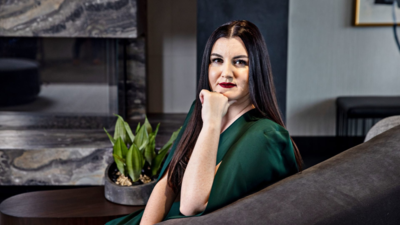
Fidji Simo, former OpenAI executive and cofounder of biomedical startup ChronicleBio, said she disagrees with Anthropic CEO Dario Amodei on most issues but fully supports his stance that AI companies must deliver tangible medical breakthroughs. Responding to Amodei’s weekend post, Simo wrote on X (formerly known as Twitter): “I disagree with Dario on most things, but this is spot on… The thing that will work is actually curing cancer.”
A rare point of agreement with Anthropic CEO Dario Amodei
Simo’s comments came in an X post on Monday, made in direct response to Anthropic CEO Dario Amodei, who wrote over the weekend that AI companies need to deliver concrete breakthroughs if they want to win over an increasingly skeptical public. Quoting Amodei’s post, Simo wrote that she disagrees with him on most things, but found his point spot on: that claiming AI will cure cancer has become more of a cliché than an inspiring statement, one most people now view as deceptive, and that what would actually work is curing cancer itself.Amodei’s original remarks were part of a broader defense of Anthropic’s public messaging around AI. On Saturday, he had pushed back on the idea that he’s been excessively pessimistic about the technology’s potential, arguing instead that the AI industry has fueled public skepticism by making sweeping promises it hasn’t delivered on.
Amodei’s criticism of AI industry
Amodei had argued that sweeping promises — such as AI curing cancer — have become clichés and risk fueling public skepticism. He said the industry must prove its value through concrete results rather than marketing. Simo echoed this, noting that while she believes AI can eventually cure all diseases, smarter models alone are not enough.
The bottleneck: Biological data
Simo stressed that the “bigger bottleneck” lies in building the right biological datasets. “AI can’t reason its way to cures without the data needed to understand a particular disease,” she wrote. She added that cancer research is best positioned for AI breakthroughs because decades of investment have produced extraordinary datasets across genomics, pathology, imaging, and clinical outcomes.
ChronicleBio’s mission
Simo cofounded ChronicleBio in 2025 to address gaps in data infrastructure for complex chronic diseases, which lack the robust datasets available in oncology. Her work reflects both professional and personal experience, as she has spoken about living with postural orthostatic tachycardia syndrome (POTS), a chronic condition that is difficult to diagnose and treat.
Read Fidji Simo’s complete post here
I disagree with Dario on most things, but this is spot on: “At this point, saying that AI will cure cancer is more a cliché than it is inspiring, and most people think it is deceptive. The thing that will work is actually curing cancer.”The thing that frustrates me is that some people often draw a straight line from smarter models → cures, without acknowledging how much infrastructure is missing in between. We’ve still got a lot of work to do, people. The regulatory bottleneck gets a lot of attention. But the bigger bottleneck may be that in many places, we’re lacking the right biological data. AI can’t reason its way to cures if we haven’t generated the data required to understand the disease in the first place.Ironically, that’s why I’m most bullish on AI making dramatic progress in cancer first: decades of investment have produced extraordinary datasets across genomics, pathology, imaging, clinical outcomes, and more.For complex chronic diseases, much of that infrastructure simply doesn’t exist yet. The good news is that many companies (including @ChronicleBioAI) are racing to build it.But model intelligence and biological infrastructure are going to have to scale together. I really do believe AI can cure all diseases but only if we build the infrastructure to translate intelligence into cures at the same pace that models improve (which is a high bar!). Otherwise, we risk having superintelligent AI with an incomplete picture of human biology, and delay that promise by years.