Netflix’s Operation Safed Sagar has been one of the best-received Indian shows in recent years. The war drama focuses on the Indian Air Force’s eponymous operation during the Kargil War, which turned the tide of the conflict in India’s favour. Based on real operations and with real people, the show managed to present an unseen part of India’s modern history to the audience.
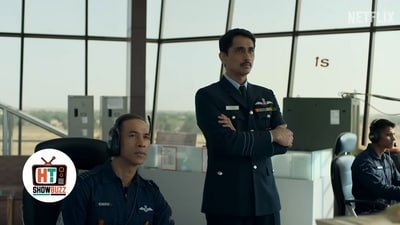
The story of Operation Safed Sagar’s making is just as expansive and intensive as the show itself, something that involved the men and women who made it to devote close to five years of their lives to the project, taking them to 16000 feet above sea level, and almost at the doorstep of Kargil itself. Abhijeet Singh Parmar and Mehboob Pal Singh of Feel Good Films give Hindustan Times a deep dive into the five years they spent making the show.
How a Golden Arrows film became Operation Safed Sagar
What is Operation Safed Sagar today was conceptualised by co-creator Kushal Srivastava as a film on the Golden Arrows, the Indian Air Force squadron that carried out the dangerous bombing missions during the War. Co-creator and showrunner Abhijeet recalls their 2021 meeting. “We read the script, and we came across the details of the war, and I said, ‘None of these details is in the script’. He said, ‘I have only 2 hours, and I can’t pack all of this’.” The push was for a show, but Kushal, an IAF veteran himself, wanted to make a film. He only came around after he met the Indian Air Force top brass later that year, and they also suggested a show. In January 2022, writing on the show finally began, and it would stretch on for almost two years.
Kushal and his co-writer Antara had spent 100 hours on pilot interviews alone. These were fighter pilots who had served in the Kargil War. “These were people who participated in the war, who’d been there, came before the war, or left before the war or came after the war. This was extensive research,” recalls Abhijeet.
The writing was still underway when the decision to pitch the show to Netflix was made, because, as the creators say, ‘if anyone would be able to pull this one off, it’s going to be Netflix’. Contrary to their expectations, Netflix was open to the idea of making it and asked for 10-20 pages to read. True to themselves, the Safed Sagar team sent them a 95-page document. Within two weeks, the show was greenlit, and the work on the script finally began in June 2022.
A mixtape of everything unseen about the Kargil War
As the writers began their work on the script, the makers realised they may have promised a bit too much. Mehboob, the co-producer, recalls, “The document which spoke of its scale was our beat sheet, which was about 200 pages, okay. And when we put that beat sheet across, we realised this is way bigger than what we had started out to uh do.” Abhijeet adds, “I myself got horrified. There were different worlds, there was aerial flying, there were bases to be shot, and they had to be shot at heights. It was a mixtape of everything that was unseen and unknown about the Kargil War.”
This forced the makers to make sure the focus stays as much on the pilots as it is on the operations. Mehboob and Abhijeet admit that the scale gave them time to build the characters and their world. The real war would not even begin till episode 4 of 6. As Mehboob explains, “I never looked at it as the war story or the event story of the war, of us winning the war. For me, it was always about the human beings behind the war and what happens to them and what happens to people who get involved or pulled into a war like that.”
Shooting at 16000 feet, and in 11 different cities
The show entered pre-production in 2024, following years of extensive research and painstaking writing. The challenge, now, was finding the locations. The team decided to shoot almost on location, in the snowy peaks of Kashmir and Himachal Pradesh, at an altitude of 16700 feet, almost the same height at which the real Kargil War was fought. “aAl of us traveled to all the real places, met all the real characters, went to all the bases, even to the bases that we’ve not shot at but were part of the original story. And when we saw all those things, we started getting a sense of what we want to put in as our locations within the show,” says Mehboob.
The Indian Air Force stepped in, opening doors for them that had never been opened for an Indian production, including giving access to bases and providing MiG aircrafts for the shoot. The team eventually found a virginal location almost at Kargil’s doorstep, where many scenes were shot. Abhijeet recalls, These were untouched peaks with no tourists. Every day, people were dropping short of breath. Ambulances had to be arranged, and all the crew had the same jackets that production had given them. We took rocks there and built sangars. It took us two days just to build those structures. The hospital was always on alert, and we had physiotherapists with us. Every care and precaution was taken.”
But the shoot in the mountains was only a part of the experience. The team also had to recreate Pakistan within India, and for that, they travelled across the cantonments and hotels of Northern India, from Chandigarh to Pataudi, and from Srinagar to Noida, sometimes in the space of days. The Lalit in Srinagar doubled as Nawaz Sharif’s residence, while the Pataudi Palace stood in for Pervez Musharraf’s house. “We have hopped on cities for one day of the shoot. From Noida, we went to Pataudi for one night. From there, we went to Chandigarh for 3 days. Then we came back to Delhi, shooting near South Block, before going to Patiala for 4 days. This all happened in 15 days,” recalls Mehboob. The team informs they shot in 11 different locations across India over an 18-month period.
The Vijeta test
The final test for the team was meeting a standard set decades before they even conceptualised the show. For the Indian Air Force, their standard of depiction of the force on the big screen is the 1982 film Vijeta. “They said you have to be as good as it, if not better. That is why we are opening the world to you,” recalls Mehboob. When the show premiered, and most of the top brass saw it, they agreed the show’s team had lived up to that promise.
Operation Safed Sagar is streaming on Netflix.