Vaibhav Sooryavanshi’s young career has moved at a pace that has made almost every new assignment feel like another landmark. International cricket arrived at 15. An IPL season overflowing with runs was followed by a difficult introduction to T20Is in England and then a Player of the Series performance in Zimbabwe.
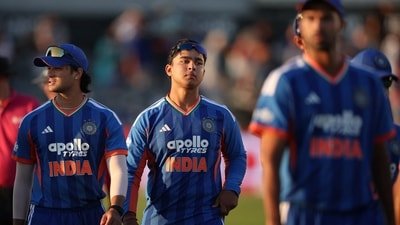
On Sunday, however, comes a rather different examination. When East Zone begin their Duleep Trophy campaign against North East Zone at the BCCI Centre of Excellence in Bengaluru, Sooryavanshi will not only walk out as a batter trying to establish himself in senior red-ball cricket. At 15, he will also do so as vice-captain of a side containing Mohammed Shami, Mukesh Kumar, Abhimanyu Easwaran and captain Ishan Kishan.
It is perhaps the clearest indication yet of how quickly Indian cricket believes Sooryavanshi can develop. It is also what makes this Duleep Trophy an intriguing test of how much of that extraordinary white-ball rise can translate to the longest format.
From six-hitting to leaving the ball
There has been a deliberate change in Sooryavanshi’s preparation. After returning from Zimbabwe, the teenager joined a 10-day Rajasthan Royals camp at the franchise’s Performance Centre in Nagpur. The work there has not simply been about reproducing the explosive strokeplay that has made him famous. His red-ball sessions have included an increased emphasis on defence and, significantly, leaving deliveries outside off stump.
A training video posted by Sooryavanshi carried the simple caption: “Preparation.” It showed the left-hander mixing his attacking strokes with a noticeably more controlled defensive approach. That adjustment matters because the disparity between Sooryavanshi’s white-ball success and his first-class record remains considerable.
He has played eight first-class matches and scored 207 runs at an average of 17.25, with only one half-century. Those numbers are almost unrecognisable beside the teenager who has already torn through bowling attacks in the IPL and international T20 cricket. His recent international experiences themselves illustrate the learning curve. Sooryavanshi began his India career in England with scores of 14, 13 and 15. Weeks later, he responded in Zimbabwe with two half-centuries and was named Player of the Series as India completed a 3-0 sweep.
VVS Laxman identified that capacity to absorb lessons as one of his defining traits, saying Sooryavanshi “reviews every practice session, not just matches.” The India coach said his understanding and awareness had developed rapidly over the previous six months.
The Duleep Trophy will demand another recalibration. There are no powerplays to exploit and no requirement to manufacture urgency. There will instead be longer spells with the new ball, periods when scoring dries up, changing surfaces over four days, and the requirement to decide not only which ball to attack but which one to ignore.
Leadership debate follows Sooryavanshi into Duleep Trophy
Then comes the second examination. East Zone’s decision to appoint Sooryavanshi deputy to Kishan immediately triggered debate because of how little first-class cricket he has played. Former Gujarat batter Priyank Panchal argued that selectors should first allow him to “understand the dynamics of red ball cricket” before adding leadership duties.
The selectors see it differently. East Zone selector Pravanjan Mullick has stressed that Sooryavanshi has not been made captain and will have Kishan, a wicketkeeper constantly involved in the game, alongside him. The idea is developmental: expose the teenager to decisions, conversations and responsibility now rather than wait until he is an established senior player. “Giving him more responsibility will help him mature even further,” Mullick told Cricbuzz while explaining the decision. He even suggested the appointment was made with an eye on what Sooryavanshi might eventually become as a leader.
Also Read: Flight, drift and deception: How Manav Suthar’s classical spin has quickly become India’s biggest weapon in Test
It is not entirely unfamiliar territory either. Sooryavanshi has previously been Bihar’s vice-captain in first-class cricket. Yet this stage is different.
For all the records already accumulated before his 16th birthday, red-ball cricket remains the part of Sooryavanshi’s game with the most still to prove. That is why the Duleep Trophy could be more revealing than another spectacular T20 innings.
The sixes have already shown what he can do. Over the next few days, Indian cricket gets to see how he responds when the challenge is to defend, leave, wait, think — and occasionally help lead.