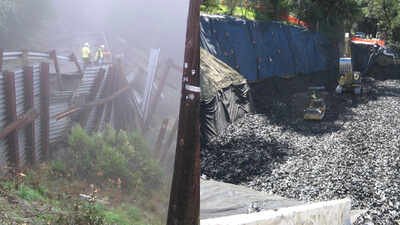
A California road repair project took an unusual turn after heavy rains caused a previous reconstruction to fail. Instead of using another traditional retaining-wall system, engineers filled the damaged section with hundreds of thousands of discarded vehicle tires. According to CalRecycle, the official website of the State of California, the project was located on Sonoma Mountain Road in Sonoma County, near Glen Ellen. It was one of two local projects to test using tire-derived aggregate, or TDA, as a practical material to repair landslides and stabilize slopes. The road had been struck by a major landslide in the past, damaging about 600 feet. The failure was attributed to the poor native soil and excess moisture which left the ground saturated and unstable. According to online data, Sonoma County first selected a retaining-wall solution to repair the damaged roadway. Engineers built a 20-foot-high corrugated steel wall and supported it with steel H-piles driven into the slope. But the repair was made in very bad conditions. The project was abandoned in December 2008, following heavy rains, and the affected stretch of the road was finally closed in January 2009. The failure prompted county officials to rethink how the unstable slope could be repaired with less excavation and lower overall reconstruction costs.
Waste tyres: A new construction material
The California Integrated Waste Management Board (CalRecycle) worked with Sonoma County in the summer of 2009 to redesign the repair. The solution was to use tire-derived aggregate as a lightweight backfill behind the reconstructed road. TDA is obtained from the recycling of discarded tires in the form of useful pieces for civil engineering projects. Because it is much lighter than conventional soil or aggregate, it can reduce the weight placed on an unstable slope. That characteristic meant engineers could make a smaller excavation in the Sonoma Mountain Road project and still rebuild the damaged section.
330,000 tyres in service
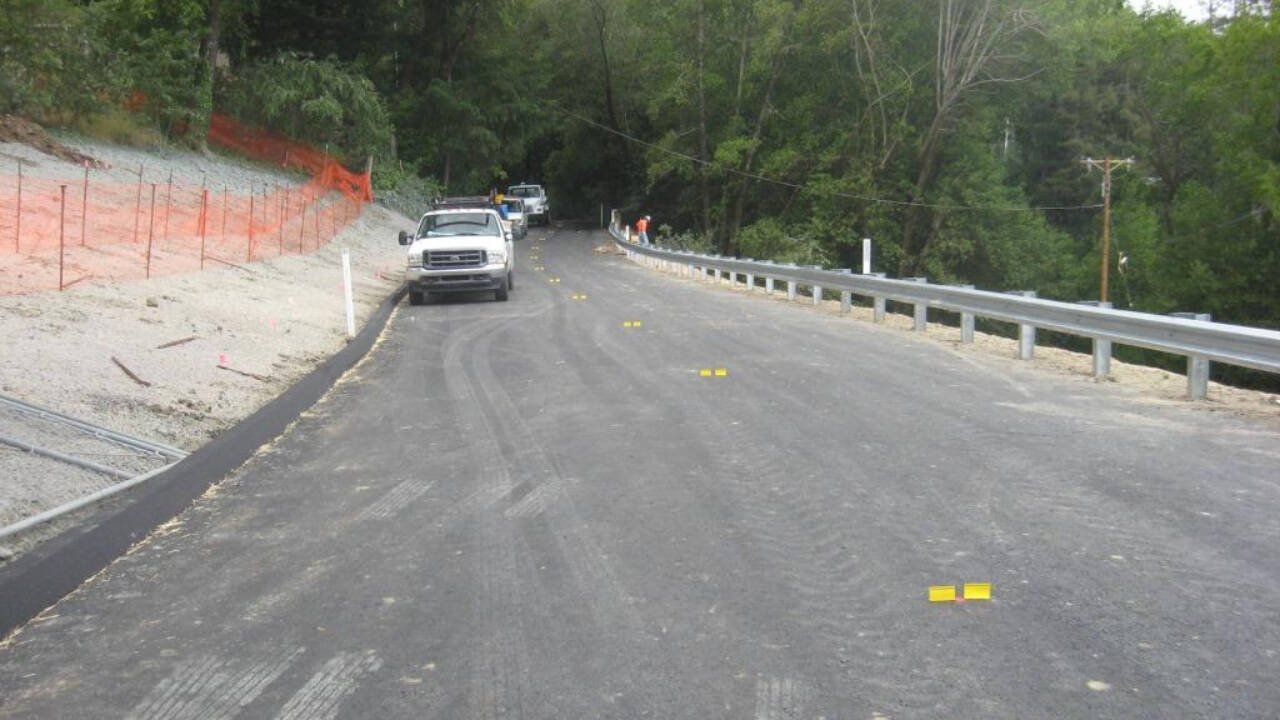
Sonoma Mountain road finished repair project.
The repair involved about 330,000 waste tires in the reconstruction. Instead of piling those tires in landfills or leaving them as a waste-management problem, the project made them a useful part of major infrastructure. The approach also illustrated how waste materials can potentially serve a dual purpose: reducing the environmental burden of discarded tires and helping to solve difficult engineering problems.The Sonoma Mountain Road project drew on lessons from an earlier county repair project on Geyser Road where officials had received design assistance for using tire-derived aggregate.
$300,000 in savings
Redesigned approach also proved to be of economic value. The county saved about $300,000 on this project by requiring less excavation and using lightweight tire-derived aggregate. The project has become a textbook example of how to use unconventional materials in infrastructure repairs when traditional ones are not enough. For Sonoma County, the 2009 reconstruction was more than a way to reopen a damaged road. It showed that hundreds of thousands of waste tires could be turned into an engineering resource, while lowering construction costs and helping to stabilize a challenging, landslide-prone slope.Images Courtesy: CalRecycle