Kolkata: In isolation, the score of 205/3 by Gujarat Titans suggests a commanding batting performance. Context is everything though, so it’s imperative to mention a three-over passage that reshaped the ceiling of the innings. No boundaries, plus the wicket of the dangerous Jos Buttler meant in overs 17 through 19 Royal Challengers Bengaluru (RCB) didn’t just contain, they pretty much recalibrated the match and swung the result in their favour even before Virat Kohli and Devdutt Padikkal unleashed mayhem.
It wasn’t supposed to go this way because at 170/2 after 16 overs, Gujarat Titans were primed for lift-off. With wickets in hand and a set Buttler at the crease, the projection comfortably stretched beyond 220. This is the phase where T20 innings typically explode—where bowlers become reactive and batters dictate terms. Instead, RCB imposed structure on chaos.
The 17th over, delivered by Suyash Sharma, returned just four runs. But more importantly, he denied momentum. Through variations in pace and spin—particularly the googly—he forced hesitation into Buttler and Washington Sundar’s decision-making. There were no boundary balls to release pressure, no predictable patterns to exploit.
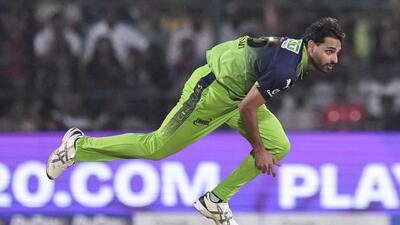
The 18th over, bowled by Bhuvneshwar Kumar, proved decisive. Five runs came from it, but its significance goes beyond that. Buttler, seeking to break free, attempted a reverse scoop and picked out the fielder. The dismissal derailed the innings.
What makes this intervention more compelling is how it aligns with Kumar’s broader body of work. In overs 16 to 20 in IPL 2026, he has bowled 12 overs, taken seven wickets, and returned an economy of just 8. His dot-ball percentage stands at 22.2, while his boundary percentage is a remarkably low 9.72. These are staggering numbers for a phase defined by excess. They point to a bowler who doesn’t merely survive the death overs but actively shapes them—controlling scoring zones, forcing errors, and, as seen here, extracting wickets at moments of maximum leverage.
And then there was Josh Hazlewood, who Titans always knew would weigh in at the death. Eight runs came from the 19th over, aided by minor fielding lapses, but the larger pattern held firm. Hazlewood’s method—Test lengths into the pitch, minimal width, and subtle variation—ensured that Gujarat Titans never regained rhythm. Even without overtly dramatic moments, the over maintained pressure, denying the boundary flow that defines late-innings acceleration.
In most matches, those three overs would read as a tidy spell. On Friday, it was transformative. Because these overs are not meant to be quiet; they are meant to be explosive. Deny that release, and the entire innings contracts, something Gill alluded to post-innings. “I think, from 16 till 19, those three overs, we couldn’t get any boundaries and we didn’t get as many runs as we would have liked. I think those three overs were very crucial for us,” he said.
The inability to find boundaries in those three overs wasn’t just a dry patch; it was the phase where Gujarat Titans lost control of their innings. From RCB’s standpoint, the execution was both deliberate and disciplined with the acceptance that anything around 200 was chaseable.
“I think we made the target that if we can stop them under 200, around 200, then that is a good total for us to chase down,” said RCB captain Rajat Patidar after the match. “The way they bowled the yorkers, that was pretty much good, and that’s why we stopped them under 200 to 205.”
What also stands out is the clarity of roles. Suyash disrupted timing, Kumar attacked the stumps and manipulated intent, and Hazlewood enforced control through consistency. Each over was part of a larger design, not an isolated act. The result was roughly a 20-run swing. From a projected 220-plus total, Gujarat Titans were pulled back to 205. In T20 terms, that difference is profound. It alters not just the arithmetic of the chase but its psychology—shifting it from daunting to manageable.
In a format that often celebrates the spectacle of late hitting, this was a resilient exhibition of control. RCB didn’t rely on a miraculous final over or a singular moment of brilliance. Instead, they identified the true inflection point of the innings and owned it completely. And in doing so, RCB didn’t just limit Gujarat Titans, they redefined what their total could be.