A temple that shelters 25,000 sacred rats; one where a motorcycle is worshipped; a border shrine associated with legends of bombs that failed to explode; and a healing centre where exorcism rituals unfold in plain sightRajasthan is often imagined through its forts, palaces and royal history. But beyond its grand architecture lies another Rajasthan — one where faith has taken forms that can surprise even those familiar with the state’s rich religious traditions.These temples are unusual not because their faith is lesser or different, but because each has developed a distinctive relationship between belief, legend, ritual and everyday life.

Inside Rajasthan’s Temples of the Extraordinary
Karni Mata Temple , Deshnok: The rat temple
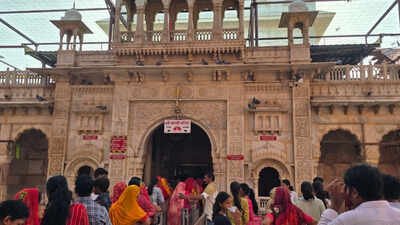
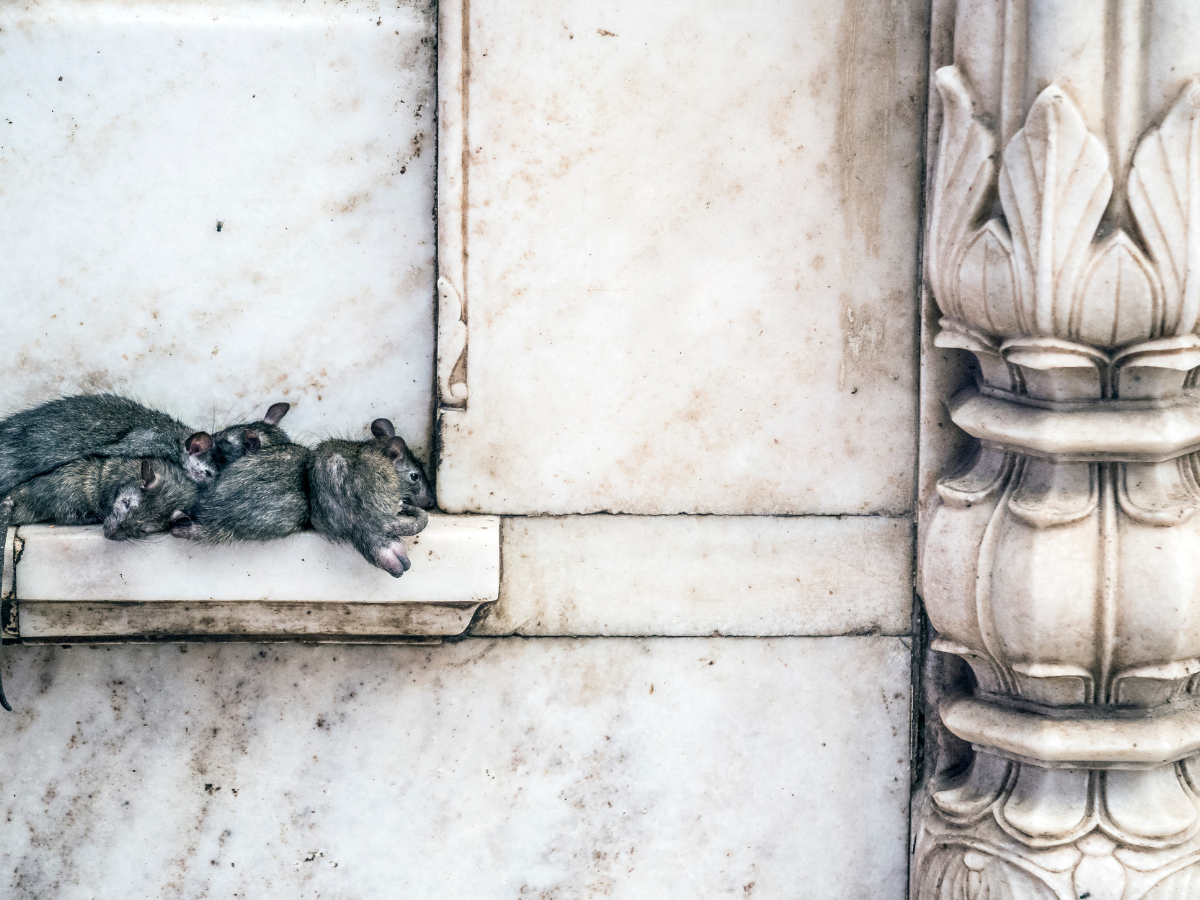
At Deshnok near Bikaner, the Karni Mata Temple presents perhaps the most striking expression of Rajasthan’s religious traditions. The temple is dedicated to Karni Mata, a revered 14th-15th century mystic whom devotees regard as an incarnation of Goddess Durga.What sets the shrine apart is not simply its deity but the thousands of rats that freely move through its marble corridors. Known as kabbas, the rats are revered by devotees rather than treated as pests.

The tradition is rooted in a deeply held legend. According to the story, Karni Mata’s stepson Laxman drowned while trying to drink water from the Kapil Sarovar. She pleaded with Yama, the god of death, to restore him to life. The legend says that Yama eventually agreed, but decreed that Karni Mata’s male descendants and devotees would be reincarnated as rats. The kabbas are therefore regarded as sacred reincarnations connected to Karni Mata’s family and followers.Devotees feed the rats milk, grains and sweets, and food touched by them is regarded as sacred. Among the thousands of black rats, the sighting of a white rat is considered particularly auspicious and is associated with divine blessings and prosperity.Hurting or killing one of the rats is considered a serious offence within the temple’s tradition.
The unusual presence of the rats, however, does not overshadow the temple’s architecture. The present structure was completed in the early 20th century under Maharaja Ganga Singh of Bikaner. Built largely in marble, it features ornate carvings and silver doors whose panels depict legends associated with the goddess.The inner sanctum houses a roughly 75-centimetre idol of Karni Mata holding a trident and wearing a crown and garlands. Further marble and silver embellishments were added in 1999.
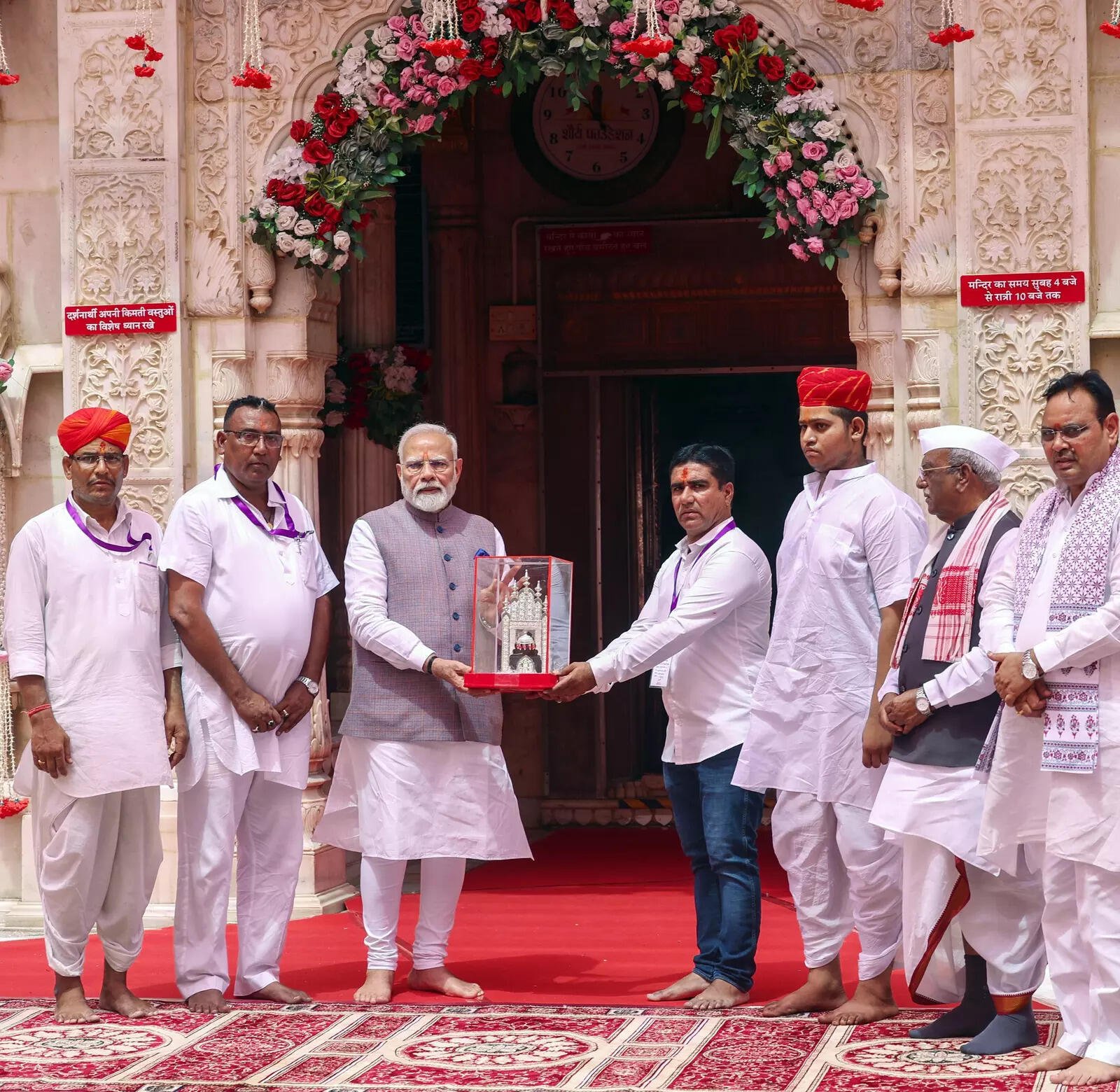
Prime Minister Narendra Modi being presented a memnto during his visit to Karni Mata Temple at Deshnoke in Bikaner
For devotees, the rats are not the spectacle they may appear to an outsider. They are part of the temple’s sacred world — living embodiments of a centuries-old belief.
Om Banna Dham, Pali: The Bullet Baba Temple
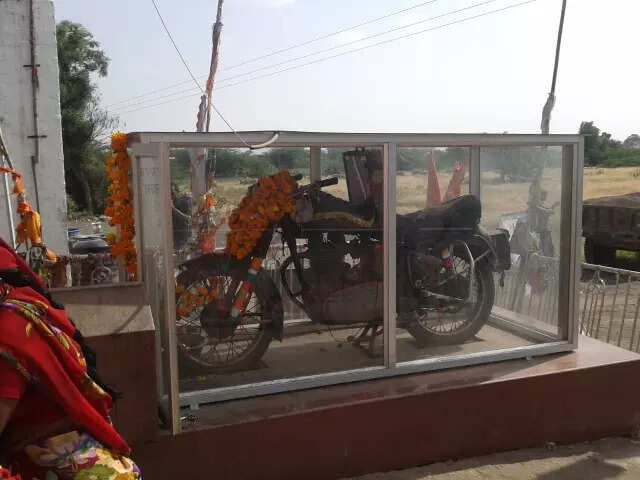
Bullet Baba Temple, Jodhpur, Rajasthan
On a road in Rajasthan’s Pali region stands another shrine unlike conventional temples. Here, the object at the centre of devotion is not a traditional deity but a Royal Enfield Bullet motorcycle associated with Om Singh Rathore, popularly known as Om Banna or Bullet Baba.The shrine grew from the story of Om Singh Rathore, who died in a motorcycle accident in 1988 after his bike struck a tree.
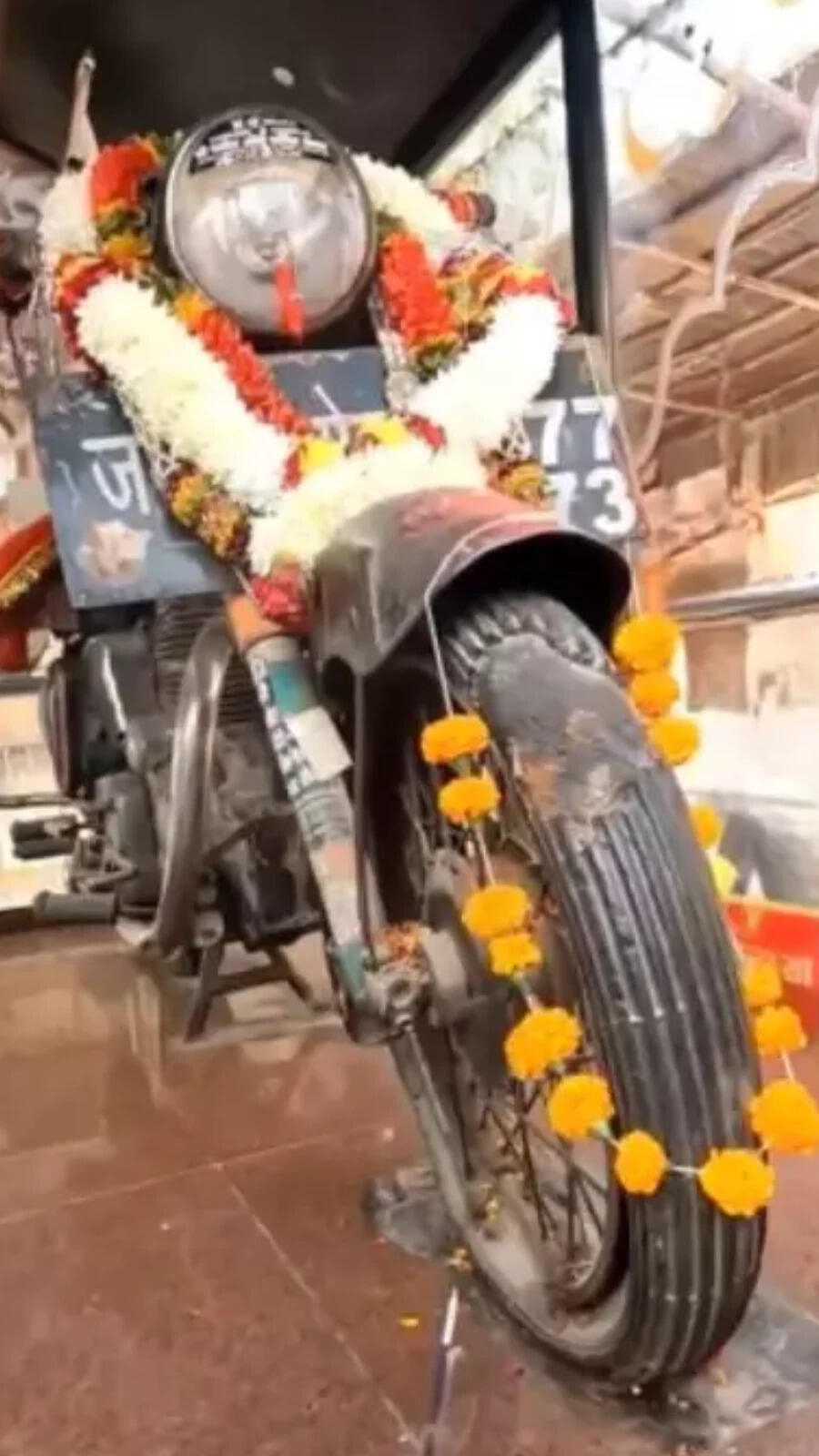
Located near Pali in Rajasthan, Om Banna Dham, also known as Bullet Baba Temple, is a one-of-a-kind shrine. Here, people offer prayers not to a deity or a man, but to a 350cc Royal Enfield Bullet motorcycle that has been immensely popular among travellers and truck drivers, who stop by to seek blessings for a safe journey.(Image: bhavani_jk999/Instagram)
According to local belief, police took the motorcycle away after the accident, but it subsequently disappeared and was found back at the accident site. The story says that attempts to remove it again met with the same result, with the motorcycle repeatedly returning to the place where Om Banna had died.The accounts are part of local legend rather than an established explanation of what happened. But the story became powerful enough to create a shrine of its own.
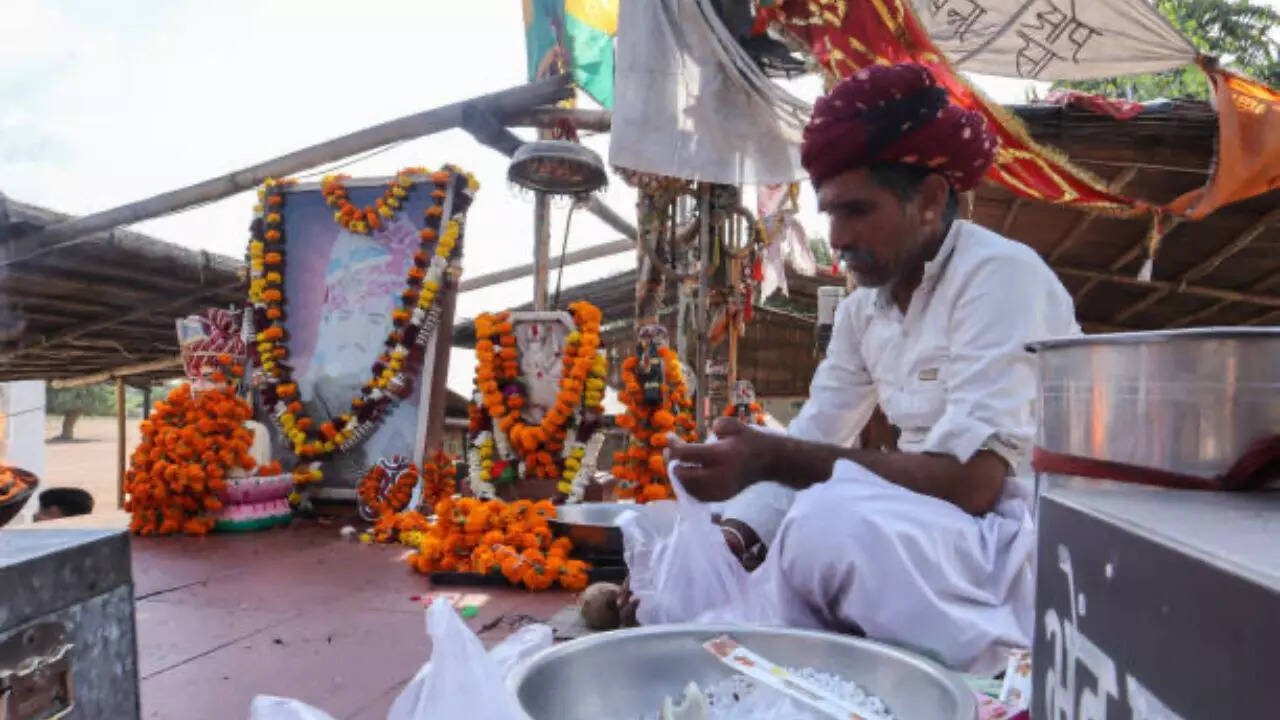
On NH62, connecting Jodhpur and Ahmedabad, 53 km before the town of Pali, resides this shrine, also known as Om Banna Shrine.
The motorcycle, a 350cc Royal Enfield, came to be treated as a sacred object. It was placed at the accident site and gradually became known as Bullet Baba.Devotees passing through the area stop to pay their respects; others offer a brief prayer from the road. The bike is kept inside a glass enclosure and decorated with flower garlands and red cloth, while devotees have been reported applying a tilak to its headlight.The belief surrounding Om Banna is closely tied to the idea of protection. Local devotees regard his spirit as a guardian of travellers on the stretch of road associated with his death.
Tanot Mata Temple , Jaisalmer: A border shrine shaped by stories of war
Deep in the desert landscape of Jaisalmer, close to the India-Pakistan border, stands Tanot Mata Temple, a shrine whose religious identity became inseparable from the history of India’s wars.The temple is regarded as a shrine of Tanot Mata, who is considered an incarnation of Goddess Hinglaj Mata and, in some traditions, associated with the divine mother forms of the region. The temple is described around 1,200 years old, with its origins placed in the early eighth century.
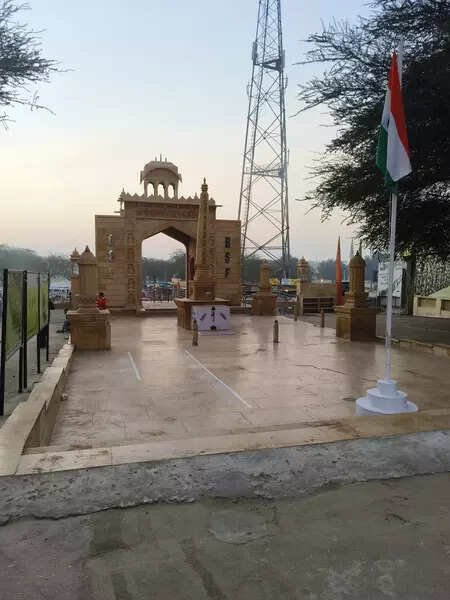
Tanot Mata temple
Its extraordinary reputation comes from the 1965 and 1971 wars. According to accounts associated with the shrine, Pakistani shelling and bombing fell around the temple during the 1965 conflict, but many of the bombs reportedly failed to explode.For devotees, these unexploded bombs became enduring symbols of Tanot Mata’s protective power. They were later preserved and displayed at the temple, turning remnants of wartime violence into objects associated with faith and remembrance.
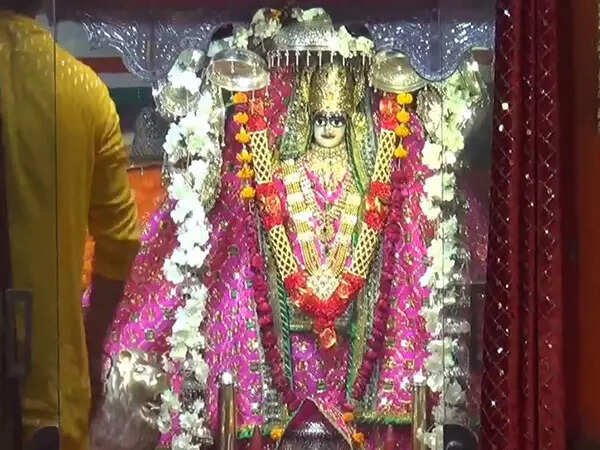
Tanot Mata temple
The legend grew further after the 1971 war, when the shrine became increasingly identified with divine protection. Five silver umbrellas associated with Pakistani Colonel Shahnawaz Khan are said to remain at the temple as offerings, adding another striking element to its wartime history.The temple is now managed by the Border Security Force, with BSF personnel involved in its daily rituals and worship. A temple and museum were developed after the wars, while a Vijay Stambh within the complex commemorates India’s victory at Longewala.
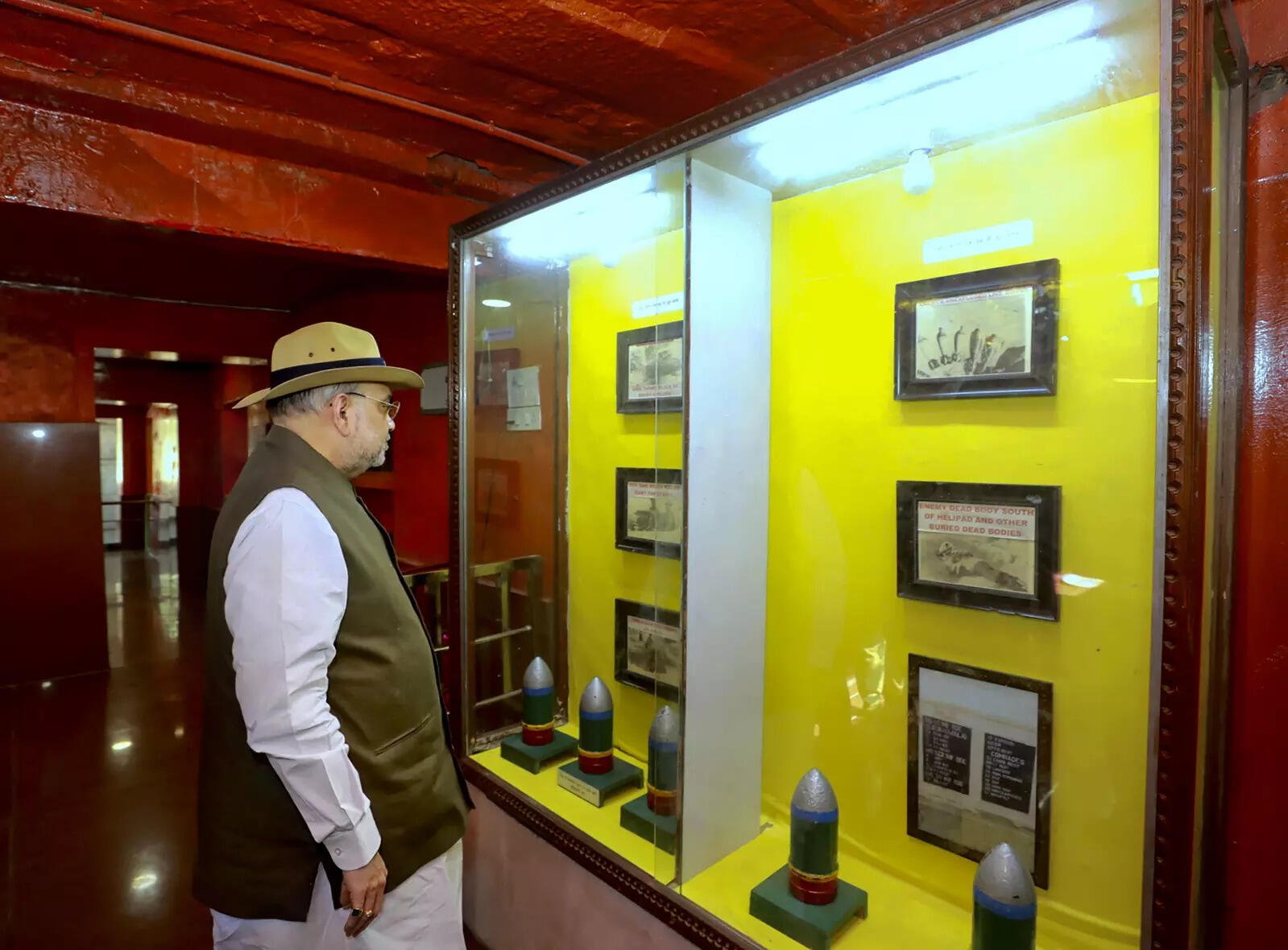
Union Home Minister Amit Shah during his visit to the Tanot Mata temple in Jaisalmer.
The temple’s story entered contemporary military memory again during Operation Sindoor.In a 2025 news agency ANI report, BSF Commandant Neeraj Sharma attributed the destruction of Pakistani drones and missiles over Jaisalmer to Tanot Mata’s blessings.
Mehandipur Balaji, Dausa : A shrine associated with spiritual healing
In the hills around Rajasthan’s Dausa-Karauli region, Mehandipur Balaji has acquired a reputation unlike that of an ordinary Hanuman temple.The shrine is dedicated to Lord Hanuman in his child form — hence the name Balaji. What distinguishes it is its long-standing association with ritualistic healing and exorcism, with devotees coming to the temple seeking relief from what they believe are evil spirits or negative energies.
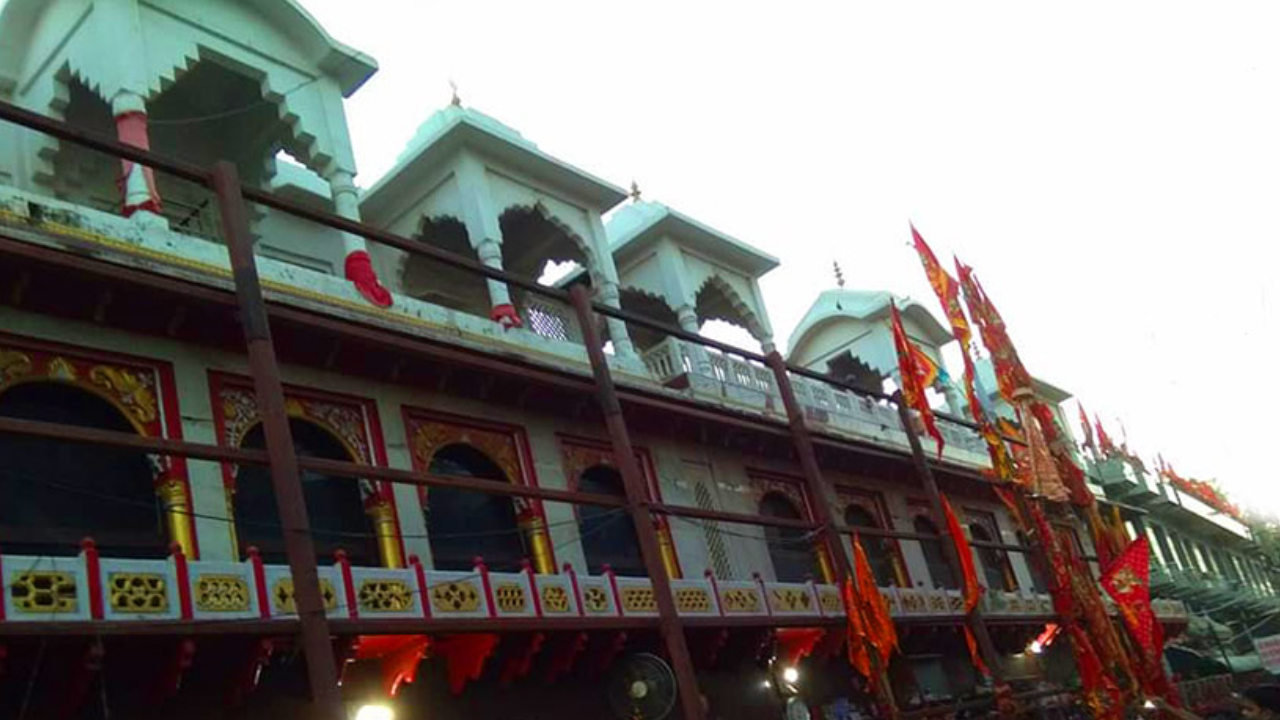
Tradition, belief, and evolving views
According to local lore, the idol of Balaji manifested miraculously in the surrounding hills centuries ago. The shrine subsequently became associated with the belief that the deity can protect devotees, drive away negative forces and bring relief to troubled souls.The atmosphere of the temple is shaped by chants, bells, prayers and intense rituals. Accounts describe devotees undertaking special practices for spiritual cleansing, while rituals associated with healing are performed around Balaji and the other deities within the temple complex.
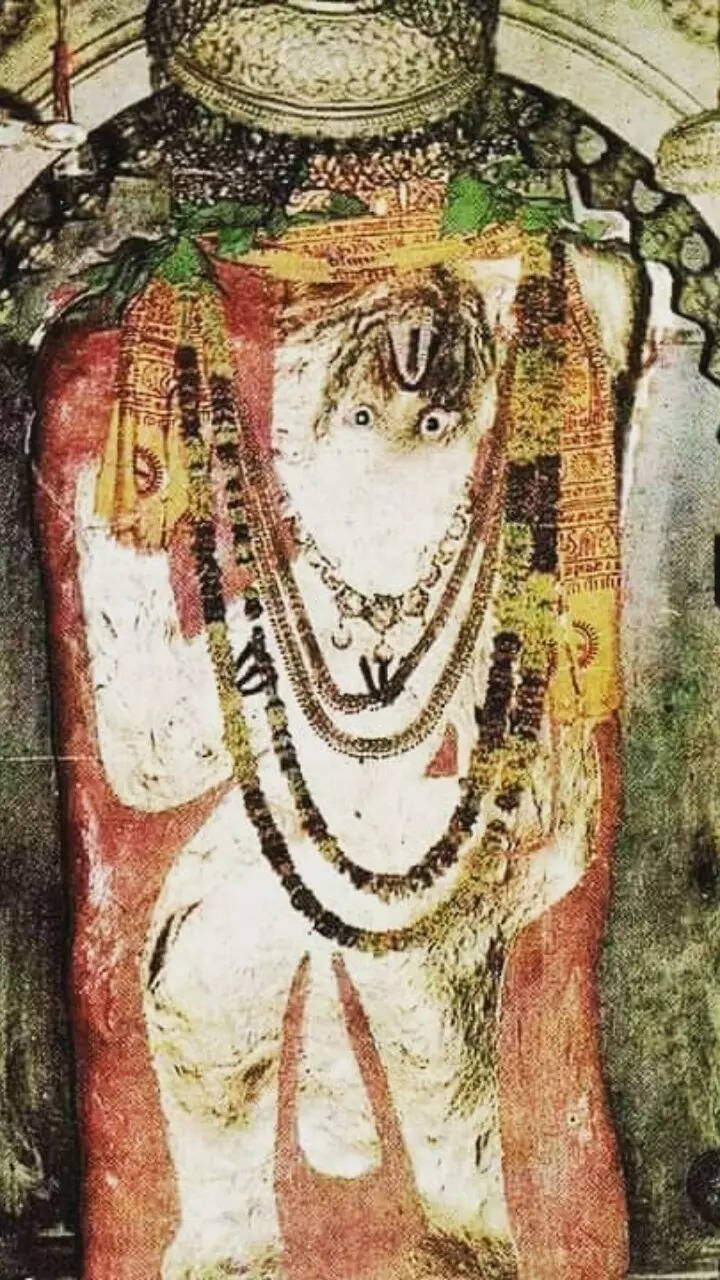
This temple is located in Dausa district of Rajasthan. It is said that people who are affected by black magic or evil spirits come here and get cured.
The sanctum is associated not only with Balaji but also with Pret Raj Sarkar and Kotwal Bhairav, figures traditionally connected with the temple’s distinctive ritual system and ideas of protection and spiritual justice.Among the practices associated with the shrine are rituals known as Arji, Sawamani and Darkhast. The temple tradition also places particular emphasis on what devotees do with offerings: accounts say that certain prasad associated with these rituals is not to be consumed or taken home, but discarded according to prescribed practice.The temple’s reputation has also led to reports of people displaying extreme physical and emotional behaviour during rituals, including crying, shouting or behaving as though affected by supernatural forces. Such experiences are matters of religious belief and interpretation rather than established evidence of possession.
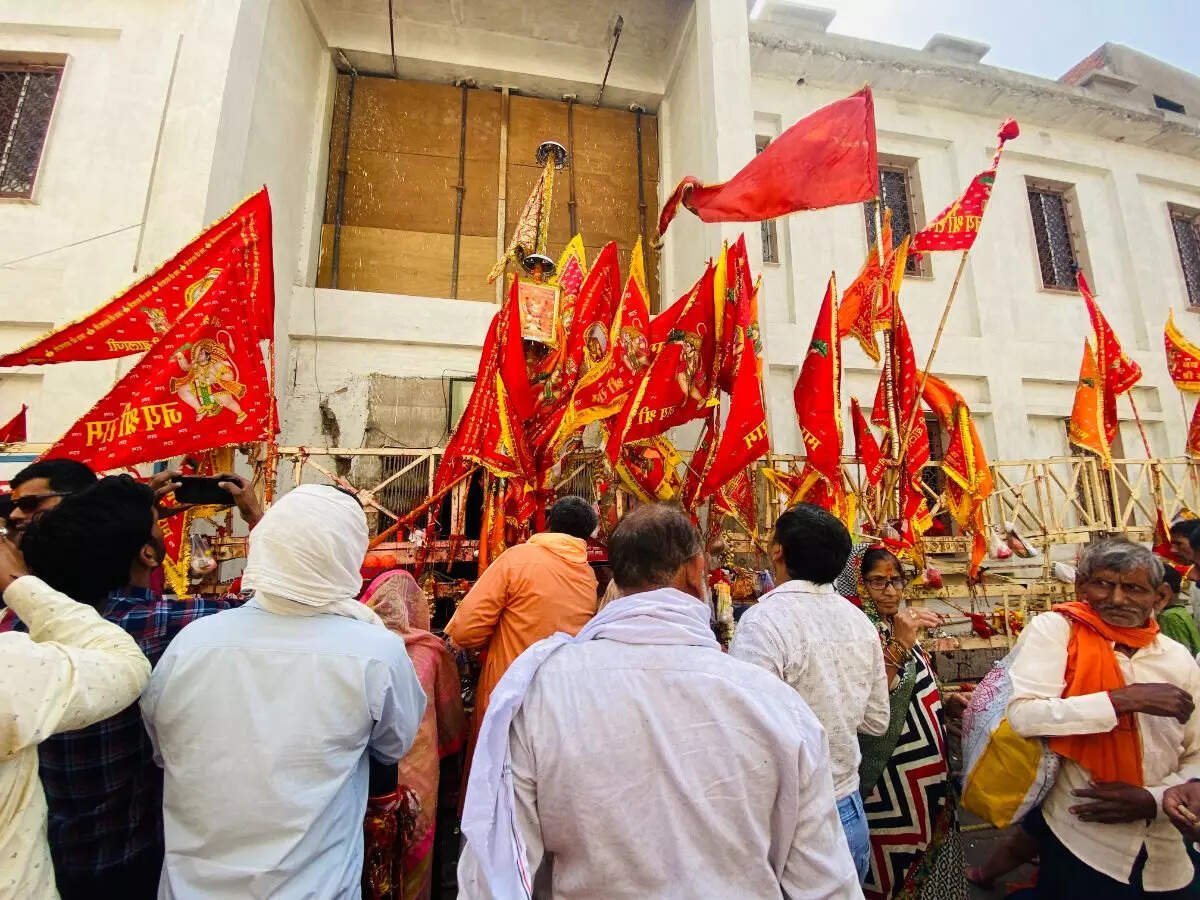
Rajasthan’s Mehandipur Balaji Temple is surrounded by mysteries
For the faithful, however, Mehandipur Balaji is a place where prayer is sought as a form of spiritual protection and relief. Its significance lies precisely in that distinctive relationship between devotion and ritual healing.
Shri Sanwariya Seth Temple, Chittorgarh: God as Business Partner
In the Mewar region’s Chittorgarh district, the Shri Sanwariya Seth Temple has developed a distinctive identity around Lord Krishna as Sanwariya Seth — a form of the deity whom devotees associate not only with worship but also with prosperity and business.The temple is located in the Mandfiya-Bhadasoda region and is popularly known as Krishna Dham. Its black stone idol represents the dark complexion traditionally associated with Lord Krishna. The temple complex features carved pillars, ornate walls and pink sandstone architecture.
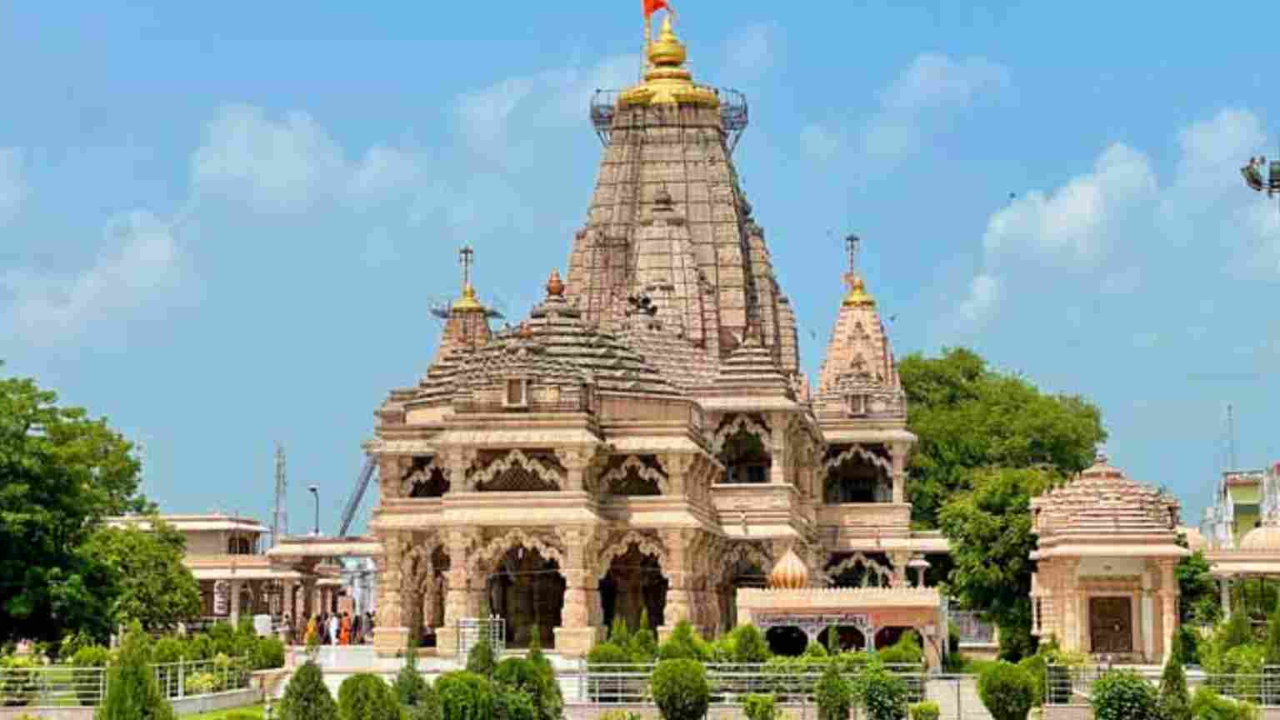
Devotee offered a silver pistol and bullet to Sanwariya Seth Mandir
What makes the shrine particularly distinctive is the relationship devotees believe they have with Sanwariya Seth. Many devotees consider the deity a partner in their businesses and personal earnings, offering a portion of their income as an expression of gratitude and faith. The belief has given the temple a special following among business communities.The tradition is not limited to conventional offerings. Devotees have reportedly offered silver representations of houses, petrol pumps, mobile phones and even crops.
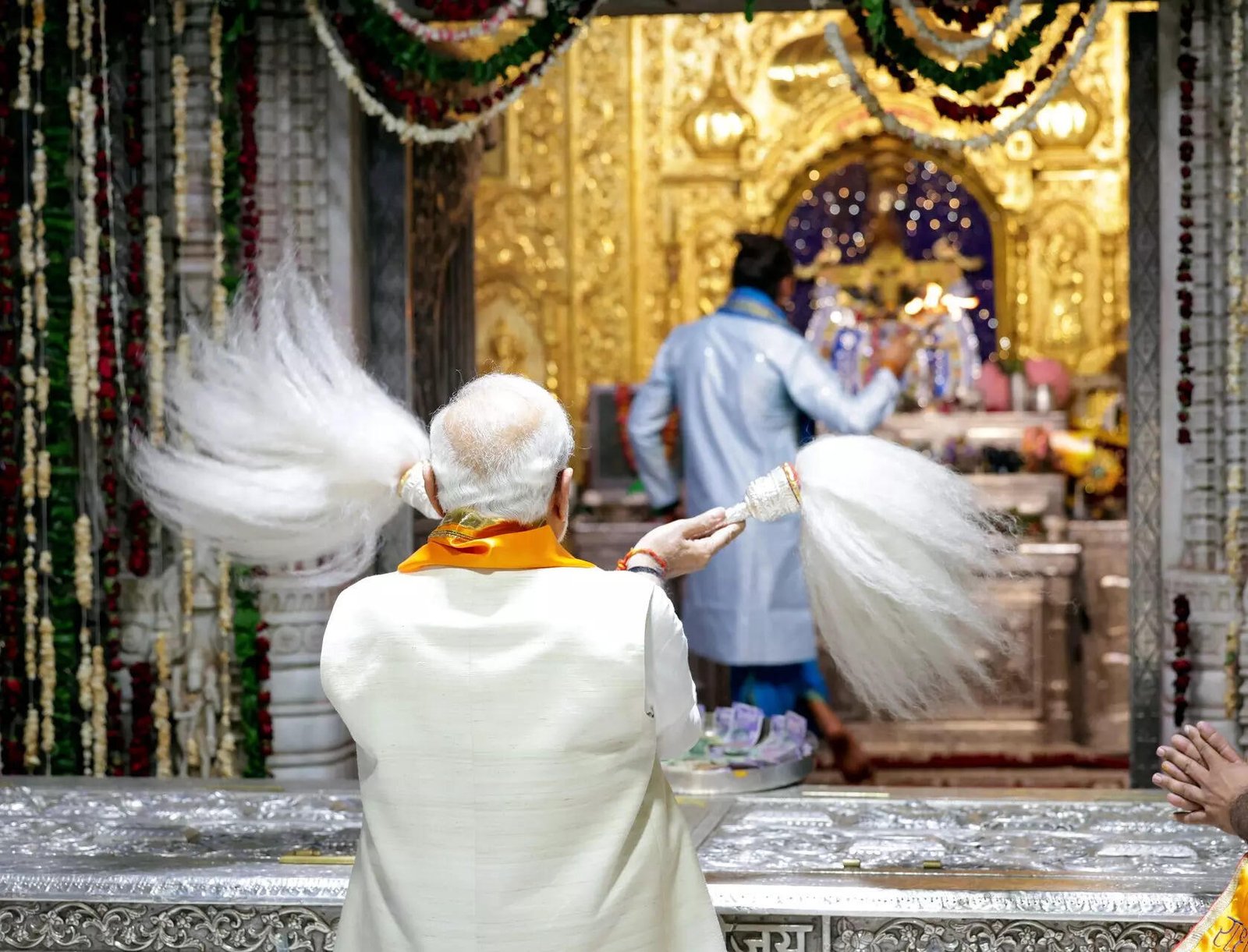
Prime Minister Narendra Modi offers prayers at Shri Sanwariya Seth Temple, in Chittorgarh, Rajasthan.
The offering is unusual, but the larger tradition reveals something deeper about the shrine: devotees often translate their worldly lives into their worship. A business, salary, property or personal achievement can become an offering to the deity they believe has shared in their prosperity.The temple’s legend also connects it with Mirabai. According to the tradition, Sanwariya Seth is the same Girdhar Gopal whom Mirabai worshipped. Another legend says that three idols associated with Krishna were hidden during a period of temple destruction and were rediscovered in 1840 after a cowherd named Bholaram Gurjar dreamed of idols buried beneath the ground. Excavation at the site was said to have revealed three similar statues.Sanwariya Seth thus represents a form of devotion in which the sacred and the everyday economy are closely connected — where the devotee does not merely ask the deity for prosperity but symbolically shares that prosperity with him.
Ramdevra, Jaisalmer: Ramsa Peer, Deity of Both Faiths
In western Rajasthan, the shrine of Baba Ramdev at Ramdevra represents yet another extraordinary dimension of the state’s religious culture.Baba Ramdev is revered by Hindus as Baba Ramdev and by Muslims as Ramsa Peer.
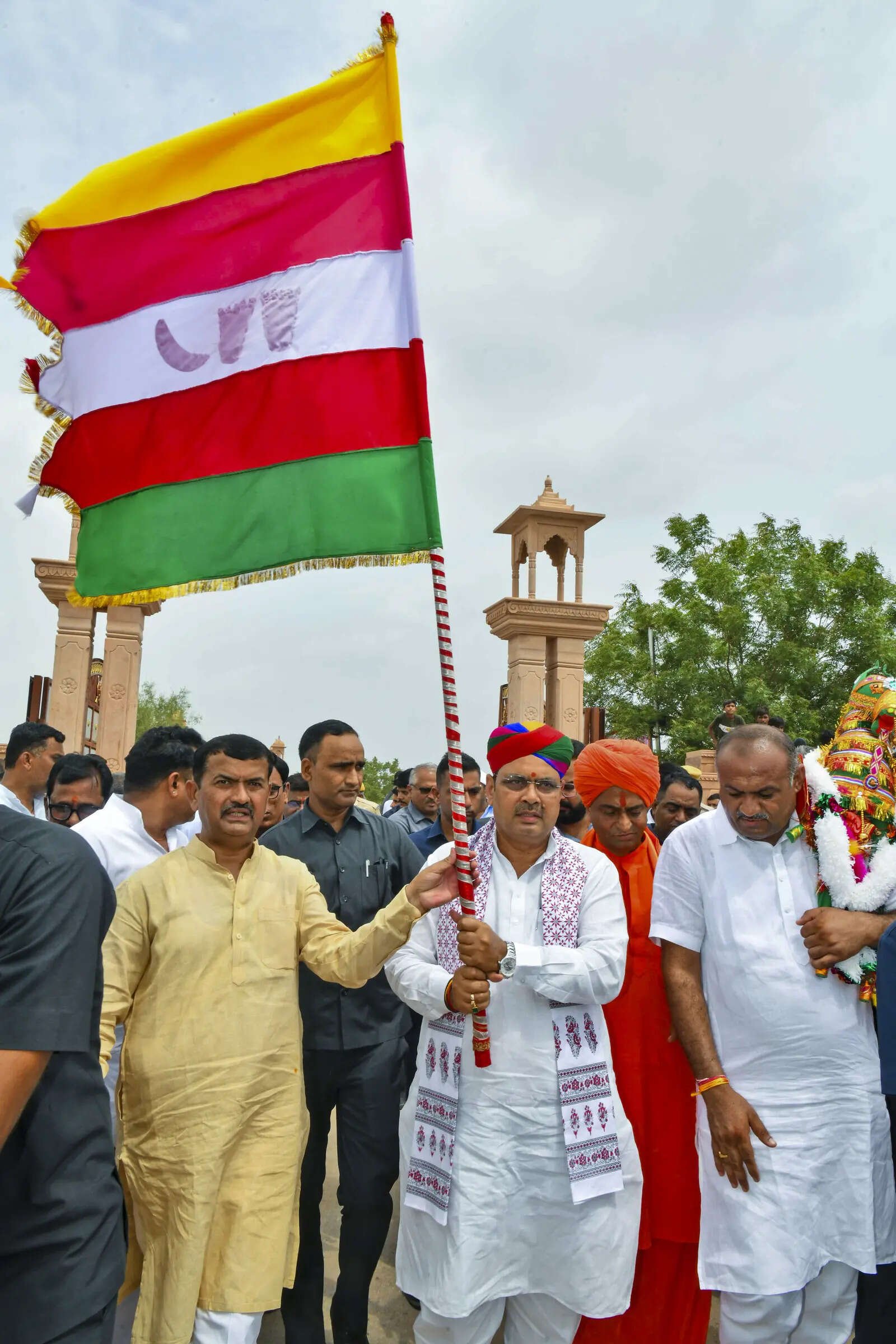
Chief Minister Bhajanlal Sharma during his visit to the ‘Ramdevra Dham’, in Jaisalmer.
The principal shrine stands at the site where Baba Ramdev is believed to have taken samadhi. What began as a small umbrella-shaped structure was expanded into a larger temple by Maharaja Ganga Singh of Bikaner in 1912.An eternal flame burns near the samadhi, while devotees traditionally tie cloth, sacred threads and coconuts while making wishes and later untie them when those wishes are believed to have been fulfilled.The shrine also contains a tomb alongside the idol of Baba Ramdev, reflecting the traditions through which he is revered by both Hindu and Muslim devotees.
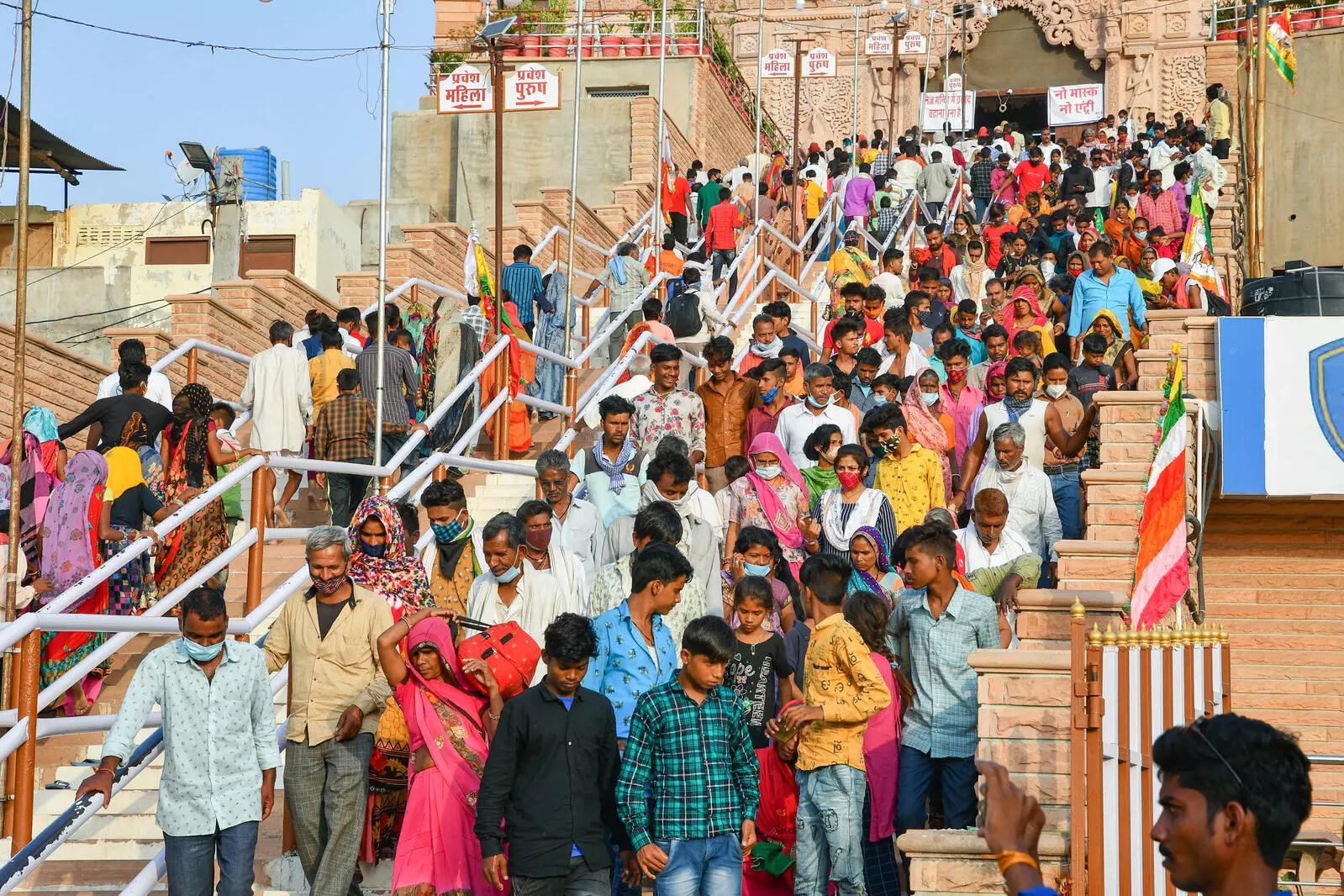
Jodhpur: Pilgrims of Ramdevra visit Ramdev temple before going to Ramdevra temple, in Jodhpur. (PTI Photo)(
Several sacred sites around the main temple add to the religious landscape. The samadhi and stone bracelet of Dali Bai, described as a devoted disciple of Ramdevji, are deeply revered. A local belief holds that passing through the bracelet brings healing, and devotees consider the act an important part of their pilgrimage.The stories surrounding Baba Ramdev also emphasise social equality. His opposition to caste discrimination and untouchability and his efforts towards the uplift of women and Dalits are also known. His teachings continue to survive through folk songs known as Harjas.
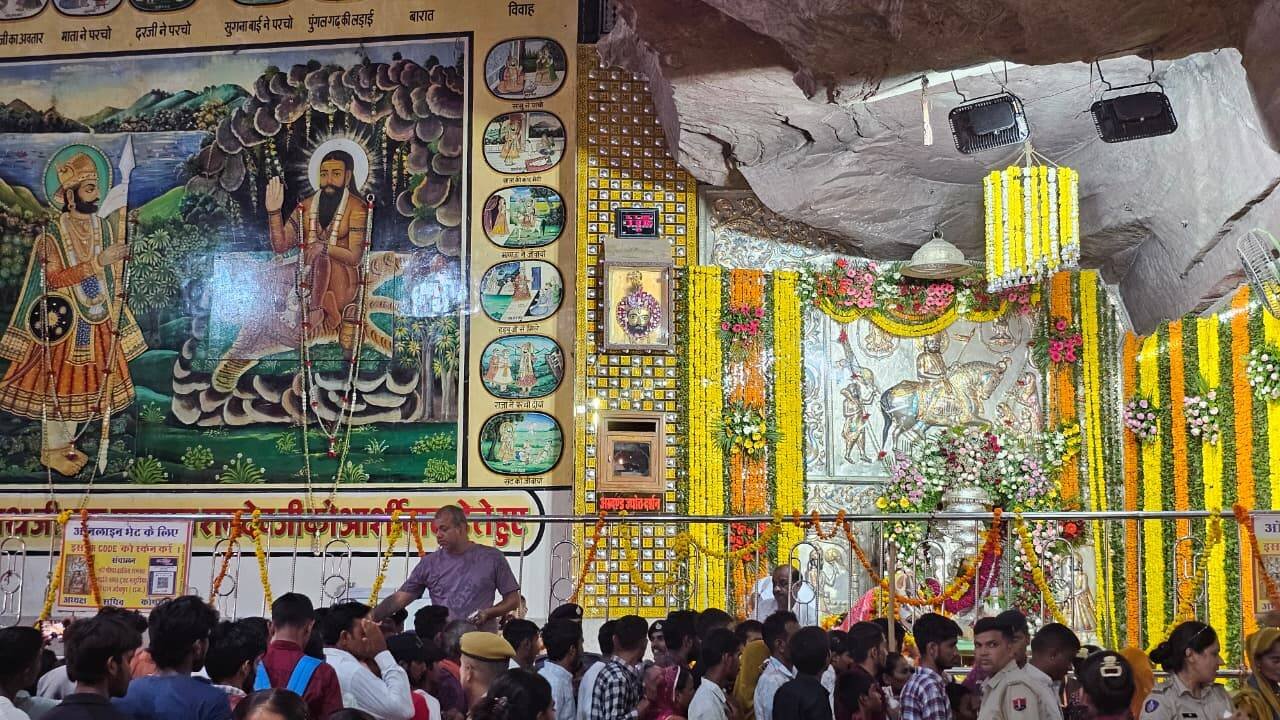
In western Rajasthan, the shrine of Baba Ramdev at Ramdevra represents yet another extraordinary dimension of the state’s religious culture.
The annual fair at Ramdevra brings this folk devotion into a vast collective expression. Devotees carry white or multicoloured flags, sing praises of Baba Ramdev and offer the flags at the main temple. People of different faiths, including large numbers of tribal devotees, participate in the celebrations.
Salasar Balaji, Churu: The Bearded Hanuman
Rajasthan’s distinctive temple traditions extend to Salasar Balaji, where the story of the shrine begins with the devotion of Shri Mohandas Ji Maharaj and his intense faith in Lord Hanuman.According to the temple tradition, Hanuman appeared in the form of an idol at Asota village in 1755 and fulfilled Mohandas Ji’s devotional wish. The idol was subsequently brought to Salasar, where the temple was constructed in 1759.
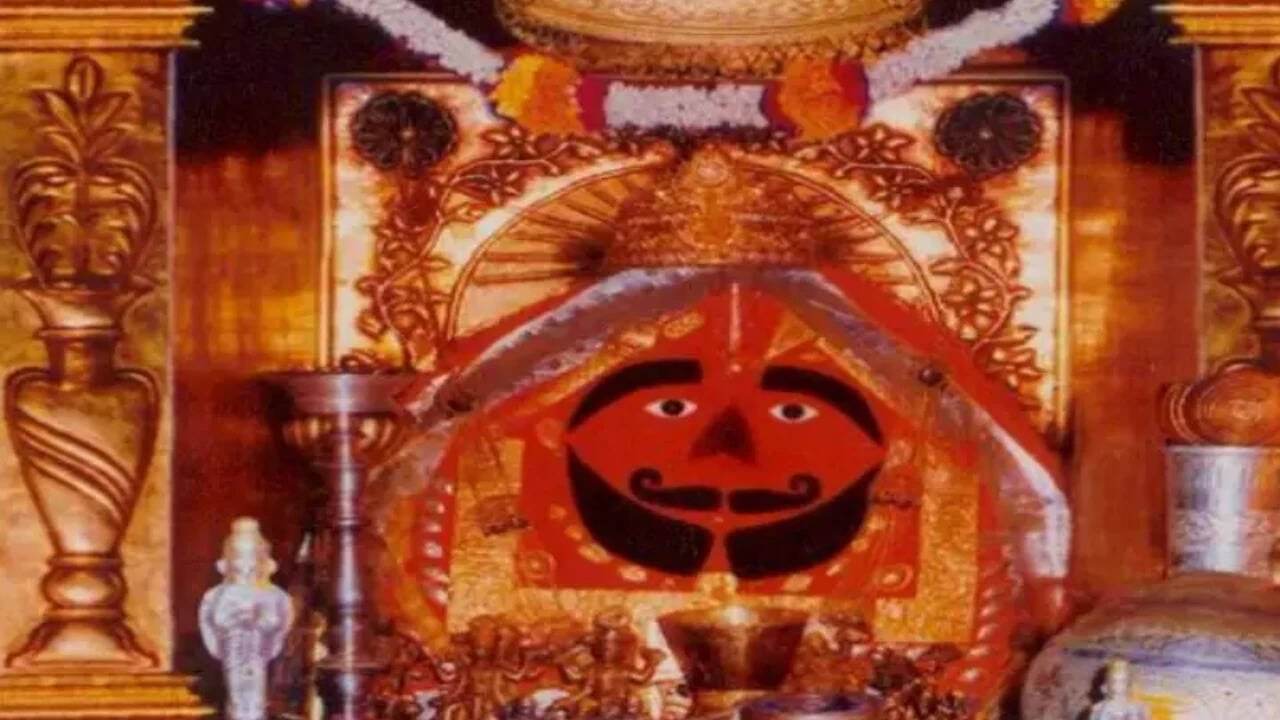
Salasar Balaji is among the most iconic Hanuman shrines in North India.
The story is filled with visions and signs. Mohandas Ji repeatedly experienced divine encounters and eventually received the promise that Lord Hanuman would remain with him in Salasar in idol form. When an idol was discovered while a farmer was working his field at Asota, the local landholder was informed. A voice was then said to have instructed him that the idol should be taken to Salasar.An especially distinctive detail is the form of the idol. According to the temple’s tradition, Mohandas Ji had seen Hanuman in a form with a beard and moustache and subsequently incorporated those features into the idol. The lamps lit in 1755 are also said to have remained continuously lit.The temple has another deeply rooted devotional practice: devotees tie coconuts as a form of prayer and wish-making. The tradition says that these coconuts are tied in large numbers as expressions of faith and are not used for other purposes.
A Rajasthan where every shrine tells a different story
Taken together, these temples reveal a side of Rajasthan that cannot be captured by architecture alone.Their uniqueness is not merely in what visitors see. It lies in what generations of devotees have believed, remembered and passed down.Rajasthan’s temples, in these stories, are not only structures of stone, marble or sandstone. They are repositories of collective memory — places where legends remain alive through ritual, where offerings carry personal meaning, and where faith has found forms as varied as the land itself.