
On Sundays, women in green saris walk through villages in Uttar Pradesh, lathis in their hands. They look out for gambling, alcohol abuse, domestic violence and other problems they say have quietly become part of village life. Their arrival can be enough to make a gambling group scatter or a man drinking in public put away his bottle. They call themselves the Green Army.“Hum nari hain, koi aur nahi. Aurat hain, par kamzor nahi.” The words are almost a declaration of intent.
13 Jul 2026 | 13:11
What’s one stereotype about women that you’re tired of hearing?
But the lathis and green saris are only the most visible part of their story. The group was born out of the women’s own experiences of violence, alcoholism, poverty and helplessness. What began in Kushiyari village in Varanasi district has grown into a larger women-led movement working across parts of Uttar Pradesh.And the women who now walk into other people’s homes once struggled to find a voice in their own.
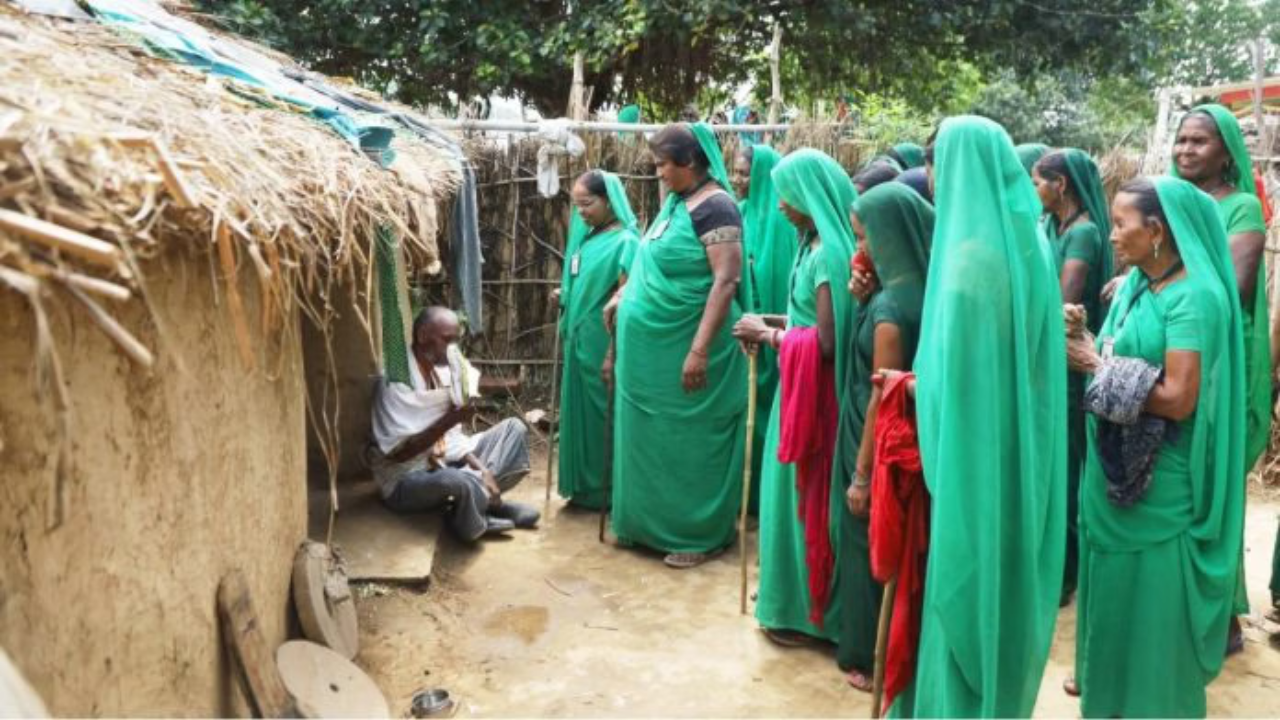
The women campaign against domestic violence, gambling, addiction and child marriage. (Photo courtesy: The Print)
‘Bachche bhookhe so jaate the’
“Shuru-shuru mein hum log ghar mein itni hinsa jhelte the…” one member told Gaon Junction. Her husband, she said, would return home after drinking and gambling. There were days when there was barely enough food for the family.“Din bhar kaam karte the, jo thoda bahut milta tha, usmein se bhi daru pi kar aa jaate the. Ghar mein na khana, na daana. Bachche bhookhe so jaate the.” Even when the women worked as labourers and managed to put together a meal, she recalled, it could be thrown away by a drunken husband.“Hum sochte the, kitne din tak aurat itna peedit hogi? Kitne din bachche bhookhe soyenge? Na koi tyohar samajh aata tha, na kuch. Isi se pareshaan hokar hum sab behne milkar apna gaon sudharne ka beeda uthaye.”That shared frustration became the starting point of the Green Army.Another member described those years in even starker terms. “Itna hum log peedit ho gaye the ki jeene-marne ki umeed hi chhod di thi. Sochte the, ya toh sudhar laayenge, ya isi tarah jeete rahenge. Isi soch ke saath hum sab behne ekjut hui aur ye group banaya.”
The green sari became a warning
The women began confronting problems they saw around them- alcohol, gambling, domestic violence and child marriage. Their method was initially simple: go together, speak to people and try to persuade them to stop.Over time, the green sari became a recognisable symbol. “Log humein hari saari mein dekhte hain toh jua khelne wale, nasha karne wale bhaag jaate hain,” one member said. And then there is the lathi. “Jab nahi maante, toh lathi toh hamari hai. Hamari lathi dekhkar bhi log darte hain.”The women say they do not see themselves as a substitute for the police. When situations become serious, they have approached authorities and helped women seek formal intervention. ThePrint reported that some Green Army members were also given police-mitra IDs to facilitate such assistance.But much of their work happens before a situation reaches that point- through repeated conversations with families and communities. The group’s founder, Ravi Mishra, has described the collective’s work as involving counselling and social intervention. Its concerns have expanded beyond domestic violence to alcoholism, gambling, dowry, child marriage and girls’ education.
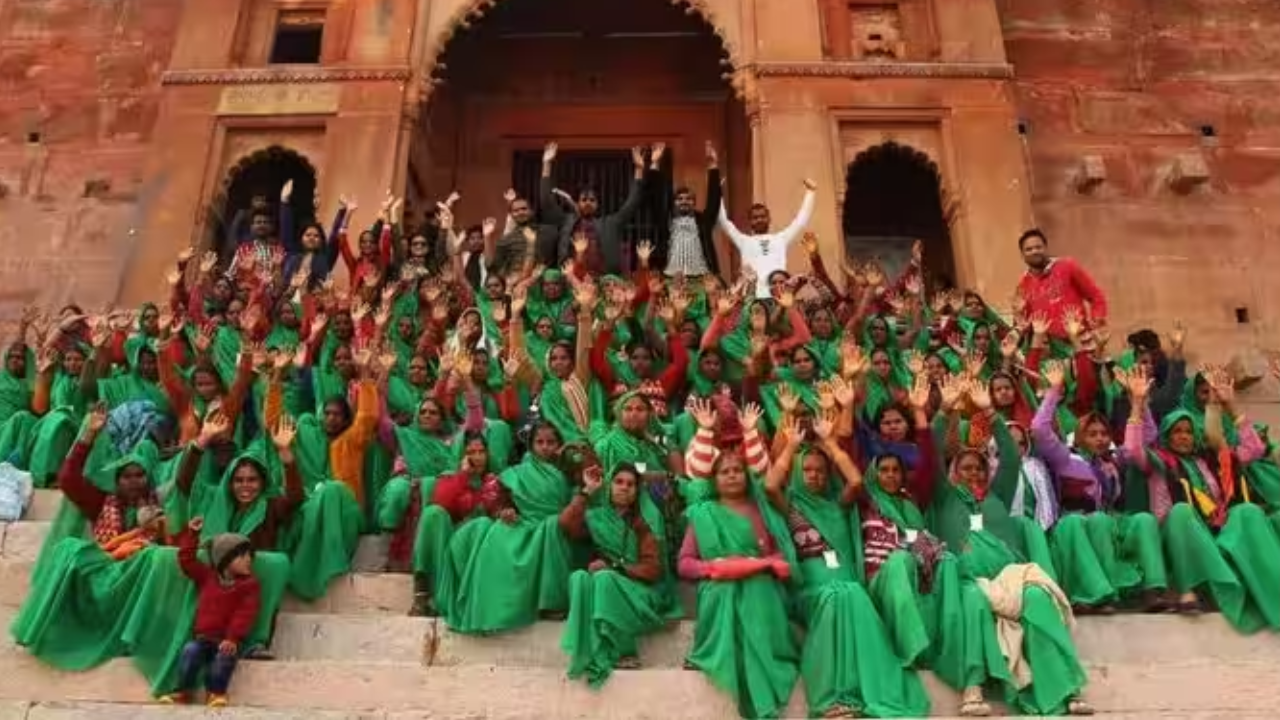
The Green Army also encourages girls’ education and celebrates the birth of daughters in villages.
‘Chhoti si bachchi kya karegi?’
Child marriage became another battle. “Chhoti-chhoti bachchiyon ki shaadi ho rahi thi. Hum sochte the, iska jeevan kharab ho jayega. Abhi toh ye khud bachchi hai. Kal sasural jaakar pati, saas, nanad, devar sabko sambhalegi- ye chhoti si bachchi kya karegi?” The women say they intervened in several such cases.They also began visiting homes where children were not going to school. “Ghar-ghar jaakar hum log kehte the ki bachchon ko school bhejo. Jab bachche school jaane lage, toh hum ye bhi dekhne lage ki padhai ho rahi hai ya nahi.”Their presence, they say, began making a difference inside schools too. “Hari saari mein hum logon ko dekhkar teachers bhi apni kursi chhod dete hain,” one woman said, describing how the group’s reputation has grown.
When a daughter is born, they bring songs
Perhaps one of their most striking campaigns is about changing how villages receive the birth of a girl. The women visit families after the birth of a daughter, sing traditional sohar songs and celebrate the occasion. “Pehle beti paida hoti thi toh log khush nahi hote the. Ab hum jaate hain, sohar gaate hain aur kehte hain- ‘Ghar mein Lakshmi aayi hai.’”The celebration is deliberate. It tells families that the arrival of a girl is not something to mourn or fear. “Khushi manate hain, gaana gaate hain aur sabko samjhate hain ki beti bhi ghar ki khushi hai.” For women who have spent years fighting discrimination themselves, this may be one of the most personal parts of their work.
‘Ab log humein dekhkar bhaagte hain’
The Green Army’s members say they have seen changes in the villages over the years. “Bahut badlav hua hai. Bachche sudhar gaye, log sudhar gaye. Ab log humein hari saari mein dekhte hain toh samajh jaate hain ki ye behne aa gayi hain.”The group’s work has also moved into livelihood initiatives. ThePrint reported on efforts including slipper-making, while sewing centres and other skill-building initiatives have also been associated with the wider organisation.That matters because the women know that telling someone to leave an abusive marriage is easier than ensuring she has somewhere to go. For many women, financial dependence can be one of the biggest barriers to walking away from violence.So the Green Army’s fight is not simply against husbands who drink, men who gamble or families that marry off daughters too young. It is also about giving women enough confidence- and eventually enough economic independence- to imagine a different life.The group has since received recognition beyond the villages where it began. In December 2024, Prime Minister Narendra Modi highlighted the Green Army’s work on social issues, bringing wider attention to the women.But inside the villages, the women are still doing what they have always done: walking together. Every Sunday, they put on their green saris, pick up their lathis and set out. Not because all the problems have disappeared. But because, as one member put it, “Hum sab behne ekjut hain.” They have discovered that a woman who once struggled to be heard inside her own home can sound very different when she is no longer standing alone.