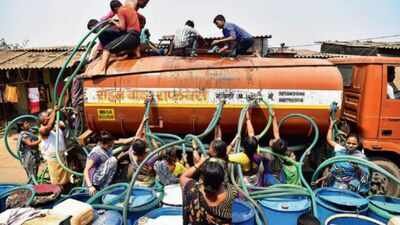
MUMBAI: Mumbai’s water crisis is not a problem to be pushed to the next decade. The city is already struggling with water scarcity, facing a 10% water cut and increasingly unpredictable monsoons, even as its demand is expected to soar 57% by 2041. The warning is stark: The infrastructure to ensure Mumbai’s future water supply is not keeping pace with the urgency of today.
Mumbai’s water gap
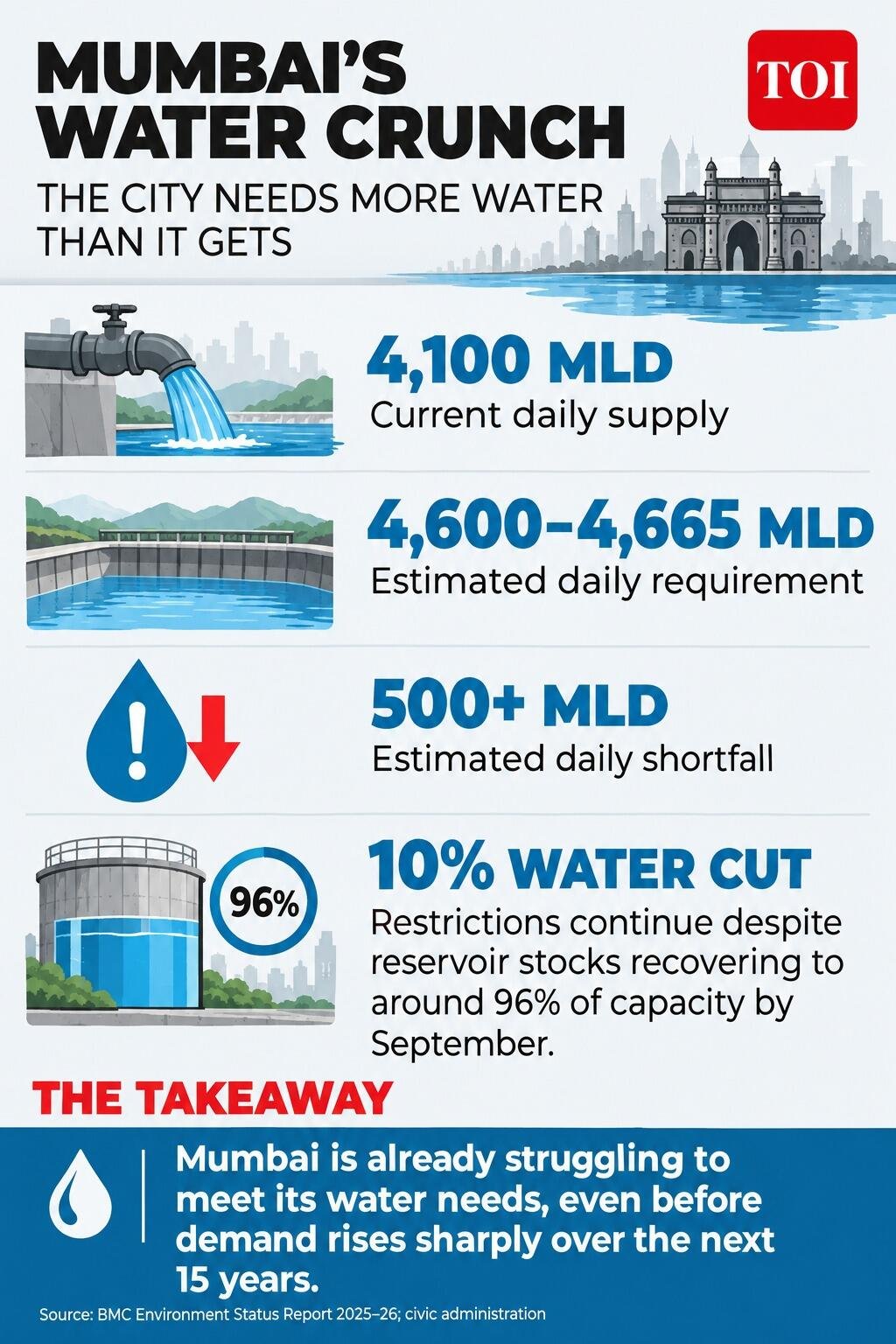
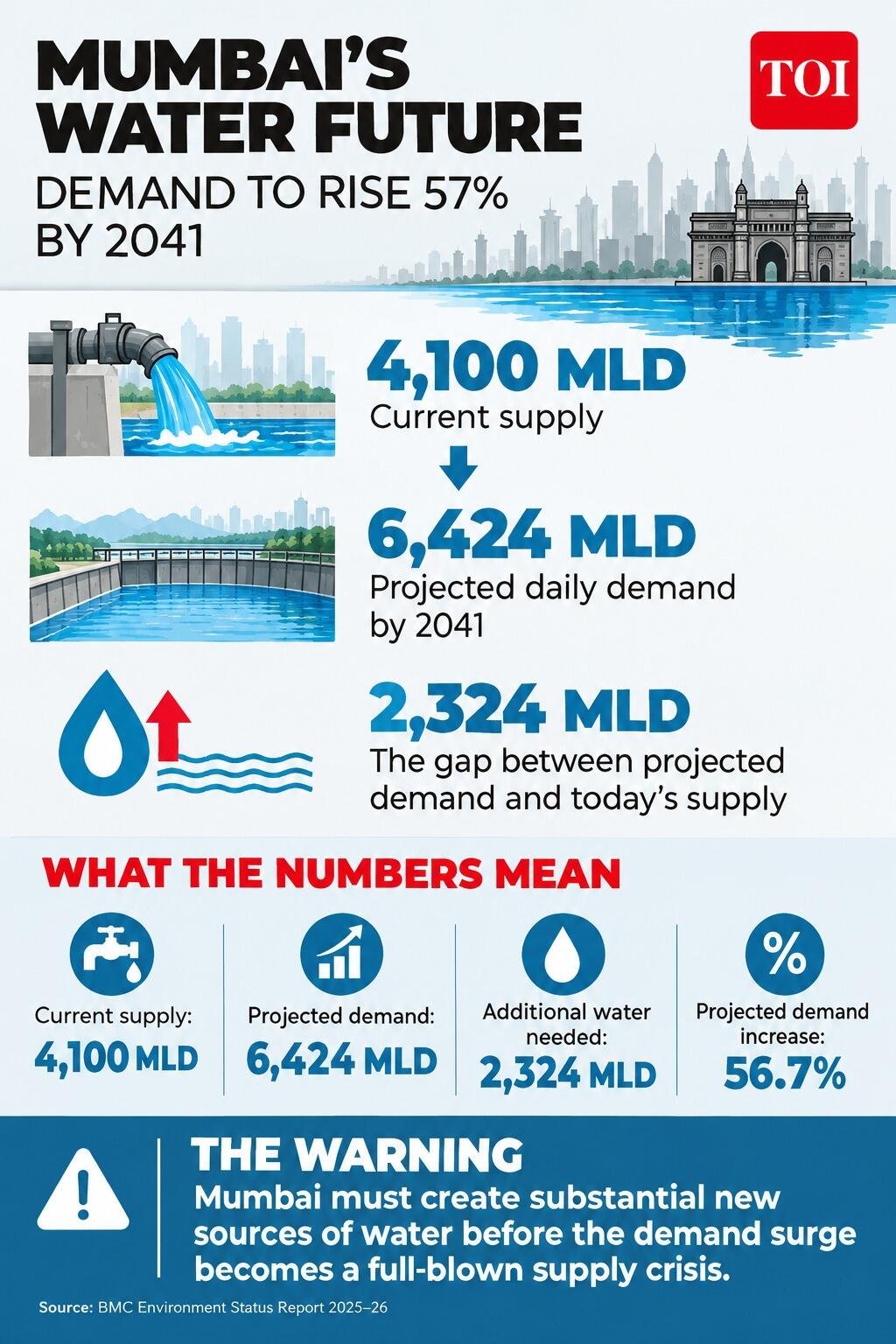
Demand has already outpaced supplyMumbai gets some 4,100 million liters of water per day (MLD) from seven lakes and dams, but its actual daily requirement is estimated at some 4,600-4,665 MLD, leaving a deficit of more than 500 MLD. The BMC’s environment status report 2025-26 expects demand to reach 6,424 MLD by 2041.
Three projects hold key to future
That would leave a gap of 2,324 MLD against today’s supply, even without taking into account the challenge of sourcing additional sources and efficiently distributing water.
Mumbai’s search for new water sources
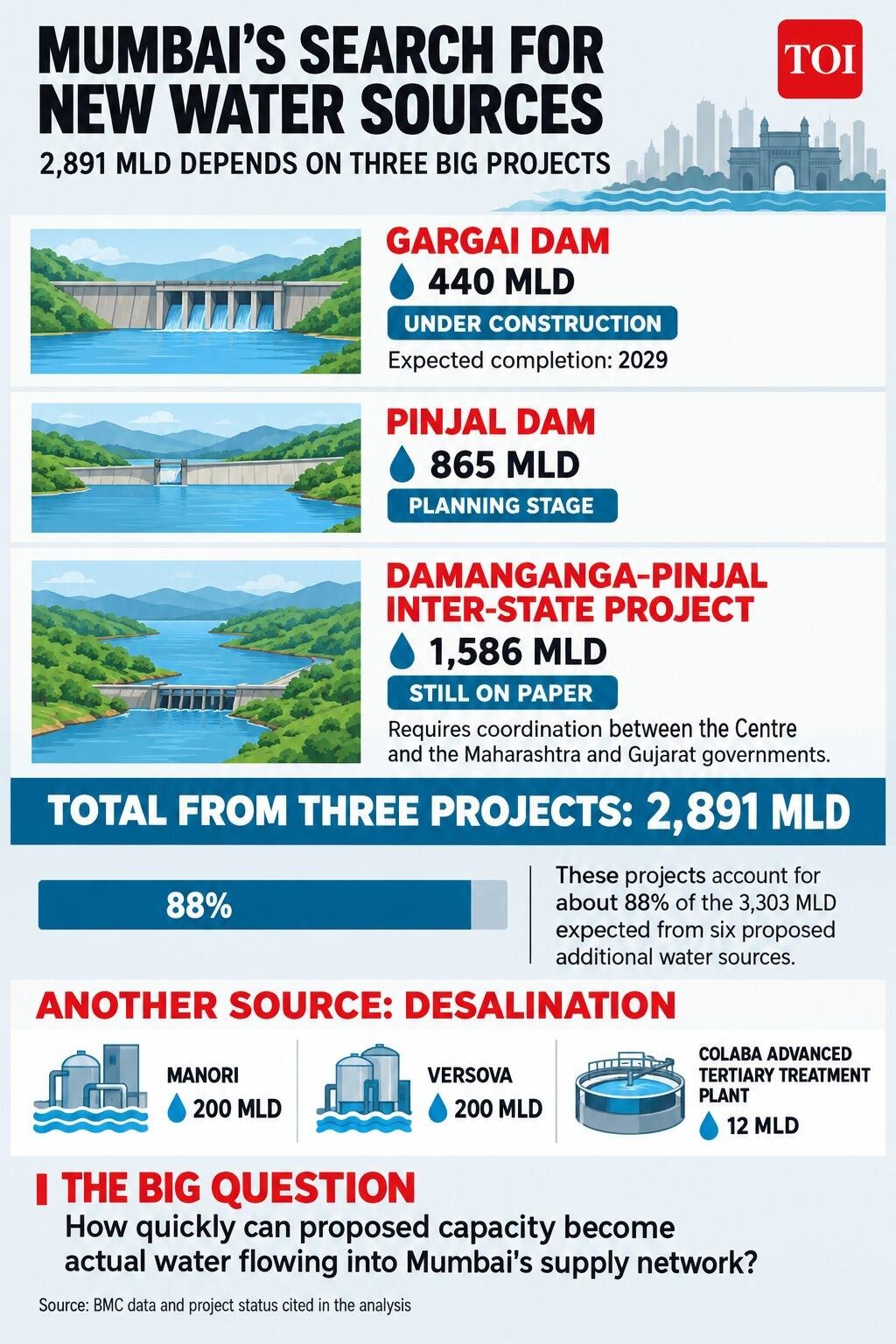
The immediate crisis shows the vulnerability. Mumbai’s reservoirs did not fill to their full capacity by the end of the monsoon this year after deficient rainfall in August and September.In June, the water levels in the seven lakes dropped to less than 10% of their total capacity, and the BMC imposed stringent restrictions. By September, the stocks had recovered to around 96% but the civic administration went ahead with the 10% cut. The Maharashtra government has also ordered a minimum 10% cut in water supply in urban and rural areas from October 16 in view of the drought-like conditions.The key is three big projectsThe BMC has identified six more sources which are expected to contribute 3,303 MLD in total. Three projects – Gargai, Pinjal and Damanganga-Pinjal inter-state scheme – constitute 2,891 MLD, or about 88% of the proposed augmentation. But their progress illustrates how much more is required to get water from a source to household taps.Gargai, expected to supply 440 MLD, is under construction and is expected to be completed by 2029. The Pinjal, which is to contribute 865 MLD, is still in the planning stage while the 1,586 MLD Damanganga-Pinjal project is still on paper.This requires coordination between the Center and Maharashtra and Gujarat governments. The delays in these projects are important as Mumbai is unable to depend only on the seven existing reservoirs to bridge the growing supply gap.Desalination is an alternative, but not a quick fixIn addition, the BMC is also building two desalination plants at Manori and Versova with each having a capacity of 200 MLD and a 12 MLD advanced tertiary treatment plant at Colaba. Initial work on Manori has been started and the project is expected to add to the city’s sources apart from rain-dependent reservoirs. But even the first 200 MLD from Manori would only be a part of the present deficit of over 500 MLD.The real test is in executionThe issue came to the fore during a visit by mayor Ritu Tawde, standing committee chairman Prabhakar Shinde and other ruling BJP leaders to Tansa and Modak Sagar lakes. They pressed hydraulic engineering officials for details to speed up Pinjal and Damanganga-Pinjal. The challenge is not just announcing new sources but getting clearances, coordinating across governments and completing projects on time.By 2041, Mumbai’s demand is projected to be 56.7% higher than the existing supply of 4,100 MLD. But already, the city is short of water today.Unless long-pending projects shift from plans to reliable supply, the 2041 deadline risks becoming a false comfort: Mumbai will not suddenly face a water crisis in 2041. It is already facing the conditions that make one inevitable.