 Pakistan will begin a home ODI series in a couple of days, involving Pakistan, Sri Lanka and England. The hosts will begin their 2027 ODI World Cup preparations with the series, having last played the format in June. A home series means they will call the shots as to what kind of pitches will be dished out.
Pakistan to practice on a variety of surfaces
During the T20I series against Sri Lanka, which ended 2-1 a few days ago in the hosts’ favour, the surfaces offered a bit of everything, but the assistance to batters easily surpassed that of the others. All three games saw both teams score more than 150 runs, except for Sri Lanka’s total in the second T20I.
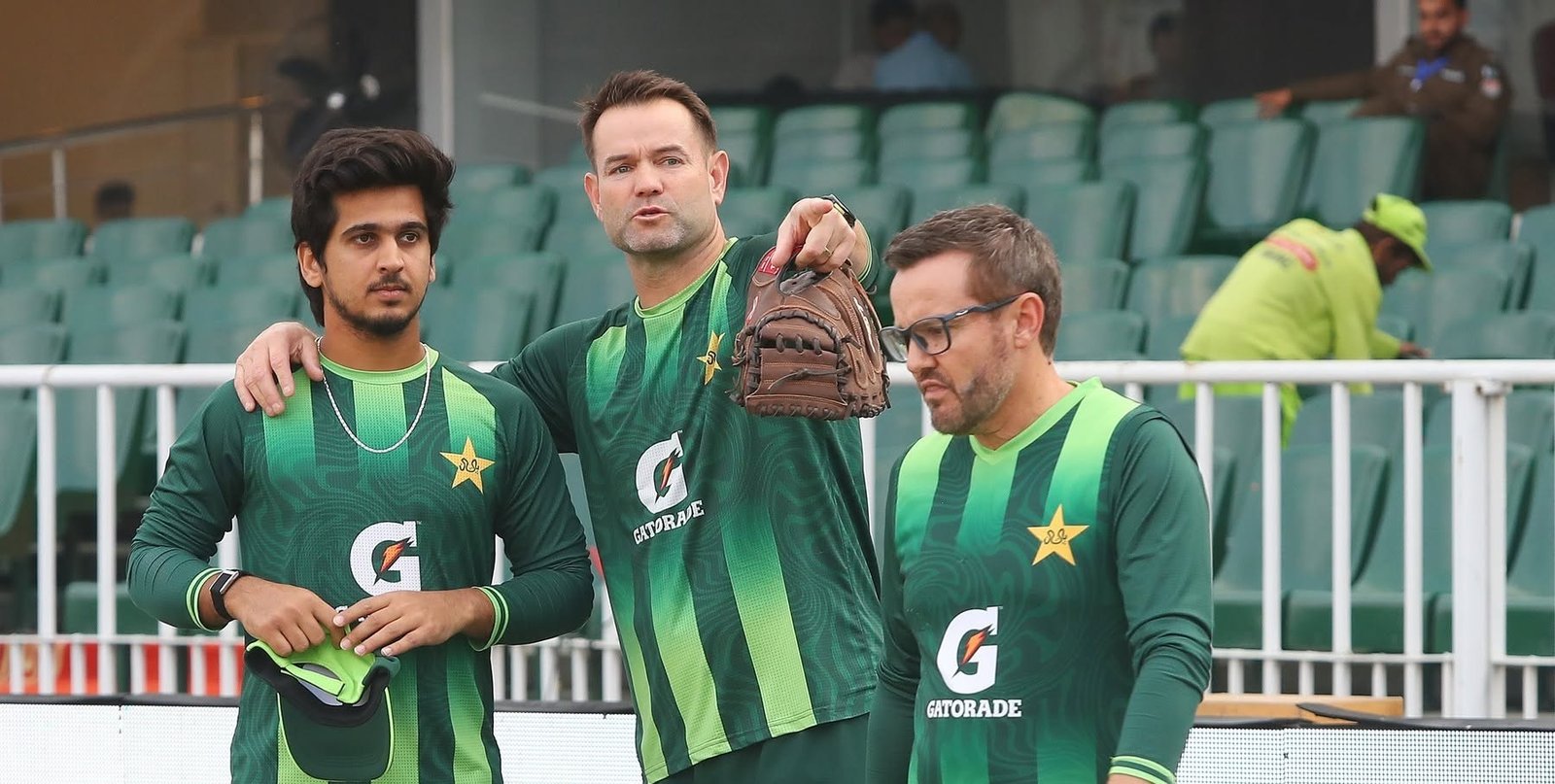
Pakistan’s batting coach Michael Smith explained the rationale behind these surfaces, saying that the World Cup, set to be played in South Africa, Zimbabwe and Namibia, will have a wide range of surfaces, which is why Pakistan will test their strength on each type.
Previously, during their ODI series against Australia, Pakistan curated extremely spin-friendly surfaces, which their head coach Mike Hesson defended, saying some decks in Zimbabwe, Namibia and even South Africa are going to incline towards spin. Hesson also mentioned that going forward the home series could see other types of surfaces being tested as well.
“I think we played really well against Sri Lanka in the T20Is on some wickets that we asked for a little bit of pace and bounce because that’s what we are going to be getting in 12 months’ time in the World Cup. So, it is good to play on a whole variety of wickets, not just on one type of pitch,” Smith said.
“In the World Cup, you are going to be playing in different places in South Africa and Zimbabwe, where you could come across five different pitches in five different games,” he added.
Polishing and building depth in batting pool
These surfaces could help Pakistan batters deal with different scenarios that they could potentially face during the World Cup as well. But regardless of the conditions, Smith reckons, the players should know how to troubleshoot even if they are faced with conditions not suited to their skill set.
“The biggest thing that we talk about is problem-solving and being able to have the skill set to play on different wickets against different bowling attacks because, when you get into games, you want your batters to be able to think about the right things, make good choices and play in different ways within their own game,” he said.
“The best batters in the world problem-solve exceptionally well, and they almost think about what’s important now for the team. That’s our biggest thing going forward: how can we build that a lot into our squad? Winning games from different positions: can you win a game from being in front or from being behind?”
Pakistan are struggling across formats currently, but ODIs still seem to be their favoured format, at least if one goes by the stability. For instance, approximately three years after the 2023 ODI World Cup, Pakistan’s core in ODIs remains more or less the same. As many as six players in the squad set to play the ODI tri-series had been a part of the World Cup as well.
But for Smith, that’s only half the job done. Besides keeping experienced players in the side, he wants to build depth so that the side doesn’t have to rely on a couple of players to work their way through difficult situations.
“Going to the World Cup, we want to build a lot of depth in all the batting positions. We don’t want to be a team that relies on two or three players. We want to know who our two or three best players are in every position and hopefully give them enough experience so we can set them up for success,” he said.
ALSO READ:
Maaz Saadqat eyes a place in Pakistan’s squad for 2027 ODI World Cup- IPL