New Delhi: India’s squad announcement for the 2026 Women’s T20 World Cup on Saturday is unlikely to produce dramatic surprises, but it arrives at an interesting moment for a side still searching for its ideal combination.
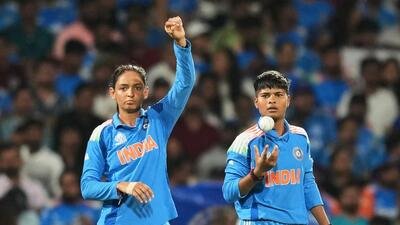
As the afterglow of the ICC Women’s ODI World Cup triumph dimmed, the management, over the last few months, cast a wider net, handing opportunities to younger players and testing different batting and bowling structures – the latest being Anushka Sharma and Kranti Gaud who made their debuts against South Africa last month.
India, however, returned after a 4-1 drubbing in South Africa, which is a bit worrying as they would have hoped to fine tune preparations before the marquee event.
Currently, the top order remains India’s strongest pillar. Smriti Mandhana and Shafali Verma continue to dictate the tempo of this batting unit. Harmanpreet Kaur, despite questions about her future in the format, remains a solid contributor in batting and returned as the leading run-scorer for India in the five-match series.
Another major positive has been the relative stability at No. 3. For a side that spent considerable time shuffling personnel through the middle order, Jemimah Rodrigues has quietly helped settle the innings-building role and that continuity will matter.
However, the bigger uncertainty lies in how India shapes the finishing unit. The return of Bharti Fulmali to the T20 setup suggested a desire to add greater hitting depth lower down the order. India have often relied heavily on Richa Ghosh for late acceleration and final flourishes, and Bharti offers a similarly aggressive skill set.
It becomes more complicated once Amanjot Kaur re-enters the conversation. Currently injured, Kaur was a key member in the ODI World Cup and her all-round skills add a huge advantage for India. When fit, Amanjot’s seam-bowling option could make her difficult to ignore if India seek greater balance in the XI.
The bowling attack, meanwhile, remains capable without looking entirely reassuring. Renuka Singh and Deepti Sharma continue to form the backbone of India’s plans with the ball, but neither enters the World Cup with overwhelming momentum behind them.
India struggled for breakthroughs in the PowerPlay during recent assignments, a worrying sign for a side that has historically depended on early wickets to control games.
Historically, India’s selections before ICC events have leaned towards being conservative, even when experimentation dominates bilateral cricket. That instinct may resurface again when the final squad is named. The scars of the 2024 T20 World Cup group stage exit linger, ensuring the squad for the England and Wales event will be built with the understanding that the margin for error in this format is far less.