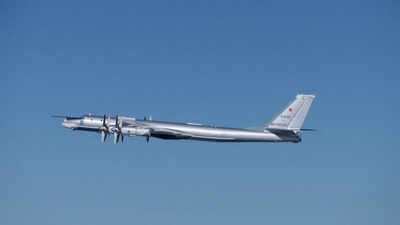
Russia has brought back its nuclear-capable strategic bombers to Vietnam after 12 years, reviving a military arrangement that once allowed Moscow to operate long-range aircraft in the region.The deployment could bring Russian bombers within striking distance of one of America’s most important military bases in the Pacific.According to Reuters report, the two Tu-95 strategic bombers, known to Nato as ‘Bears’, accompanied by two long-range tanker aircraft, were stationed at Da Nang airport in central Vietnam on Wednesday.The aircraft had flown south from Russia’s Far East and arrived in Vietnam on Tuesday, marking Moscow’s most significant military aircraft deployment across East Asia in possibly more than a decade.The return of the Tu-95 bombers comes amid heightened military activity near Japan and Taiwan, raising questions about Moscow’s ambitions in the Indo-Pacific and the message it wants to send to Beijing.The last known deployment of Russian strategic aircraft to Vietnam took place in 2014, when Hanoi offered Russian warships and military aircraft preferential access to its Cold War-era naval facility at Cam Ranh Bay and the airfield at Da Nang, according to Ian Storey, a security scholar at Singapore’s ISEAS-Yusof Ishak Institute.During that deployment, Russia stationed Il-78 aerial refuelling tankers at Da Nang to support Tu-95 strategic bomber flights near Guam, home to major US air and naval bases in the Pacific.Storey told Reuters that he was unaware of any subsequent deployments and suggested that the operations may have been suspended after the administration of then US President Barack Obama raised concerns with Hanoi.Last year, Moscow sought to revive the arrangement, but Hanoi was initially hesitant, Nguyen The Phuong, a Vietnam security expert at the University of New South Wales in Australia, told Reuters.He said the latest deployment, ostensibly for refuelling, could signal a change in Vietnam’s approach and potentially pave the way for further Russian military aircraft deployments.The move is significant for Russia, which has been seeking to maintain its military presence in the Indo-Pacific despite its ongoing war in Ukraine. Access to Vietnamese facilities could provide Moscow with greater operational flexibility for long-range bomber missions across Southeast Asia and the western Pacific.The Tu-95’s significance extends beyond its long-range capabilities. The aircraft is a key component of Russia’s strategic aviation fleet and can carry nuclear-capable cruise missiles. Its deployment, accompanied by aerial refuelling tankers, demonstrates Moscow’s ability to operate strategic aircraft far from its own territory.What message does the deployment send to China?The deployment also carries a message for Beijing, as Vietnam seeks to maintain its strategic balance amid growing Chinese military influence in Southeast Asia.China announced in late September that it was helping Laos build a new military airfield to train its air force. Vietnam has not publicly criticised the move but is monitoring developments to ensure that the facility does not eventually become a military base, Nguyen told Reuters.Hanoi and Beijing are also locked in territorial disputes over parts of the South China Sea. Against this backdrop, Vietnam has often viewed its strong military relationship with Moscow as a strategic counterweight to China.Phuong said Hanoi could have allowed the Russian deployment partly to signal its position to Beijing. Ian Storey said the move could be intended to “signal to China that its military ties to Russia remain strong”.The development also highlights the complex relationship between Moscow, Beijing and Hanoi. While Russia and China have strengthened their military and political partnership, Vietnam continues to maintain close defence ties with Moscow to protect its own strategic interests.