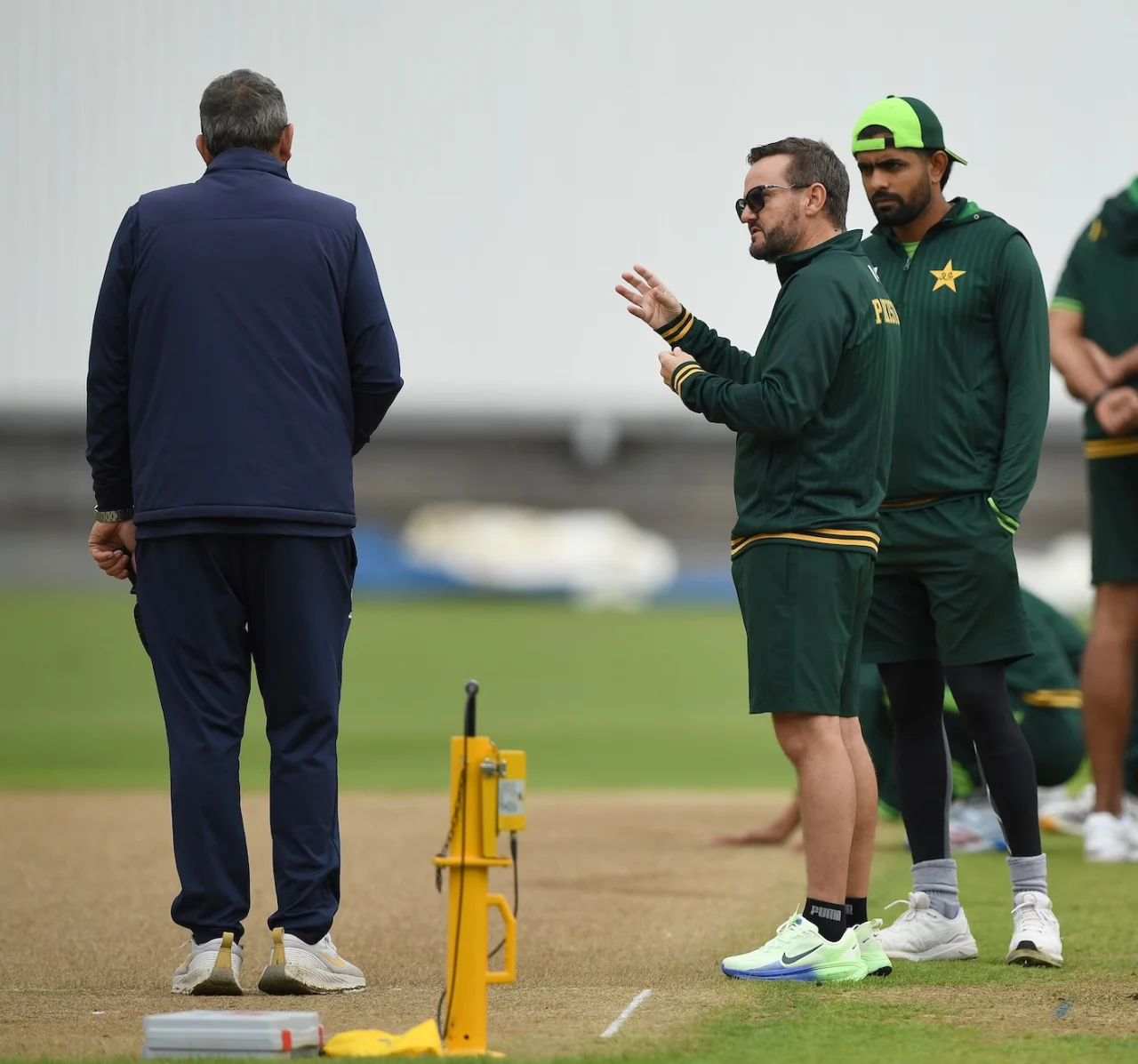
 Pakistan’s head coach Mike Hesson is tired of answering the same questions about his captain Babar Azam. Babar was dismissed for just 8 runs in the ongoing Rawalpindi Test’s first innings. This was the lowest score among all the dismissed Pakistan batters. However, his dismal score did not have much of an impact, as the rest of the team took the side to a 325-run total, which would likely see Pakistan not bat again in this Test.
Babar’s slow return to form
Babar’s lean patch has stretched longer than he or his side would fancy. His last century in Tests came in 2022. However, his returns in the red-ball format this year haven’t really been as dreadful. In seven Test games, he averages 45, which is his best average in the format since 2022. This is why Hesson did not want to overcomplicate the Babar Azam issue by discussing it in every press conference.
“In all honesty, I’ve had enough of those questions,” said Hesson following the close of play on day 2. “You ask the same question at every single press conference.
Babar is averaging close to 50 in Test cricket, so we are certainly not worried about it. I’ll give you the same answer I gave last time. Can we stop asking the same questions every time and actually talk about the cricket being played?
Pakistan are playing some good cricket here, so how about we start focusing on that? Next question, please.”
Hesson explains Pakistan’s shift towards greener pitches
Two days in, the Test is already in its third innings. Before stumps on day 2, Pakistan had dismissed three Sri Lankan batters, as they made their way to the ginormous lead set by the hosts. A large part of their success is due to how the pitch behaved on day one. Bowling first, Pakistan bowlers were glad to find the surface assisting them. The pacers took all ten wickets, and the entire Sri Lankan team were back in the hut after batting just 6.5 overs in the second session.
Hesson revealed this transition in pitches, moving from spin-friendly to greener ones, hasn’t been a reactionary move. Instead, they had been planning for it since the start of the domestic season, which is why the President’s Trophy and Quaid-e-Azam Trophy both saw pitches inclining more towards pacers. The rationale behind this is, Hesson said, to let players get accustomed to the sort of wickets they’ll find in the majority of venues across the globe.
“I wouldn’t call this a green top. I would say these are the kinds of pitches you play on all around the world.
I think the main difference for us is that when you play on turning pitches, the outcome can become a bit of a lottery. We want to play on good cricket wickets where talented players can shine through. That will also allow us to play and perform well overseas.
We are looking to develop this approach not just at the international level but also in the first-class system. They have moved to Kookaburra Turf balls and have also left a little more grass on the pitches throughout the domestic programme.”
ALSO READ:
Updated WTC 2025-27 points table after Pakistan and SL lose WTC points due to slow over rate