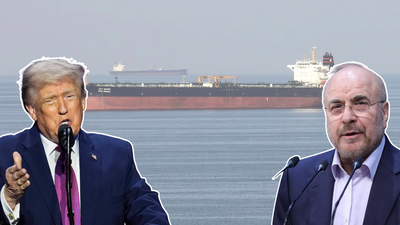
The fragile ceasefire between the United States and Iran appeared dangerously close to collapse on Friday after fresh military exchanges in and around the Strait of Hormuz reignited fears of a wider Middle East conflict. The latest escalation came after the US military said it intercepted Iranian missiles, drones and fast attack boats targeting three American destroyers in the strategic waterway before launching retaliatory strikes on Iranian military sites.US-Iran war — Follow live updates\Iran, however, accused Washington of provoking the confrontation first by attacking an oil tanker and another vessel near Hormuz, insisting its forces responded in “retaliation”. The renewed fighting has cast doubt over whether the uneasy truce that took effect on April 8 can survive, particularly as both sides continue to threaten further action while simultaneously discussing a possible diplomatic settlement.
US President Donald Trump attempted to project confidence that the ceasefire remained intact, but his rhetoric suggested otherwise. Calling Iran’s leaders “lunatics”, Trump warned Tehran that if it failed to sign a deal quickly, Washington would respond “a lot harder, and a lot more violently”.
Hormuz flashpoint pushes ceasefire to breaking point
The Strait of Hormuz once again became the centre of global tensions after Iran and the United States exchanged fire near one of the world’s most critical shipping lanes. US Central Command said Iranian forces launched missiles, drones and small boats towards three American destroyers operating in the area. According to CENTCOM, none of the vessels were struck as US forces intercepted the attacks before carrying out retaliatory strikes on Iranian military positions believed to be responsible.Iran rejected the American version of events, accusing Washington of violating the ceasefire first by targeting Iranian-linked vessels. Tehran claimed its naval units responded immediately after the alleged attacks.
Trump revives threats despite ceasefire claims
Donald Trump’s remarks following the confrontation highlighted the contradictory nature of Washington’s current strategy. While insisting the ceasefire was “still on”, the US president simultaneously issued fresh threats against Tehran. Speaking in Washington and later posting on Truth Social, Trump warned Iran that any failure to sign a deal would lead to significantly harsher American military action.“We’ll knock them out a lot harder, and a lot more violently,” Trump wrote, adding that Iran needed to accept an agreement “FAST”. He also described Iran’s leadership as “LUNATICS” and claimed the US destroyers had passed through Hormuz unharmed despite what he called an Iranian assault involving missiles, drones and naval vessels.
Oil markets shaken as recession fears return
The renewed instability in Hormuz immediately rattled global energy markets, reviving fears of another economic shock tied to Middle East conflict. US crude prices climbed sharply following reports of clashes between Iranian and American forces, while analysts warned that a prolonged disruption in shipping through the strait could have devastating global consequences.According to projections cited by the Washington Post from the Federal Reserve Bank of Dallas, oil prices could rise beyond $167 a barrel if Hormuz remains closed through September. Some financial institutions have forecast an even more severe scenario, with crude potentially reaching $200 a barrel. Such increases would likely push petrol prices in the United States beyond $7 per gallon and risk triggering a global recession.
UAE dragged deeper into regional confrontation
The conflict widened further after the United Arab Emirates confirmed that its air defences intercepted missile and drone attacks believed to have originated from Iran. Emirati authorities warned residents not to approach debris from intercepted projectiles, highlighting the growing danger to civilians across the Gulf.The reported strikes intensified concerns that neighbouring Gulf states could become increasingly exposed if fighting between Iran and the US escalates again. Fujairah, a strategically important Emirati port city, was also referenced in Iranian media commentary suggesting attacks had caused fires and disruption there.
Iran tightens grip over Strait of Hormuz
Tehran has moved to formalise its control over the Strait of Hormuz by reportedly creating a new authority tasked with regulating and taxing vessels seeking passage through the channel. According to shipping intelligence reports, the agency — named the Persian Gulf Strait Authority — has begun positioning itself as the body responsible for granting transit approvals to ships crossing the strait.The move has alarmed maritime experts and Western governments, who argue that Iran’s actions violate international law governing freedom of navigation. The United Nations Convention on the Law of the Sea requires countries to permit peaceful passage through territorial waters.Iran has effectively restricted access to the strait since the conflict intensified in February, leaving hundreds of commercial vessels trapped in the Gulf.
Thousands stranded as shipping crisis deepens
The consequences of the conflict are increasingly being felt across global shipping networks. According to the International Maritime Organization, roughly 1,500 vessels and 20,000 international crew members are now stranded in the Gulf region because of disruptions linked to the war.Commercial traffic through Hormuz has slowed dramatically since Iran tightened restrictions and the US increased naval operations in the area. Shipping companies remain reluctant to risk passage through waters where missiles, drones and military patrols have become increasingly common.
Tehran media celebrates ‘failed’ US mission
Iranian state-linked media outlets used the latest confrontation to portray the United States as strategically weakened in Hormuz. An editorial published by Tasnim News Agency, which is closely linked to Iran’s Revolutionary Guards, mocked Washington’s recent naval operations in the strait.The commentary claimed Trump’s attempt to escort commercial shipping had collapsed after vessels allegedly came under Iranian attack and several ships refused to continue transit. The article further claimed that US destroyers eventually withdrew after facing sustained pressure from Iranian naval forces.“Destroyers came, got stuck and went back; the strait remained under Iran’s control,” the editorial declared.
Pakistan steps up diplomatic mediation efforts
Amid the renewed violence, Pakistan has continued trying to broker a diplomatic settlement between Tehran and Washington. Pakistani Prime Minister Shehbaz Sharif said Islamabad remained in constant contact with both sides in an effort to preserve and extend the ceasefire.Pakistan’s foreign minister also held discussions with Iranian Foreign Minister Abbas Araghchi, while Iranian officials confirmed they were still reviewing messages conveyed through Islamabad. Iranian foreign ministry spokesman Esmaeil Baqaei said Tehran had “not yet reached a conclusion” regarding the latest American proposals.
Lebanon tensions rise alongside Iran conflict
The broader regional fallout from the Iran-US confrontation is also becoming increasingly visible in Lebanon. A separate ceasefire involving Israel and Hezbollah has come under fresh strain following Israeli strikes on southern Beirut that reportedly killed a Hezbollah commander.Lebanon’s health ministry said at least 12 people were killed in additional Israeli airstrikes on Thursday, while Hezbollah claimed further attacks against Israeli forces operating in southern Lebanon. The fighting has reignited concerns that the wider Middle East war could spread further beyond the Gulf.
Global powers fear wider economic fallout
International concern over the Strait of Hormuz crisis continues to grow as governments warn about the global consequences of prolonged instability. Saudi Arabia’s ambassador to the United Nations cautioned that any threat to freedom of navigation in Hormuz would directly affect international markets, trade routes and energy security.European leaders have also intensified diplomatic contacts with Washington amid fears that another major escalation could destabilise the global economy. Trump said he had held a “great call” with European Commission President Ursula von der Leyen, claiming both sides agreed Iran “can never have a nuclear weapon”.