With so much at stake, the Indian Premier League (IPL) comes with its own set of rules. Do well, and you are immortalised, but struggle, and you will pay the price. And it appears the moment of truth has arrived for the struggling trio of Axar Patel, Ajinkya Rahane and Rishabh Pant. Captains of the Delhi Capitals, Kolkata Knight Riders and Lucknow Super Giants, respectively, all three are likely to be sacked from their leadership roles following underwhelming returns in IPL 2026, according to a PTI report. Pant’s LSG became the first team to be eliminated from the tournament, and although DC and KKR are still mathematically alive, it appears only a matter of time before they bow out as well.
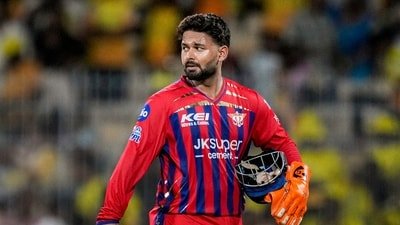
“Three IPL captains are in the line of fire due to campaigns that have been nothing short of disastrous and they could end up losing their jobs when the season winds up later this month, sources tracking developments in various franchises have indicated. Axar Patel, Ajinkya Rahane and Rishabh Pant have captained for two successive seasons and failed miserably in their bid to take their respective teams into the playoffs,” the report stated.
Here’s what the PTI carried:
Only Lucknow Super Giants are officially eliminated, making Pant the biggest fall guy of back-to-back poor seasons. But for all practical purposes, Kolkata Knight Riders led by Rahane and Delhi Capitals helmed by Axar are also unlikely to be around during the business end of the high-profile league. Axar’s numbers as captain and player make for poor reading. He has scored only 100 runs in nine innings at a strike-rate of 112.50, with 56 coming in one innings and the remaining 44 aggregated across eight knocks despite batting mostly in the top-five.
In 12 games, Axar has bowled only 36 overs, exactly three overs per game, and picked up 10 wickets at an economy rate of 8.08. While the economy rate looks respectable considering the punishment endured by fellow spinner Kuldeep Yadav, Axar has often under-bowled himself. With Delhi Capitals having an arrangement of equal owners – JSW and GMR split management responsibilities in alternate cycles – next season will see Parth Jindal and JSW taking charge of cricket operations.
“With Axar completely failing to prove his leadership worth and mostly being dependant on Hemang Badani and Venugopal Rao for decision making, it will be a miracle if he retains captaincy next year. The entire coaching staff is also unlikely to be retained,” an IPL source tracking developments told PTI on conditions of anonymity.
The decisions to ignore a flamboyant batter like Abhishek Porel, not using an all-rounder like Madhav Tiwari consistently, and throwing an out-of-sync youngster like Sahil Parakh into the deep end expecting him to do a Vaibhav Suryavanshi have not gone unnoticed. Parakh undoubtedly has talent but remains a work in progress. With mega auctions slated for 2027, Axar as a player could still be retained but there has been little evidence of dynamic leadership so far. As decision-making powers shift from GMR to JSW, Axar’s future as leader certainly isn’t cast in stone.
Not exactly ‘Pant’astic
In Pant’s case, it is an open secret in franchise cricket that captaincy doesn’t sit well with him. Pant has tried batting at different positions but it has often seemed that he is carrying a thousand-ton burden on his shoulders. In a franchise ecosystem where instant results are the norm, failing to qualify for two successive seasons is unlikely to go down well with LSG owner Sanjiv Goenka.
Within franchise circles, Goenka is known as someone willing to pay top dollar – nearly USD three million in Pant’s case – but also someone who demands performances that can justify with the remuneration. Pant’s 251 runs at a strike-rate of 138 is poor by modern T20 standards. The pressure he is under is reflected in the fact that he has hit only nine sixes in 11 games. The flow that once defined his batting seems missing and some of the team composition decisions have left even staunch LSG supporters perplexed.
Why was Arshin Kulkarni, whose Syed Mushtaq Ali Trophy strike-rate as opener hovers around 134, pushed to open in the IPL? His 17 off 24 balls as opener in this day and age beggars belief. Did Pant take the call or was it coach Justin Langer and the support staff? Even beyond Kulkarni, questions remain over repeated opportunities for Himmat Singh, whose domestic T20 strike-rate barely crosses the 130-mark.
Similarly, why was Ayush Badoni repeatedly preferred in the top-half despite not possessing the muscular power game expected in modern T20 batting? Certainly, the poor form of Nicholas Pooran and Aiden Markram hurt the campaign badly but Pant never looked like a captain possessing the tactical acumen needed for this format.
Rahane a liability
Rahane’s appointment at KKR was largely a classic TINA (There Is No Alternative) case as the franchise lacked credible leadership options. It also helped that his former Mumbai teammate Abhishek Nayar was at the helm as head coach. However, KKR were hamstrung by the fact that Rahane and Nayar’s protege Angkrish Raghuvanshi could not match the pace demanded from top-order batters in modern T20 cricket.
Raghuvanshi scored 340 runs at a strike-rate of 139-plus while skipper Rahane managed 237 runs at a strike-rate of 133. Both batted in the top-three, resulting in loss of momentum in almost every game. In 11 matches, the duo combined for only 25 sixes, averaging barely two sixes per game between them.
Rahane and Raghuvanshi ideally should not have played together in the same XI and the management’s stubbornness proved costly for the franchise. When questioned about his strike-rate earlier this season, Rahane had spoken about people being jealous but at 37, he perhaps needs to introspect whether he can still keep pace with the changing demands of T20 cricket.
While Axar and Pant will continue to remain in demand as players, it can safely be said that Rahane is unlikely to attract interest from any franchise at the next mini-auction unless KKR, in a bizarre move, decide to persist with him for one more season. That move could well prove counter-productive.