Let’s be real for a second. When a K-pop group hits year 13, most of them are long gone, reuniting for nostalgia tours or the occasional variety show cameo. But pop titans BTS? They’re doing the exact opposite. They’re walking into 2026 like it’s a whole new beginning.
Here’s the thing about the number twelve. In mythology, in zodiac cycles, in the way we measure time itself, twelve means complete. A full circle. An ending that actually feels finished. So what does thirteen mean? It means you’ve moved past the finish line. You’re not in the same race anymore. You’re somewhere new, somewhere you haven’t mapped out yet.
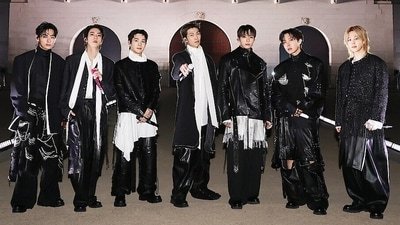
That’s exactly where BTS finds themselves as Festa 2026 kicks off from June 4 to June 13. And this anniversary hits differently for one simple, massive reason: for the first time in nearly four years, all seven members are done with South Korean mandatory military service. No one’s counting down the days until someone has to leave. No one’s missing from the group photo. They’re just… here. Together. Finally.
The theme this year is 13(B)TS, and it’s not just a cute spin on their name. It’s them drawing a line in the sand. The first chapter about the debut years, the grind, the uncertainty, the military hiatus has been officially complete. Closed. Finished. And so begins the Festa 2026, road to the beginning of their thirteenth year together.
June 2026 rollout
The whole thing starts with a warm hug from the past. June 4 brings back an old favorite: The Family Portrait. It’s a ritual BTS has kept alive since their rookie days back in 2014, and somehow, after all these years, it still hits the same.
Then June 5 turns up the energy. The Hooligan performance video drops—a high-octane visual for a deep cut off their Arirang album. But here’s where things get interesting. June 7 and 8 shift gears entirely. First comes Normal Log which means exactly what it sounds like. Just the members being regular people. Then 13 Side Film, capturing those unguarded, in-between moments that never make the official content.
And then comes the moment BTS ARMY has been loudly, repeatedly, desperately asking for. June 12. ‘Come Over’finally escapes vinyl prison. The one that was locked away on the deluxe vinyl edition of Arirang, taunting anyone who didn’t snag a copy. Produced by SUGA, co-written by RM and j-hope, it is a track about wandering away from someone who matters and then finding your way back, which, if you think about it, is basically the story of the last four years.
The return of Run BTS 2.0
Let’s be real for a second: one of the loudest screams from the Festa schedule drop wasn’t for a new song or a concert. It was for Run BTS 2.0.
For anyone who’s been around since the early days, the original Run BTS was the place where the biggest band on the planet stopped being BTS the brand and just became… seven guys being chaotic together. The global image faded the second they sat down to play a game they definitely did not understand. And that was the magic of it.
Over 150 episodes, Run BTS turned into something rare. It was chaotic, loud, and absolutely hilarious. Games that escalated way too fast. It was the messiest, most wonderful window into who they actually are when the cameras aren’t trying to capture something epic.Then came the military hiatus. The show went quiet. And for nearly four years, fans just held onto old episodes like comfort blankets.
The teaser drops on June 10. The full episode arrives June 11.
Return to Busan Asiad
The whole anniversary month builds to one big weekend: June 12 and 13, two sold-out nights at the Busan Asiad Main Stadium in South Korea. The choice of Busan carries real weight.
Before the military hiatus, Busan was one of the last places where ARMY saw all seven of them together on a stage. At that 2022 concert, the uncertainty was everywhere. So now, nearly four years later, walking back onto that same ground? That’s a full-circle moment. Busan held their last show before the pause. And now Busan gets to host their first big celebration on the other side of it. Some things just come home.
Grosses, stadiums and the myth of absence
In most entertainment industries, a long hiatus leads to decline in visibility and commercial pull. Four years away from group activity would typically weaken momentum. BTS, however, continues to challenge that expectation.
The group stepped away from full-group activities for nearly four years—military service, solo projects, real life happening in between. Any other act returning from that kind of break would be met with a polite round of applause and a fraction of their old audience. Instead, BTS came back to find that absence hadn’t made the world forget them. It just made everyone want them more.
The numbers back it up. Their North American tour leg alone moved 840,000 tickets across just 15 shows as reported by their company Big Hit Music. As per Billbaord, in April 2026 alone, across eight stadium shows in Goyang, Tokyo, and Tampa, BTS pulled in $76.2 million and sold 417,000 tickets. That made them the highest-grossing live act on the entire planet for that month.
The full circle moment
The annual Festa calendar winds down on June 13 with an archive piece titled ‘20130613 Congratulations’. It is a direct nod to a specific Thursday thirteen years ago when seven young people stood on their first broadcast stage, armed with nothing but borrowed clothes, heavy eyeliner, and an intense undercurrent of anxiety.
Back then, BTS ran on pure, defensive adrenaline. Emerging from a sidelined agency, their early work was an aggressive, almost desperate protest against an industry that seemed entirely prepared to watch them fail. They had to fight for every inch of screen time, turning their music into armour to prove they simply had the right to exist in the same room as the giants. Today, that desperation has quieted down into something far more intimidating: absolute self-assurance.
Surviving the global microscope
Over the last decade, the group has been picked apart under a cultural microscope, weathered severe internal burnout, and managed a four-year physical separation due to mandatory military conscription. When the system finally released them, the real question hanging over was whether seven individuals, having grown into completely different adults in separate military units, would still feel like a band when they stood in a room together.
The defining characteristic of this post-enlistment era is total, uncompromised autonomy. For the first time since their debut, the background clock has completely stopped ticking. They have moved past the exhausting cycle of fulfilling potential and entered the far trickier, quieter territory of managing a living legacy.
BTS has reached a rare state of artistic security where they are entirely comfortable with the historical footprint they’ve already left behind. That comfort gives them the luxury to be unpredictable. They don’t have to burn down their past to build their future; they can simply evolve at their own pace.
Their perspective today is naturally calloused by the heavy years, anchored by a decade of unprecedented triumphs, and completely open-ended. They are moving forward entirely on their own terms, answers to no one, and that makes an unchecked, unbothered BTS the most dangerous version of the group the music industry has ever seen.