Imagine you walked into a stock market. You had ₹1,000 crore to deploy. The blue chips, the Sensex darlings, the names everyone knows, were all available. So were a handful of no-name penny stocks trading at near-zero.
Where would a smart investor put their money?
If IPL 2026 was your answer, the data has an uncomfortable verdict: the penny stocks won. Spectacularly.
The market opened and the expensive stuff started bleeding immediately
IPL 2026 saw ten franchises collectively deploy ₹1,026 crore across 203 players over 74 matches. Total value generated: ₹1,347 crore. A net profit of ₹321 crore for the whole market. Healthy numbers, on the surface.
But strip away the aggregates, and you find a market with one of the sharpest inversions in the history of player valuation.
Every rupee deployed on players priced below ₹1 crore generated a collective ₹144 crore in value. Every rupee deployed on players priced above ₹12 crore generated a collective loss.
Read that again. The cheapest 62 players in the tournament, guys who cost less than a decent used car, returned more money than the 36 most expensive stars combined.
The worst trades of the season
Here is where the market truly broke down.
Yuzvendra Chahal cost Punjab Kings ₹18 crore. He returned value worth ₹3.7 crore a loss of ₹14.3 crore. Jasprit Bumrah, ₹18 crore to Mumbai Indians, returned ₹3.7 crore in value. Loss: ₹13 crore. Arshdeep Singh, also ₹18 crore, delivered ₹5 crore back. Nicholas Pooran cost Lucknow Super Giants ₹21 crore and delivered 31 paise per rupee invested.
These are not fringe players. These are marquee names, India internationals, players with genuine pedigree. And yet the data, built on ball-by-ball Win Probability Added calculations across every delivery of every match, says the same thing with relentless consistency: the market paid for reputation and got performance that didn’t match the price tag.
The ₹12–18 crore bracket as a whole, 30 players, ₹461 crore spent, posted a net loss of ₹68 crore. Thirty of the most celebrated T20 cricketers in the world, deployed at premium prices, collectively destroyed ₹68 crore of value.
Meanwhile, the bargain bin was printing money
Vaibhav Sooryavanshi cost Rajasthan Royals ₹1.10 crore.
He scored 776 runs in 16 matches at a strike rate of nearly 238. He generated ₹33.9 crore in surplus value. His return on investment: 31.79 times cost. For context, if you had invested ₹1 lakh in him at auction, you got back ₹32 lakh worth of cricket.
Donovan Ferreira, also at Rajasthan Royals, cost ₹1 crore and generated ₹17.9 crore in surplus at an 18× return. Kartik Tyagi at KKR cost ₹30 lakh and returned nearly 32 times his cost through quiet, disciplined bowling. Prince Yadav at Lucknow cost ₹30 lakh and returned 27 times his value. Ayush Mhatre at CSK cost ₹30 lakh and generated returns of over 23 times his cost in just six matches.
Five players. Combined cost: under ₹4 crore. Combined surplus value: over ₹85 crore.
That is more profit than six full franchises generated from their entire squads.
Also Read: RCB’s INR 25 crore secret: How two players held the fort for IPL 2026 champions beyond light and noise
The franchises that understood this and the ones that didn’t
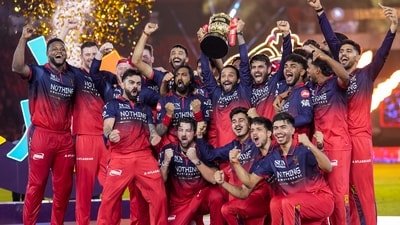
Royal Challengers Bengaluru ran the best-managed portfolio of the season. Season P&L: + ₹83 crore. Their secret was structural rather than lucky. They didn’t overpay for stars. Devdutt Padikkal at ₹2 crore returned ₹17.4 crore. Krunal Pandya at ₹5.75 crore quietly compounded. And their captain, Rajat Patidar at ₹11 crore, performed like a ₹50-crore asset generating ₹38 crore in player P&L and an additional ₹25 crore in captaincy surplus, the best leadership return of any captain in the tournament.
Sunrisers Hyderabad and Gujarat Titans followed, each generating over ₹50 crore in surplus. Both built around batting depth and mid-tier value picks.
Then there’s Mumbai Indians. MI deployed ₹112 crore the highest squad cost of any franchise. They finished with a net loss of ₹12 crore. Their five most expensive stocks (Bumrah, Hardik Pandya, Rohit Sharma, Suryakumar Yadav, Boult) all posted major losses simultaneously. A portfolio implosion. The most expensive team in the market delivered the worst returns.
Why did this happen?
The answer is structural, and it applies far beyond cricket.
T20 auctions price track record, brand, and international reputation. They cannot price a teenager’s potential. They cannot price the compounding effect of a player who performs consistently at a fraction of the cost of a star who performs occasionally. The market paid for name recognition and received regression to the mean.
The players who overdelivered were almost entirely uncapped or just-capped Indians playing under zero expectation frictionless upside with limited downside. The players who underdelivered were weighed down by the premium the market had already attached to them before a single ball was bowled.
Bowlers, as a collective asset class, returned − ₹32 crore on ₹357 crore deployed. The entire bowling sector was underwater. In IPL, the currency is runs, and the players who add those runs most efficiently especially at base prices will always outperform a market that bets disproportionately on bowling reputation.
The one number that explains the whole season
₹1.10 crore in. ₹34.97 crore out.
That is Vaibhav Sooryavanshi’s IPL 2026 ledger. A 16-year-old from Bihar, picked as an afterthought at less than what a franchise might spend on travel logistics, generated more surplus value than any player in the tournament including the player who cost 24 times as much.
The IPL 2026 stock market had a clear verdict. The smart money was always in the penny stocks.
Method note
Analysis based on a proprietary IPL player impact model using ball-by-ball Win Probability Added data from all 74 IPL 2026 matches. P&L figures are rating-adjusted and denominator-normalised. This model was designed exclusively by the author.