
NEW DELHI: India has recorded a significant decline in infant deaths over the past decade, with the Infant Mortality Rate (IMR) falling to 24 deaths per 1,000 live births in 2024. Yet behind the national progress lies a sharply uneven picture, with some states approaching developed-world child survival standards while others continue to struggle with high infant mortality despite improvements in institutional healthcare.The latest Sample Registration System (SRS) Report 2024 shows that India reduced its IMR from 30 in 2019 to 24 in 2024, reflecting an annual average decline of around one point. The improvement has been driven largely by a sharp increase in institutional deliveries and expanded maternal and child healthcare services across the country.However, the report also underlines a sobering reality. Despite the decline, one in every 42 infants at the national level still dies before reaching the age of one. In rural India, the figure is one in every 37 infants, while in urban areas it is one in every 59 infants.

National decline driven by institutional deliveriesOne of the most striking findings in the report is the rapid rise in medically attended births.The percentage of live births where mothers received medical attention in government or private hospitals increased from below 83% in 2019 to more than 95% in 2024.
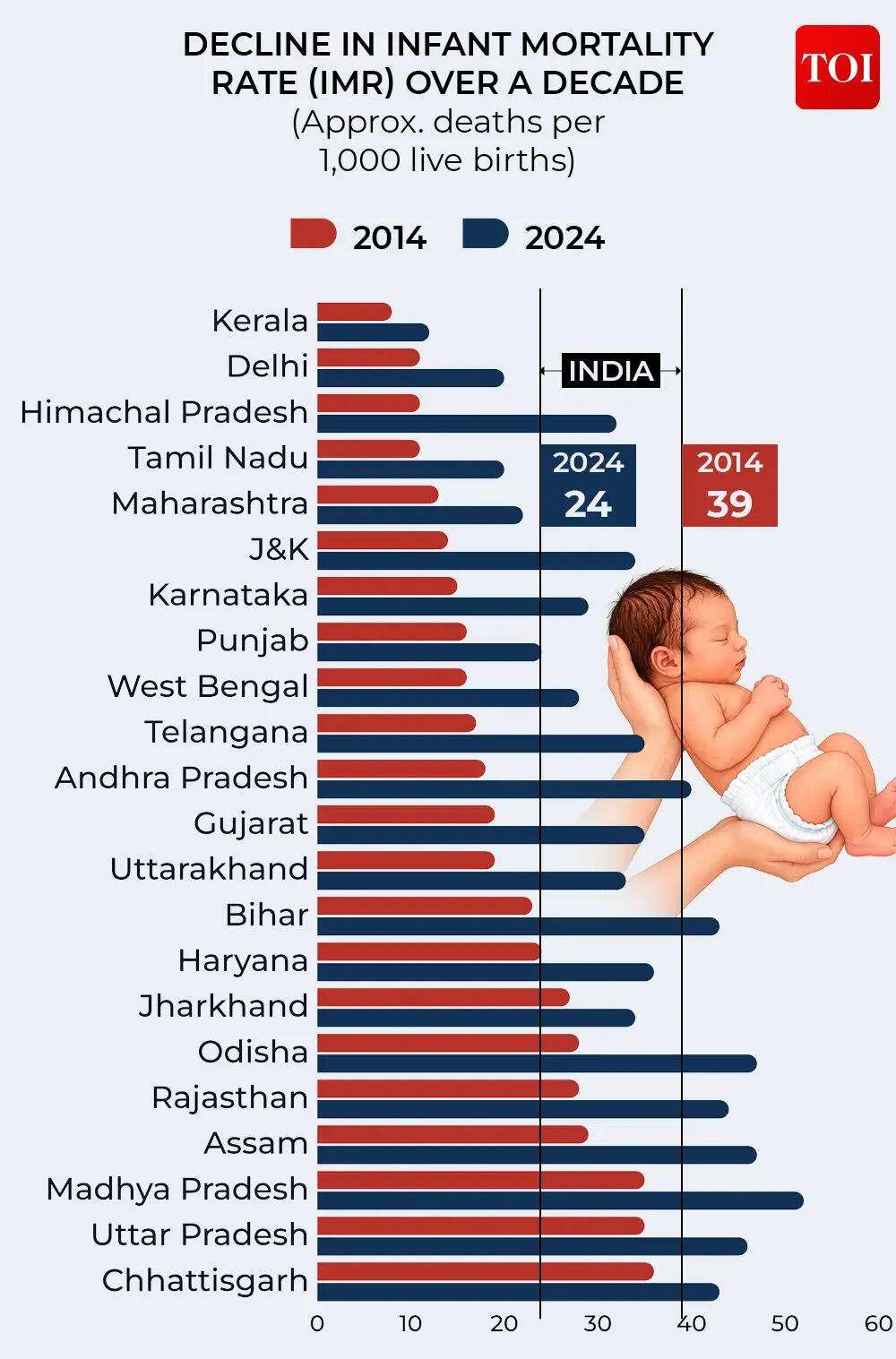
Health experts have long linked institutional deliveries with improved newborn survival, and the national decline in infant mortality appears to reflect that trend. Rural India registered a slightly higher reduction in IMR than urban India, with rural IMR declining by 36% compared to 35% in urban areas.India’s IMR has fallen by 37.4% between 2012-14 and 2022-24, a faster pace than the 33.2% decline recorded between 2002-04 and 2012-14.Yet the report also suggests that institutional deliveries alone cannot guarantee lower infant mortality.Chhattisgarh remains the worst performerChhattisgarh recorded the highest IMR in the country at 36 deaths per 1,000 live births in 2024.The state’s experience highlights the limitations of relying solely on institutional deliveries as a measure of healthcare success. Institutional deliveries in Chhattisgarh increased dramatically from over 77% in 2019 to 97% in 2024. Despite this, the state registered the weakest improvement in infant mortality.
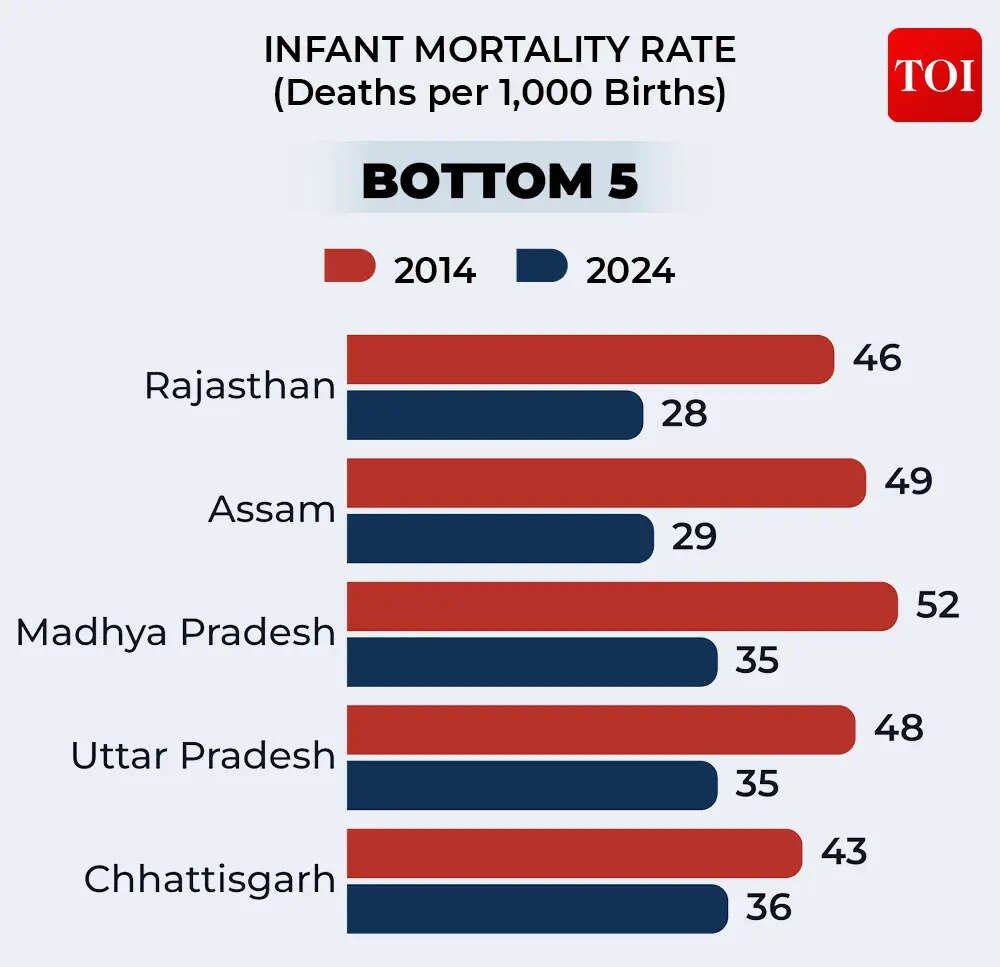
Its IMR declined from 45 to 37 between 2012-14 and 2022-24, representing a reduction of just 18.3%, the lowest among states.Chhattisgarh was followed by Uttar Pradesh and Madhya Pradesh, both recording an IMR of 35.The report also found that Madhya Pradesh and Chhattisgarh recorded the highest neonatal mortality rate (NMR) among larger states and Union Territories at 26 deaths per 1,000 live births, followed closely by Uttar Pradesh at 25.Kerala, Goa and Sikkim lead the countryAt the other end of the spectrum, Kerala continued to set the benchmark for infant survival.Kerala recorded an IMR of just 8 deaths per 1,000 live births and also reported the lowest neonatal mortality rate among larger states at 6.
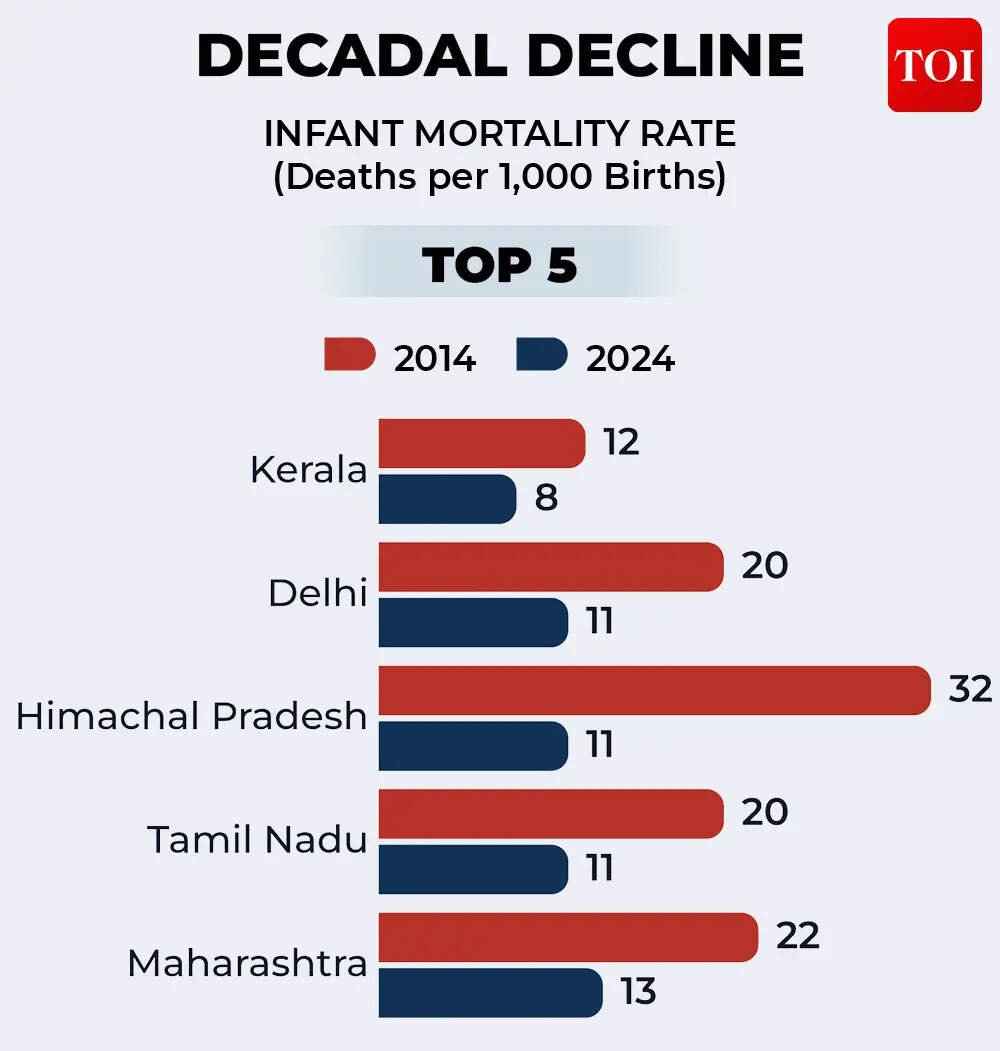
Among all states, Goa and Sikkim performed even better, recording the country’s lowest IMR at 7 deaths per 1,000 live births.Goa’s achievement is particularly notable as the state improved from an IMR of 10.7 in 2023 to 7 in 2024. Rural Goa reported an IMR of 5 compared to 8 in urban areas, reversing the national trend where rural mortality remains higher than urban mortality.The figures indicate strong maternal and child healthcare systems and effective healthcare delivery even in villages.Southern states continue strong performanceSeveral southern states remained among India’s strongest performers on child health indicators.Tamil Nadu recorded an IMR of 11, matching Delhi among the best-performing larger regions.Telangana reported an IMR of 17, significantly below the national average of 24 and ranking fifth among major states.The state reduced its IMR from 35 in 2014 to 17 in 2024. Rural Telangana recorded an IMR of 19, compared to 14 in urban areas.
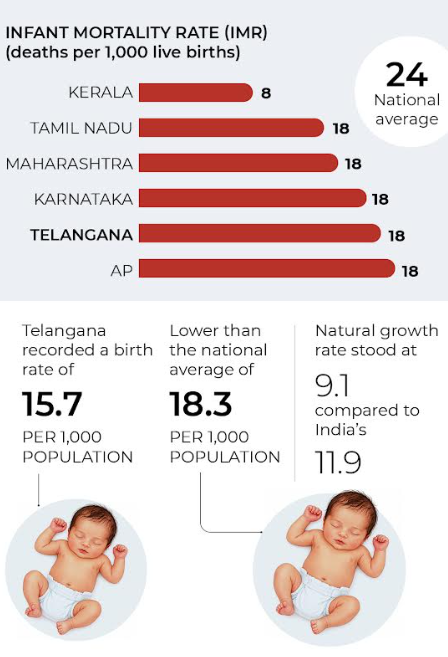
According to health department officials, improvements were supported by regular antenatal care, institutional deliveries, early screening of high-risk pregnancies, the Aarogya Laxmi nutrition programme and Amma Vodi transport services for pregnant women.Andhra Pradesh also recorded continued progress, reducing its IMR from 25 in 2019 to 18 in 2024.The state’s neonatal mortality rate stood at 14, while the under-five mortality rate was 22. However, disparities remained between rural and urban areas. Rural Andhra Pradesh reported an IMR of 20 compared to 13 in urban centres.The report also noted Andhra Pradesh’s declining fertility rate of 1.4, lower than the national average of 1.9, indicating slower population growth and an ageing population in the future.Karnataka sees slight reversal after a decadeKarnataka, which had consistently reduced infant mortality for a decade, registered a marginal increase in 2024.The state’s IMR rose from 14 in 2023 to 15 in 2024 after declining by 55% between 2013 and 2023.Health officials stressed that the increase should not be viewed as a reversal of the broader trend, noting that fluctuations become more common as mortality levels approach single digits.The rural-urban gap remained visible, with urban Karnataka recording an IMR of 11 and rural Karnataka reporting 17.The state also continued to record a birth rate below the national average, reflecting changing lifestyles, delayed marriages and smaller family preferences.Eastern and northeastern states show mixed trendsOdisha recorded one of the most significant long-term improvements.Its IMR declined from 49 deaths per 1,000 live births in 2014 to 28 in 2024, a reduction of 21 points over a decade.Institutional deliveries in Odisha rose from around 72% in 2014 to more than 97% today. However, the state’s IMR remains above the national average.The report also highlighted a rural-urban divide, with rural Odisha recording an IMR of 30 compared to 21 in urban areas. Female infant mortality remained slightly higher than male infant mortality.Tripura emerged as one of the country’s success stories, achieving its lowest-ever IMR of 12 in 2024, improving from 15 in 2023.The state also reported a birth rate of 15 per 1,000 population and a death rate of 5.9 per 1,000 population, both better than national averages.Maharashtra and Punjab record gainsMaharashtra continued its long-term improvement in child survival.According to the Economic Survey of Maharashtra 2025-26, the state’s IMR declined to 14 deaths per 1,000 live births in 2023, substantially below the national average.The neonatal mortality rate stood at 11, while the under-five mortality rate was 16.The survey identified a persistent rural-urban divide, with rural Maharashtra recording an IMR of 17 compared to 10 in urban areas.Punjab also outperformed the national average across multiple indicators.The state reported an IMR of 16, a neonatal mortality rate of 11 and an under-five mortality rate of 19.Punjab’s maternal mortality ratio declined to 77 per lakh live births in 2022-24 compared with the national average of 87.At the same time, the state showed signs of rapid population ageing, with people aged 60 and above accounting for 11.5% of the population compared to the national average of 9.7%.Newborn deaths remain the biggest challengeWhile infant mortality continues to decline, the report highlights that most infant deaths occur within the first month of life.Neonatal mortality, defined as deaths within the first 28 days after birth, accounted for nearly 73% of all infant deaths in 2024, up from 67.6% in 2014.India’s overall neonatal mortality rate stood at 18 deaths per 1,000 live births.The data suggests that future reductions in infant mortality will increasingly depend on improving care during pregnancy, childbirth and the first few weeks of life.Persistent gaps despite progressThe SRS report reveals substantial inequalities across geography, gender and access to healthcare.Assam recorded the widest rural-urban difference in infant mortality, with rural IMR at 31 compared to 14 in urban areas.Gender disparities also persisted. Bihar reported one of the largest gaps among major states, with an IMR of 21 for male infants and 25 for female infants. In contrast, Jammu and Kashmir reported higher mortality among male infants, with an IMR of 16 compared to 12 for female infants.The findings suggest that while India has made notable gains in reducing infant deaths, progress remains uneven. States with strong healthcare systems continue to push mortality rates into single digits, while others still face challenges linked to healthcare access, neonatal care, nutrition and rural service delivery.As India enters a new phase of child health improvement, the report indicates that the next battle will be fought not only in delivery rooms, but also in ensuring quality neonatal care, maternal nutrition and equal access to healthcare across every region of the country.