Actor Mandana Karimi has been open about her concern with the ongoing US-Iran conflict. It all started after Iranian Supreme Leader Ayatollah Ali Khamenei was killed in a joint strike by the United States and Israel in March. Born in Iran, Mandana took to her Instagram account to share posts about the war. Last month, she announced her decision to leave India and relocate to Dubai. Since then, she has also been sharing moments from her life after relocating to Dubai, adding that she is learning to live again while continuing to carry Iran in her heart.
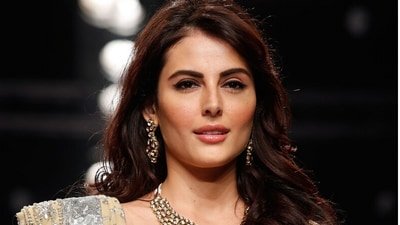
‘I spoke up when it mattered and I will do it again’
In a new video post, Mandana has responded to critics who accused her of flaunting her new lifestyle and of no longer posting about the war. Mandana directly replied to these comments and said, “A lot of messages lately asking why I am not talking about Iran every single day anymore, why I am normalising, and I don’t think people understand the cost… the jobs, the opportunities I lost; the stress, heartbreak of watching my country suffer while I feel completely helpless. I have my family back in Iran. I spoke up when it mattered, and I will do it again. But there is something that I have learnt. Activism is not measured by how much you have suffered publicly.”
She added, “Sometimes fighting means speaking, sometimes fighting means surviving, and sometimes fighting means allowing yourself to heal. Just because you see me posting my workouts and my friends does not mean I have forgotten my people, or Iran. It means I am still here. They did not break me. After everything, I am choosing to live, creating, laughing and moving forward. My love for Iran was never content, my pain and support wasn’t content. Just because it has disappeared from your feed every day, it does not give you the right to judge me.”
In the caption, Mandana penned a note. It read, “To the people accusing me of “normalizing” Iran because I’m posting about my life again: The irony is that the messages of gratitude come from people inside Iran. The attacks come from faceless accounts outside of Iran people whose activism begins and ends with a few posts on social media. For years, I used my platform, my voice, my career, and my safety to speak up. I paid a price for it. I lost opportunities. I lost work. I carried the weight of a nation’s pain publicly while many of you watched from a safe distance.”
She added, “So don’t mistake my healing for silence. Don’t mistake my survival for indifference. Don’t mistake my joy for forgetting. I am not normalizing oppression. I am normalising life after trauma. I am normalising getting up after being broken. I am normalising surviving January, surviving loss, surviving heartbreak, surviving the endless grief that so many of us have carried for years. The strongest thing I can do for myself and for my people is to stay alive, stay visible, stay healthy, and keep moving forward. And before anyone decides to judge me, ask yourself a simple question: What have you actually risked? Because I didn’t just make a few posts. I spoke on national television. I used every interview I had. I used my public platform. I stood with my people when it was costly to do so. I took the backlash. I took the consequences. I took the losses.”
“So if my content bothers you because it contains laughter, work, fashion, travel, healing, or moments of happiness, you’re free to unfollow. But you don’t get to rewrite my story. And you certainly don’t get to question my love for my people. I know exactly what I’ve done. The people who matter know exactly what I’ve done. The rest can keep talking,” she concluded.
About US-Iran war
The latest attacks on Israel have put the fragile ceasefire at risk even as the war in the region reached its 100th day. On Saturday, Iran launched a salvo of missiles at US allies Bahrain and Kuwait after fresh American strikes, drawing a furious response from the Gulf monarchies and further straining a fragile truce. Efforts to turn the truce into a lasting settlement have repeatedly stalled, while the conflict has rattled global markets and increased pressure on US President Donald Trump at home ahead of midterm elections.