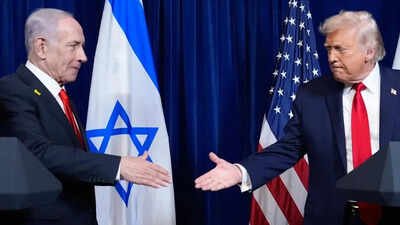
The latest round of fighting between Israel and Iran appears to have eased, but reports suggest tensions between US President Donald Trump and Israeli Prime Minister Benjamin Netanyahu have intensified in recent days.However, Israel’s ambassador to the United States, Yechiel Leiter, has played down claims of a rift, saying the two leaders share a decades-long bond and “sometimes lovers have a spat.”His remarks came after Trump publicly warned Netanyahu against expanding military operations against Iran and reportedly told him that Israel could find itself isolated if it ignored US calls for restraint.Speaking to Fox News, Leiter said he had been present for hundreds of conversations between the two leaders and described their relationship as exceptionally close.“They have a deep friendship that goes back some 40 years, and sometimes lovers have a spat, and sometimes the tension in the room and on the conversation can get a little heated,” Leiter said.
Trump warns Netanyahu
The comments followed a tense period in US-Israel relations after renewed fighting between Israel and Iran threatened to derail Washington’s efforts to secure a broader regional settlement.According to media reports, Trump called Netanyahu and urged him not to retaliate against Iran after Tehran launched missiles at Israel following Israeli strikes in Lebanon.In an interview with Axios, Trump revealed details of the conversation. “I said, ‘Bibi, you better be careful, or you will be on your own very soon,'” Trump said.The US president has repeatedly pushed for de-escalation, insisting that both sides stop “shooting” and expressing hope that “final negotiations” toward peace could proceed.
What may have led to the spat?
While the US and Israel launched military operations against Iran together earlier this year, differences have increasingly surfaced over how the conflict should end.Trump has focused on securing a diplomatic breakthrough with Tehran and easing regional tensions, while Netanyahu has continued to argue that Iran and its allies must face sustained military pressure.The divide became more visible after Israel struck targets in Beirut despite Trump’s public calls for restraint. Iran responded with missile attacks on Israel, prompting further Israeli strikes inside Iran.Although US forces helped track and intercept incoming Iranian missiles, Washington did not participate in the retaliatory strikes.According to reports, Trump later made another call to Netanyahu urging him to abandon plans for a broader offensive. Israeli officials said Netanyahu eventually agreed to pause further action provided Iran also stopped its attacks.In a televised address, Netanyahu said Israel had acted to defend itself and would continue to do so if necessary. “Israel has a full right to self-defence, and we are exercising it as required,” he said.“At the moment, the fire has ceased, because after we struck the terror regime in Tehran, it stopped attacking us. If the terror regime in Iran makes the mistake of attacking us again, we will respond with force,” Netanyahu added.The Israeli leader maintained that Iran and the Iran-backed Hezbollah group remained threats to Israel’s security and said recent military operations had significantly weakened both.Despite the public disagreements, Leiter insisted the alliance between Washington and Jerusalem remains strong. He said Netanyahu had agreed to lower the temperature of military operations at Trump’s request, but added that the US president understood Israel’s security concerns.“For the most part, we’re dealing with a very, very close collaborative effort between the United States and Israel, and there’s tremendous understanding,” Leiter added.