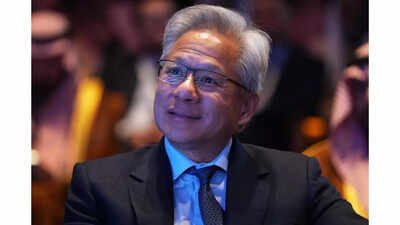
Nvidia CEO Jensen Huang isn’t in favour of the US government taking a stake in artificial intelligence (AI) companies. In a recent interview, the chief executive of the chip giant said he does not fully understand what such a proposal aims to achieve. He argued that Americans already benefit from the success of AI companies through investments, jobs and tax revenues. Huang even argued that the impact of successful AI companies extends beyond the technology sector.“I’m not exactly sure what they’re trying to achieve. I haven’t had a dialogue with them about that. But just remember that these are American companies. Their success benefits the stock price, of which many Americans are investors in. It generates taxes, which helps many Americans. It creates a lot of jobs. Americans have a stake in American companies already, naturally, in a whole lot of different ways,” Huang told AP while discussing government ownership in AI companies. His comments come amid growing discussions in Washington about whether the US government should own shares in major AI companies to distribute the sector’s economic gains more broadly. The idea has been floated by US President Donald Trump and has also received support from some political leaders and technology executives.
Why Nvidia CEO Jensen Huang disagrees with government ownership in AI companies
The Nvidia CEO suggested that the economic benefits generated by AI companies already flow through the broader economy. According to him, growth in the AI sector can support industries such as energy, construction and hardware manufacturing while also creating employment opportunities. His remarks come at a time when companies such as OpenAI and Anthropic are attracting increasing attention from policymakers concerned about the concentration of wealth within the AI industry.While Huang questioned the need for direct government ownership, he emphasised that AI’s benefits could become more widely available as the technology becomes easier to use.
Nvidia CEO Jensen Huang on broader AI adoption : Just go engage it
During the interview, Huang also encouraged broader adoption of artificial intelligence, arguing that the technology can help reduce barriers to accessing advanced computing capabilities.“We need to create new social norms. I would advocate that everybody use AI. Just go engage it,” Huang added.He said AI tools can assist with tasks ranging from website creation and document analysis to scientific research and home renovation planning. According to Huang, these capabilities allow people to perform complex tasks without needing advanced programming skills.At the same time, Huang acknowledged concerns about job displacement and the rapid pace of AI adoption. He argued that society would need to adapt to the technology in the same way it adjusted to previous technological changes.Huang also stressed the importance of balancing AI innovation with national security requirements. While supporting government oversight in certain areas, he said policymakers should clearly define the risks they aim to address before imposing restrictions.“National security should always be the top concern of all technologies. But having said that, you know, you have to be very specific about the risk that you’re concerned about, before setting up policies for export controls,” Huang explained. The Nvidia CEO additionally highlighted energy supply as a major challenge for America’s AI ambitions. He warned that the rapid expansion of AI data centres is increasing electricity demand and placing pressure on existing infrastructure.“The United States is woefully behind in energy production. We just suffocated energy production for too long,” Huang pointed out.According to Huang, expanding energy generation will be essential if the US wants to maintain its position in AI development, chip manufacturing and related infrastructure industries.