Long before streaming platforms, social media feeds and algorithms shaped the way we discovered music, songs found their audience through more personal connections. They travelled through word-of-mouth and a shared love for melodies and the stories behind them. It was in this era that Delhi-based band Parikrama took shape and went on to become one of India’s most popular rock acts, delivering songs such as But It Rained, Open Skies and Tears of the Wizard.
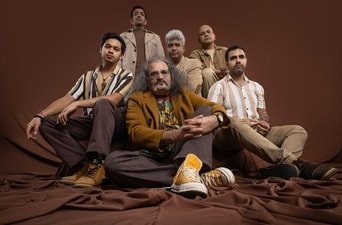
Ahead of World Music Day (June 21), and just days after the band completed 35 years on June 17, we speak to one of its founding members Subir Malik about a journey that began as a four-month passion project at Delhi University’s Kirori Mal College.
FROM CASSETTES TO STREAMING
Having witnessed India’s music industry evolve since the ’90s, Malik believes today’s musicians have access to opportunities that did not exist when Parikrama began its journey.
“Earlier, it was impossible for a song to reach out to anyone. The only way was to find a record company who’d make a CD and sell it. But we didn’t want to do that. So we got hundreds of blank CDs from Nehru Place, made a cover, put our song in it, and sent them off for free to lakhs of students with a message: ‘Go and pirate it as much as you want!’” he shares.
For Malik, the logic was simple. “When you go to watch a movie, you see the trailer for free, right? We gave them the trailer. They liked it, they called us, and that’s how we made our money. We ended up giving out more music to our fans than people who actually tried to sell records.”
A WORLD MUSIC DAY TO REMEMBER
What wins at the end of the day, though, is still music. Recalling a moment that reinforced its ability to bring people together for him, Malik goes back to the early ’90s and one of the first Parikrama and Friends event, a live concert series headlined by the band.
He shares, “It was held at Priya Cinema in Vasant Vihar in 1994. The situation in the country was tense at the time. Since there was no internet, we collected addresses of about a hundred musicians and sent them specially printed Indian letter cards inviting them to be there on World Music Day. And we sang John Lennon’s Give Peace a Chance.”
THE PRICE OF DEMOCRATISATION
Looking at today’s landscape, Malik sees both advantages and challenges. “The pro of the streaming era is that today you don’t need a record label. You can sit at home, make an album on your laptop, record it and put it on YouTube or any platform. A new song can be uploaded in seconds. Any song can be heard in the USA, London, Argentina, or wherever you want.”
The flip side, he says, is the challenge of standing out amid an “oversupply” of music. “Spotify gets about 1 or 1.2 lakh songs a day. The problem is oversupply. When you have so many songs coming out, how do you stand out? How do you work so that your song is heard by a lot of people?” he opines.
‘I’VE NEVER MISSED A PARIKRAMA SHOW’
Malik, who recently underwent surgery for retinal displacement, was present at the band’s June 13 concert in Delhi to mark its 35-year milestone.
“I have never missed a Parikrama show in 35 years. Despite being advised bed rest by the doctors, I thought I had to at least go and be on stage for two songs. I am not allowed to move my head because the retina is still not in place. So I chose the two slowest songs. But yes, I made it,” he shares.