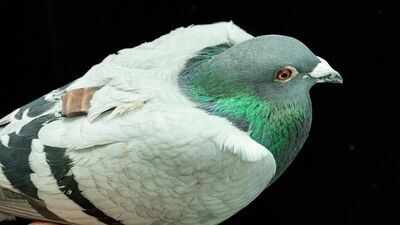
Artificial intelligence (AI) researchers developing medical AI tools have a new inspiration: pigeons. Researchers in the US are reportedly studying pigeons’ visual abilities to help develop AI tools that could improve the early detection of cancer and reduce the number of abnormalities missed during medical scans. The research is being led by Dr Gregory DiGirolamo of the College of the Holy Cross in Worcester, Massachusetts. His work focuses on understanding how radiologists process medical images and how AI can be trained to identify subtle signs of disease that may go unnoticed during routine examinations.Researchers and radiologists can miss abnormalities in some scans despite looking directly at them. Earlier research by DiGirolamo and his colleagues found that when radiologists viewed suspicious lung nodules on CT scans, their eyes often lingered on the area and their pupils widened, even when they later classified the scan as normal. According to a report by Popular Science, the findings suggest that the brain may detect abnormalities at a non-conscious level before that information reaches conscious decision-making.
How pigeons became part of the AI medical tool research
To better understand this non-conscious visual system, DiGirolamo and his team turned to pigeons. The researchers trained six pigeons to watch short CT scan videos and determine whether they contained lung nodules, growths that can sometimes indicate lung cancer.During the training process, some pigeons received food rewards for correctly identifying scans with nodules, while others were rewarded for correctly recognising normal scans. Over time, the birds learned to distinguish between the two and were able to apply that knowledge to scans they had not previously seen.The study also found that pigeons could recognise other lung abnormalities, including emphysema and ground-glass nodules, despite not being specifically trained to identify them. Ground-glass nodules can be associated with early-stage lung cancer.To the human eye, emphysema and ground-glass nodules “look totally different from a lung nodule,” DiGirolamo told Popular Science. However, the pigeons’ performance suggested that the conditions may share a visual pattern detectable by the visual system.DiGirolamo hopes to use these insights to build AI systems that can assist doctors in identifying abnormalities that might otherwise be overlooked.In this case, the suggested process involves obtaining eye-tracking and physiological data from radiologists as they analyse medical images. This information is further used by AI systems to detect minute signs of anomalies, even if the radiologist concludes that the images are normal.DiGirolamo said the technology is intended to support rather than replace medical professionals. The goal is to create AI tools that learn from radiologists’ visual responses and help bridge the gap between conscious and non-conscious perception during image analysis.The researcher believes similar methods could eventually be applied in other fields, including cardiology, art authentication and security screening. However, he noted that his current focus remains on healthcare applications.“Right now, I’m constraining myself purely to medical misses because those for me seem far more practical. But I am hoping to do a little bit of ‘can we tell which Caravaggio are real and which ones are fake?’” DiGirolamo said.