On Tuesday night, the city witnessed a disturbing incident when a 22-year-old was stabbed in a moving local over a small dispute, leading to safety concerns in the mode of transport considered Mumbai’s lifeline
What happened?
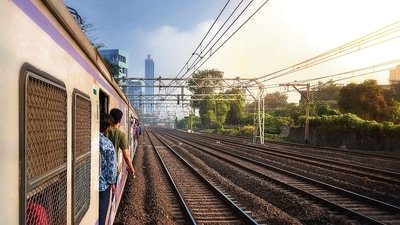
Mayank Lohar, a 22-year-old Virar resident employed at Westside’s Andheri outlet, was travelling in the first-class compartment of a Churchgate-Nalasopara local when he was attacked by a fellow passenger, identified as 30-year-old Roshan Suvarna from Mira-Bhayandar. The dispute arose over whether the coach’s doors should remain open during the downpour. Lohar reportedly wanted them closed to prevent rainwater from splashing inside, while Suvarna insisted they remain open. As Suvarna was getting more aggressive, some fellow commuters tried to reason with him and even advised Lohar to stand one the opposite gate instead. Then, between Goregaon and Malad stations, Suvarna allegedly unzipped his bag, took out a knife and walked towards Lohar. He is accused of stabbing the 22-year-old three to four times in the chest and stomach inside the moving train.As the train arrived at Borivali station, Suvarna fled before the train came to a halt. GRP and RPF personnel reached the compartment after receiving information. Lohar was rushed to the Emergency Medical Room at Borivali station and later shifted to Shatabdi Hospital in Kandivali. Despite treatment, he succumbed to his injuries in the early hours of Wednesday.
The mindset of the city
Dr Arti Shroff, who has been running her independent psychology practice in Mumbai for over a decade says there are multiple factors that are contributing to such erratic behaviour, including climate change, high levels of stress and low level of tolerance. “There is an unprecedented rise in temperature in terms of climate change and clinical research has already shown that a rise in heat is linked to higher prevalence of aggressive behaviours and low tolerance. We are seeing rise rise in intolerance, aggression and fights is because our threshold tolerance is becoming lower. We are used to getting any service in minutes now, so the ability to tolerate any kind of distress or delay in gratification is becoming lower, contributing to aggression and irritability,” she says, travel is a place where the aggression comes out quite predominantly. “You can also refer to all the happenings at the airport when flights have been cancelled. People get very aggressive, jumping on the counter, abusing the stewardess and harassing them. People don’t want to wait in line and get triggered by that.”
Shroff adds that people are so used to living in their bubbles and digital world that their real life interactions have reduced. “People are not really going out as much as they used to and interacting with other people other than their own kind. So, places like airports and trains is where they are seeing all kinds of people and that tolerance towards that has become lower.”
She adds, “We are viewing a lot of aggressive content online without any kind of censorship or any kind of restriction or limitation. And people in urban cities are way more stressed than a person in a tier 2 or 3 city because of the financial pressure and they’re already on edge. That is manufacturing in lifestyle disorders, mental health issues, and other kinds of illnesses, and people don’t have the adequate coping mechanisms to be able to deal with the stress.”
Ask her for a solution and she says that while therapy is a choice, people need to incorporate lifestyle changes too. “Your overall quality of life has reduced to become so stressful and you need to address this burnout by engaging in some kind of self-care. Either you take up some kind of breathing or meditation, or cultivate some hobby or engage in some kind of holistic strategy. People should have enough insight to understand that the high levels of stress are resulting in behaviours and actions, which may be problematic to them and others. So they need to recognise and make lifestyle changes.”
Commuters feeling scared
“As someone who travels daily from Lower Parel to Andheri on Mumbai locals, we all face overcrowding, rain, delays, and arguments over doors, but no disagreement is worth taking a life. We need better crowd management, stricter security, and, above all, a little more humanity,” says 32-year-old software engineer Gaurav Pandey.
Arti Joshi, a 21-year-old student, says, “The fact that such a small interaction could turn so violent raises serious concerns about commuter safety. As a regular local train traveller, this incident has left me feeling anxious and fearful while commuting. It highlights the need for stronger security measures, especially during late-night travel, and more vigilance in train compartments.”
Brand and Marketing Manager, and content creator, 22-year-old Hitika Bajaria shares, “I travel by Mumbai local every day. I can’t choose another mode of transport or stop going to work. We think that if we’re careful, we’ll be safe. But after this, I’m not sure about that. It feels like I’m gambling with my safety every single day, and there’s nothing I can do about it.”