
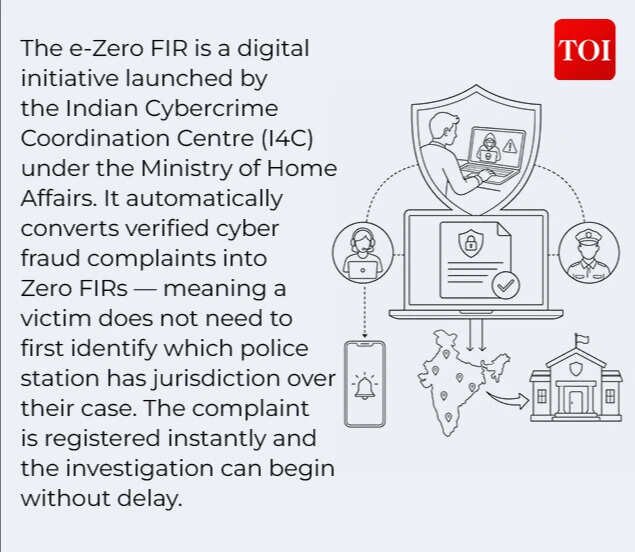
NEW DELHI: At a recent PRAGATI (Pro-Active Governance And Timely Implementation) meeting attended by chief secretaries from all states, Prime Minister Narendra Modi directed officials to fast-track the rollout of e-Zero FIRs. The system automatically converts verified cyber-fraud complaints into FIRs so victims don’t have to run from one police station to another — a major problem for cybercrime victims.Noting that only nine states have the system in place, the PM asked PMO officials to take it up with every chief secretary and DGP.The e-Zero FIR is a digital initiative by the Indian Cybercrime Coordination Centre that allows victims to bypass jurisdictional barriers and helps investigators act immediately, before it is too late to catch the fraudsters.The urgency behind Modi’s push is easy to understand: cyber fraud has grown into one of the most organised criminal networks in the country. In a major crackdown on cybercrime infrastructure used to facilitate digital arrest scams, the Central Bureau of Investigation, under Operation Chakra-VI, formed 60 special teams and conducted searches at more than 80 locations across 16 states, including Delhi, Maharashtra, Punjab, Gujarat and Tamil Nadu.
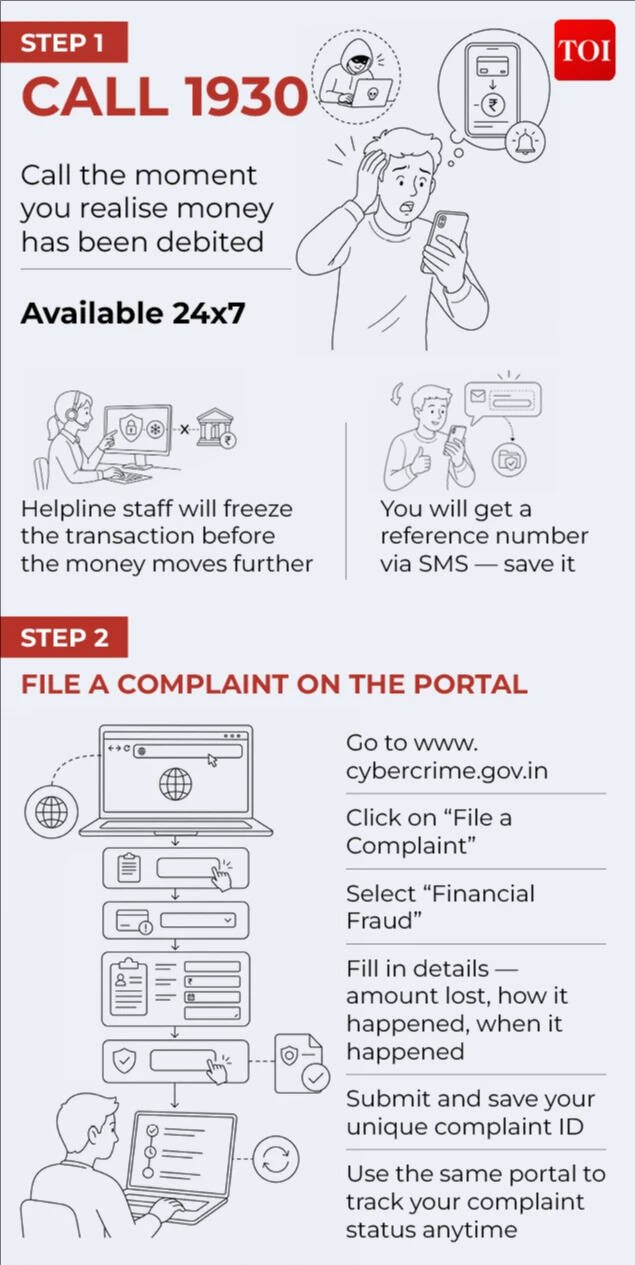
Two people were arrested in Chennai and Kolkata for allegedly creating shell companies and opening mule bank accounts used to launder about Rs 2 crore. The CBI also discovered a fraudulent website with a URL similar to the Supreme Court of India’s official site, which fraudsters allegedly used to deceive victims, according to ANI.The problem isn’t limited to organised networks.In a recent Delhi case, a 40-year-old man named Navneet, a Punjab resident working for a private company, was arrested in connection with an alleged Rs 7.8-crore cyber fraud involving former MP Naresh Gujral. Police say Navneet provided his savings account to scammers, through which Rs 15 lakh of the stolen amount was routed. He claimed he shared his account for a commission — a reminder that cyber-fraud chains often run through ordinary people who become unwitting or willing links.Union Home Minister Amit Shah has also directed agencies to technologically strengthen the national cybercrime helpline 1930 and improve its infrastructure.For ordinary citizens who fall victim to fraud, the first hour after losing money is critical. The faster you act, the better the chances of recovering funds. Here’s what to do.Call the National Cybercrime Helpline ‘1930’ firstThe moment you realise money has been taken from your account, call the National Cyber Crime Helpline at 1930, said Gautam S. Mengle, assistant vice-president at Culsight.“The personnel manning the helpline will take down basic details, which will help kickstart the process of freezing the transaction so it can be reversed,” he said.After the call, victims receive an acknowledgement with a reference number via SMS, which should be mentioned when filing a detailed complaint on the portal.On whether money can actually be frozen in time, Mengle said yes: “lakhs of rupees are recovered through this process every year. The only requirement is speed. Call the helpline first, because hundreds of people are trying to lodge complaints on the website at any given time and you might not get the same speed there.”How to file a complaint onlineAfter calling, go to the National Cyber Crime Reporting Portal at cybercrime. gov. in, click “File a Complaint” and register with your mobile number. Select “financial fraud” as the complaint type and fill in the details — when it happened, how much was lost, and how the fraud took place. After submitting, you will receive an acknowledgement with a unique complaint ID.If you are not comfortable filing online, you can walk into your nearest police station and lodge a complaint. But Mengle says the 1930 helpline and the portal have yielded more success.
Documents to have readyKeep these ready before you start: your bank statement showing the fraudulent transaction, screenshots of messages or links you received, the UPI transaction ID or reference number if the fraud happened through UPI, your Aadhaar number for identity verification, and the mobile number linked to your bank account.How to track your complaintOnce you’ve filed the complaint, return to cybercrime. gov. in and click “Track Your Complaint.” Enter your acknowledgement number from registration; the site will show the current status and which agency is handling it.On how long it takes for a complaint to reach the police, Mengle said it depends on the case.“In financial cybercrimes, freezing the transaction takes priority, after which the case is transferred to the police station for deeper investigation,” he said.You can also file an FIR at your police station if the amount is large. Mentioning the portal complaint number will help the police take the matter forward faster.The biggest mistake victims makeMengle flagged one common mistake that hurts victims: trying to investigate on their own before approaching authorities.“People still think they need to gather evidence, such as where the suspect mobile number is based or how long the Telegram channel has been active, before approaching the police,” he said. “There needs to be sustained and increased awareness encouraging people to dial 1930 the minute a single rupee is lost.”So the message is simple: do not investigate, do not panic, do not delete messages. Call 1930 immediately.