Delhi woke up to thunder and rain and many breathed a sigh of relief after brutal June heat. The India Meteorological Department (IMD) issued warning as heavy showers, gusty winds, and thunderstorms swept through the city, marking what looks like the tail end of an intense heatwave. This shift from scorching heat to monsoon rain isn’t just a change in the weather app. It’s the kind of transition that puts real stress on your body, and doctors are already seeing it show up in their clinics.
Why your body struggles when the weather flips
Dr. Rajeev Chowdry, Director of Internal Medicine at Yatharth Super Speciality Hospital in Faridabad, explains that this kind of abrupt weather shift makes the body more vulnerable to viral infections. And we’re talking about coughs, sore throats, fever, and general flu-like symptoms are the usual suspects. So if you’ve been sneezing more than usual this week, you’re not imagining it. The rising humidity that comes with monsoon rain also creates ideal conditions for bacteria, viruses, and fungi to thrive, which tends to make existing respiratory issues like asthma, bronchitis, sinusitis, and allergic rhinitis worse than they already are.
Who needs to be extra careful right now
Not everyone faces the same level of risk during this transition. Children, senior citizens, people with weakened immune systems, and those managing chronic health conditions are particularly susceptible to falling ill during this period, according to Dr. Chowdry. And it’s not just about catching a cold. Damp, humid weather can also worsen joint pain and stiffness for people dealing with arthritis, something that often gets overlooked when everyone’s talking about the flu season starting up.
The mosquito problem nobody wants to deal with
Here’s where things get a bit more serious. Heavy rain means water pooling in places it shouldn’t, clogged drains, flowerpots, rooftops, construction sites, and that standing water becomes prime breeding ground for mosquitoes. Dr. Chowdry points out this significantly raises the risk of mosquito-borne illnesses like dengue and malaria, both of which tend to spike across Delhi NCR every monsoon season without fail. Flood water that mixes with sewage or garbage can carry water-borne diseases too, including diarrhea, typhoid, and hepatitis A. So that puddle outside your gate isn’t just an inconvenience, it’s a genuine health hazard.
Feeling drained lately? That’s normal too
If you’ve noticed yourself feeling more tired than usual, getting headaches, or just running low on energy, that’s actually a fairly common response while your body adjusts to the sudden change in temperature and humidity. It’s not always something to panic over, but it is worth paying attention to, especially if it sticks around longer than a few days.
What you can actually do about it
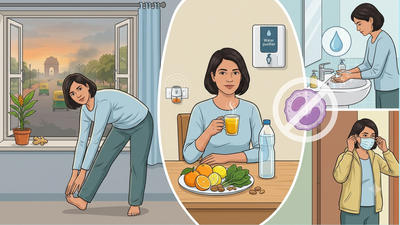
Dr. Chowdry’s advice is refreshingly practical. First, change out of wet clothes as soon as you can, staying damp for long stretches only adds to the stress on your immune system. Drink plenty of fluids, and try to eat a balanced diet with enough fruits, vegetables, and protein to keep your body’s defenses up. Hand hygiene matters more than people think during this season, so wash your hands often, particularly before eating.Water safety is another big one. Stick to clean, filtered water and steer clear of food from vendors or places that don’t look particularly hygienic, since your gut is already dealing with enough stress from the weather shift. Around your home, make it a habit to clear out any standing water, whether that’s in buckets, coolers, or plant saucers, since that’s exactly where mosquitoes lay their eggs. Using insect repellent helps too, and it’s worth avoiding walking through flooded streets when you can help it, since you never know what’s mixed into that water.And if you or someone in your family has asthma, keep the inhaler within reach at all times during this period. With Delhi NCR expected to see rain and thunderstorms continuing through the coming days, this isn’t a one-off precaution. It’s the kind of thing worth building into your routine until the weather settles down properly.