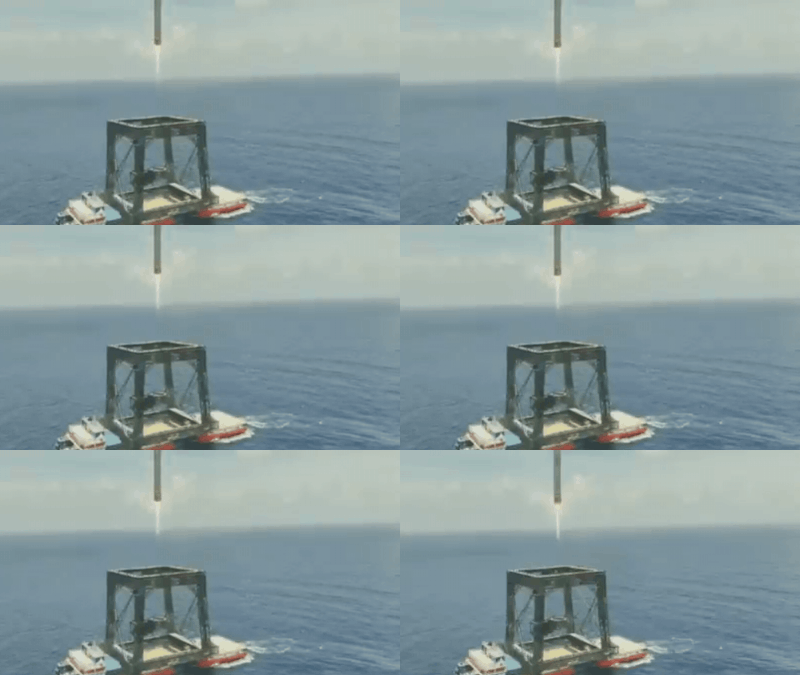
China has successfully tested an experimental sea-based rocket booster recovery system, marking a major step towards developing reusable launch vehicles and narrowing the gap with the United States in reusable rocket technology.The Long March 10B rocket lifted off from the Hainan commercial space launch site in southern China at 12:15 pm local time on Friday. About six minutes after the booster separated from the upper stage, it made a controlled vertical descent and was recovered using a net mounted on an offshore platform, according to state broadcaster CCTV.What we know about Long March 10BThe Long March 10B is part of the Long March 10 rocket family being developed for China’s planned crewed lunar missions before 2030. It is designed for commercial space missions and can carry a payload of at least 16 metric tonnes to low-Earth orbit.Unlike SpaceX’s Falcon 9, which lands autonomously on drone ships or landing pads using deployable legs, China’s Long March 10B uses “landing hooks” to catch a net suspended on a sea platform.SpaceX achieved its first successful Falcon 9 booster landing after an orbital mission in December 2015, while Blue Origin’s New Glenn completed its first successful landing in November 2025. Today, Falcon 9 rockets fly around 150 missions annually, with boosters being reused multiple times.Boost for China’s commercial space ambitionsChina has spent nearly a decade developing reusable rocket technologies through a series of low-altitude hover tests and orbital booster recovery experiments. A successful reusable launch system is expected to lower launch costs and support the country’s rapidly expanding commercial satellite network.Private Chinese aerospace firms are also accelerating efforts to develop reusable rockets, supported by relaxed IPO regulations aimed at helping companies raise capital. However, previous recovery attempts by LandSpace and the China Aerospace Science and Technology Corporation failed to complete the final landing stage.