Mumbai: Once is a mistake, twice a pattern. To avoid being habituated to losses, Indian cricket would want to examine threadbare how a world beating T20 side suddenly plunged into disarray. India’s twin series defeats, in Ireland and England – 6 losses, 1 no result – will soon be under BCCI review.
If one goes by precedents, there won’t be any forensic examination. BCCI secretary Devajit Saikia recently called it a “bad phase”, expressing hope that the team “will be back in good form” in the ODI series (starts Tuesday). Only that the T20 and ODI squads are diametrically opposite and cater to formats that have separated from each other with time.
If cricket is on the menu, the national selectors and head coach Gautam Gambhir may soon have to decide if the gung-ho approach that won them the 2026 T20 World Cup at home requires to be tweaked with the next mega event to be played in Australia-New Zealand.
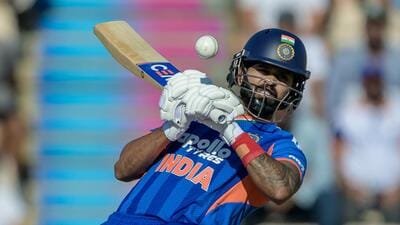
During the five-match England series that India lost 0-4, the short ball led to an Indian wicket every 11 balls – 14 wickets fell for a batting average of 17. Such results point to the ineptitude of a batting group that was accustomed to playing aggressively on truer pitches and smaller boundaries. Against a barrage of short balls dished out by Jofra Archer and Josh Tongue, they had no answers. Only skipper Shreyas Iyer looked accomplished. Tilak Varma, belatedly in the final T20I, showed signs that he had the game, provided he was given a consistent run at No.5.
Samson-Sooryavanshi shuffle
By now, Sanju Samson and Vaibhav Sooryavanshi would both feel they are on trial. Whether this situation could have been avoided is for the selectors and head coach to reflect upon. “Initial conversations were for Sanju to get at least the first two matches in England. What prompted a change after the first match is not known,” said an Indian team source. Gambhir later suggested that the decision to drop Samson was on the basis of “form”, and left the door open for him to return. Samson returned for the final match, replacing Sooryavanshi. He finished with 28 runs in two matches while Sooryavanshi managed 42 runs in 3 matches.
To have a precocious 15-year-old talent is one thing, to nurture him to ensure continued excellence calls for far greater planning than what was on view in England.
Iyer’s starting trouble
Shreyas Iyer (218 runs, avg 54, SR 156) the batter at No.4 was a definite upgrade on the axed Suryakumar Yadav, who had been poor for over a year in international cricket. As captain though, Iyer must take the blame, being part of the team management. Asked to point out reasons for the defeat, he spoke about the failure to “adapt” as conditions differed over the tour. If Iyer was less pro-active starting out as captain, the honeymoon days are truly over.
In the field, India were poor, frequently dropping key catches and failing to effect direct hits. Shivam Dube dropping Harry Brook early in his innings of 95* in Saturday’s final T20I effectively cost them the match.
The absence of a Plan B without all-rounders Hardik Pandya and Nitish Reddy was glaring. It didn’t help that Dube was below par with bat and ball. While T20 wisdom suggests prioritising batting depth, the feeble contributions of other allrounders (Washington Sundar, Suryansh Shedge) never prompted the think tank to explore the option of playing an extra pacer in any of the matches.
To make matters worse, the returns of the spinners got progressively worse. India began by playing three spinners and ended the series with only one in the eleven. Between Axar Patel, Varun Chakravarthy, Ravi Bishnoi and Sundar, the spinners registered the worst average (102) and economy (11.8) in a T20I series, managing only three wickets between them. In contrast, England’s Adil Rashid, Will Jacks and Liam Dawson shared 11 wickets.
After the upcoming series in Zimbabwe, other than a 5-match series in New Zealand, there are a clump of relatively easy matches at home against Afghanistan, West Indies and Sri Lanka.
India would do well to plan with one eye on the big picture. Iyer did speak of building up to a World Cup in Australia. Still searching for his first win, to last the course he would be well advised not to get ahead of himself. The format is too fickle as his predecessor found out.