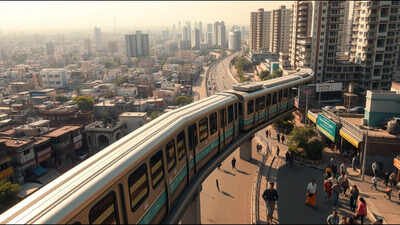
In India’s biggest cities, metro connectivity is fast becoming one of the biggest drivers of property prices.Picture two identical apartments, same size, same amenities, same builder. One sits a five-minute walk from a metro station. The other is a 20-minute auto ride from the nearest one. Which do you think costs more today? A decade ago, the answer might have depended on the neighbourhood’s postal address. Today, it almost always comes down to one thing: how many minutes it takes to get to work.This shift is playing out vividly in Mumbai, and it holds lessons for any city adding metro connectivity.
From ‘which locality’ to ‘metro station distance’
Mumbai’s property market is undergoing what consultants call a move toward “connectivity-adjusted value.” Buyers once paid a premium simply for an address in South Mumbai or the Island City. Now, the first question is often: how long does it take to reach the office, the airport, or Bandra-Kurla Complex (BKC)?The city’s expanding Metro network, including operational and upcoming corridors like Line 3 and Line 7, is a major driver of this change. These lines are creating entirely new residential and commercial micro-markets in areas that were once considered peripheral. Combined with other infrastructure upgrades, they’ve cut peak-hour travel times by as much as 60-70 minutes on some routes.The ripple effects go beyond housing. Central Mumbai is expected to see nearly 5 million square feet of new Grade-A office development, supported directly by Metro Line 3 and improved connectivity to BKC. Planners anticipate these transit-linked hubs will attract Global Capability Centres (GCCs) and financial institutions, which in turn generate fresh demand for nearby housing.
Why metro access moves prices: The Gurgaon story
Mumbai isn’t the first city to see this pattern. Gurgaon offers a textbook example. A few decades ago, it was a quiet suburb. As the IT sector grew and metro connectivity expanded, linking Gurgaon to major landmarks across Delhi NCR, the city transformed into a real estate hotspot. Flats began selling out quickly as residents gained smoother access to workplaces, public utilities, and social infrastructure.The underlying logic is simple: infrastructure development and real estate growth are directly linked. When connectivity improves, property values tend to appreciate. When a market stagnates, infrastructure investment often slows too, the relationship runs both ways.
What this means for buyers and investors
The Mumbai and Gurgaon examples point to a broader principle worth remembering:Commute time is becoming a measurable metric, not a vague impression — buyers increasingly compare neighbourhoods on hard numbers like minutes to the airport or business district.Upcoming metro lines can signal opportunity. Areas with planned but not-yet-operational stations often carry lower prices before demand catches up.Legacy prestige isn’t guaranteed to hold. Even established premium neighbourhoods face softer price growth if they lack strong metro or road connectivity compared to newer corridors.Redevelopment near transit hubs is becoming a key supply source, especially in cities with limited vacant land, offering modernised housing without sacrificing location.The bigger takeaway: as cities grow, the map of “prime real estate” is being redrawn, not by tradition, but by transit. For today’s buyers and investors, understanding where the next metro line is headed may be just as important as knowing where the next big landmark stands.