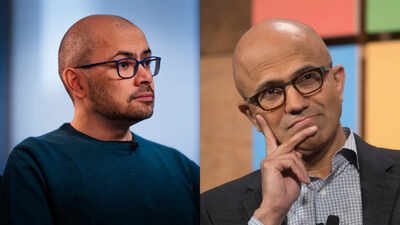
Demis Hassabis has spent his career building AI. On Tuesday, the Google DeepMind CEO argued it’s time someone started policing it—and that the United States should hold the badge. In a manifesto titled “A Framework for Frontier AI and the Dawning of a New Age,” the Nobel laureate laid out his most concrete regulatory pitch yet: a new standards body empowered to test the world’s most advanced models before they ship, and, if the risk demanded it, to coordinate an industry-wide slowdown.Then came the endorsement that mattered. Microsoft CEO Satya Nadella called it “an important piece” and said the field needs more of this kind of thinking. His framing was the sharpest of the bunch—the goal, he wrote, is a frontier ecosystem that promotes innovation and choice “while avoiding any one model drop that breaks the world.” Coming from the boss of OpenAI’s biggest backer, that’s not idle applause. It’s a signal that the industry’s heaviest players are converging on the same idea.
Demis Hassabis AI regulation plan: a watchdog modelled on FINRA
Hassabis is specific about the shape of the thing. A conventional government agency, he argues, “would not be able to move fast enough, or have the right resources.” So instead he wants a public-private body modelled on the Financial Industry Regulatory Authority—the self-regulator that oversees US brokers and markets. Fund it largely through industry, staff it with independent technical experts and open-source representatives, and keep it answerable to the federal government.The mechanics are elegant, which Hassabis knows. A model gets tagged “frontier-class” once it clears certain benchmark thresholds, and its maker becomes a “frontier lab” carrying extra responsibilities. That neatly sidesteps the endless fight over whether academic or open-source systems should be regulated—capability is the only thing that counts, not who built it or whether the code is public. Labs would share models with the body up to 30 days before release, voluntarily at first, before the review calcifies into a hard requirement for the US market.
Satya Nadella backs Hassabis as AI CEOs line up behind the pitch
Nadella wasn’t the only name in the comments. OpenAI’s Sam Altman called it “a thoughtful proposal.” DeepMind’s Mustafa Suleyman offered full support. Sundar Pichai, Hassabis’s own boss at Google, said simply: “Well said Demis!” For a field this fractious—Apple is suing OpenAI, Anthropic is suing the Pentagon—that’s a rare moment of alignment.It helps that Hassabis has done the quiet legwork. According to Axios, he’s spent months briefing the Trump administration, rival labs, and European officials, and wants the body running before year’s end. His read on the White House: the noises have been “very positive.”
Why the AI safety framework arrives now, not later
The pitch didn’t come out of nowhere. Last month Washington abruptly hit Anthropic’s Fable and Mythos models with export controls over cybersecurity fears, lifting them only on June 30. OpenAI staggered its GPT-5.6 Sol release at the government’s request. Both episodes exposed how improvised the current process is—ad hoc reviews critics panned for thin expertise and murky decisions.There’s a harder edge underneath the optimism. Open models from China’s DeepSeek and Z. ai are narrowing the gap with US frontier systems, and access to American technology is the leverage that makes any US-led standard stick. Hassabis knows execution is where these ideas die. “No proposal would be immune to being executed poorly,” he admits. But his read on the window is blunt: “Time is short, the hour is late… this is the time.“