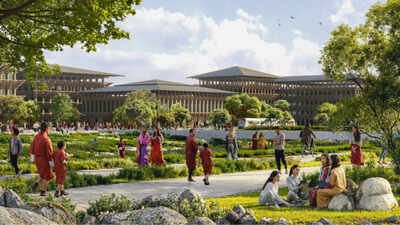
Bhutan has long been the soft, poetic rebuke to a world defined by GDP figures and glitzy ‘smart’ development models.For decades it has marketed itself — and, more importantly, governed itself — around Gross National Happiness (GNH), a state philosophy that values well‑being, cultural preservation, environmental stewardship, and good governance over raw economic output.Yet beneath the postcard façade, Bhutan confronts a wrenching reality: its youth are leaving in unprecedented numbers.Despite its global branding as the “world’s happiest country”, mounting demographic, economic, and social stresses are pushing the nation’s young people to look beyond its Himalayan borders. The country that measures success through happiness faces a paradox — how do you keep a generation content enough to stay when opportunities, mobility, and aspirations pull them outward?To battle the crisis, the country’s policymakers and thinkers are rolling out an ambitious concept that is typically Bhutanese: Gelephu Mindfulness City, a high-tech, culturally anchored urban experiment intended to marry economic opportunity with ingrained spiritual and environmental values.This is how a nation built on contentment is trying to stop a brain drain by reinventing what “success” looks like.But before we take a look at the solution, let’s decode the crisis facing Bhutan.
The ‘happiness’ factor
Bhutan’s GNH Index is a unique way the country measures its people’s overall well-being instead of just economic growth. Unlike most nations that focus on GDP, Bhutan believes true progress includes mental, social, and environmental health.The GNH Index is built on nine key areas of life: psychological well-being, health, education, time use, cultural diversity, good governance, community vitality, ecological diversity, and living standards. Every few years, the government conducts nationwide surveys asking citizens about these aspects, such as their life satisfaction, sleep, work balance, family ties, and environmental values.People are grouped as deeply happy, extensively happy, narrowly happy, or unhappy, depending on how many indicators they fulfill.The GNH, however, is often misread as proof that the country is the “happiest on earth”, but that headline masks a more complicated reality.While GNH reflects Bhutan’s unique philosophy of prioritising well-being over GDP, it does not mean citizens are universally content or free from hardship.In global happiness rankings, such as the World Happiness Report, Bhutan typically places around the middle — not at the top.
Why the youth are leaving
Bhutan’s population is small — about 800,000 — and even modest outflows can distort social and economic balance.Over the last decade youth unemployment, underemployment, and limited higher-education capacity have driven larger cohorts to India, Australia, and beyond for study and work.Bhutan’s National Statistics Bureau show increasing temporary and permanent emigration among the age group of 18-35.
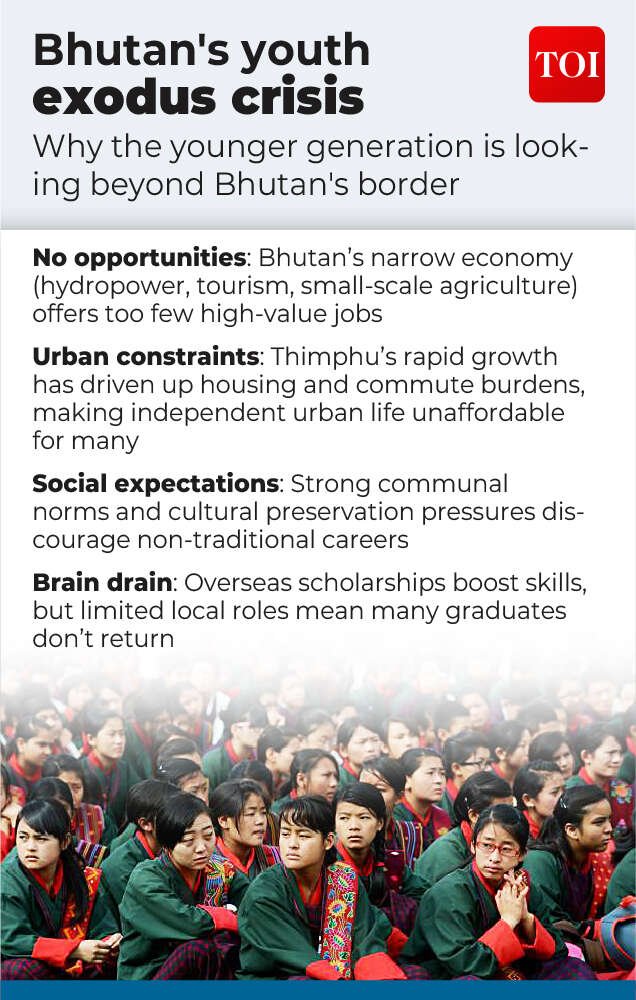
Bhutan’s youth exodus crisis
Bhutanese youth, more connected and aspirational than earlier generations, seek modern career pathways — tech, creative industries, international finance — that the domestic economy struggles to supply.The migration’s social costs are multifold.Families lose young wage-earners and future caregivers; rural communities see accelerated aging and labour shortages; the public sector faces recruitment challenges; and the political compact that has long underpinned Bhutan’s social model — citizens invested in a shared cultural and ecological future — comes under strain.External remittances can prop up household incomes short-term but do not build domestic industrial capacity or broaden opportunity inside Bhutan.More significantly, an exodus of young minds weakens cultural renewal — problematic for a nation that takes continuity of identity seriously.
Why go-to fixes failed
Policymakers tried textbook responses to the exodus crisis: expand technical and vocational training, incentivise entrepreneurship, liberalise small-business credit, and pursue FDIs in tourism and light manufacturing. These moves matter, but they collide with structural constraints — geography, a tiny domestic market, limited physical infrastructure, and a deliberate policy preference to limit mass urbanisation and environmental degradation.Bhutan’s constitutional and policy emphasis on preserving culture and environment restricts large-scale industrialisation, while its hydropower-centric growth model offers limited employment multipliers for the modern service and knowledge economy.A new approach needed three elements simultaneously: meaningful job creation aligned with global demand, preservation and modernisation of cultural values, and place-making that makes staying emotionally and socially attractive.
Mindfulness City
Enter Mindfulness City, Bhutan’s nascent urban vision. No skyscrapers, highways, massive transport infra and soul-crushing concrete mazes.At its core, Mindfulness City reframes “development” as an integrated proposition: economic opportunity, environmental stewardship, social cohesion, and mental wellbeing — so that modern aspirations are met without sacrificing the emotional and ecological frameworks that define Bhutanese identity.It is less a single project and more a networked policy portfolio: special economic zones for creative technology, campuses for experiential and Himalayan studies, climate-resilient housing anchored by communal public spaces designed for contemplative practice, and tightly controlled tourism nodes that pay locals well and preserve authenticity.
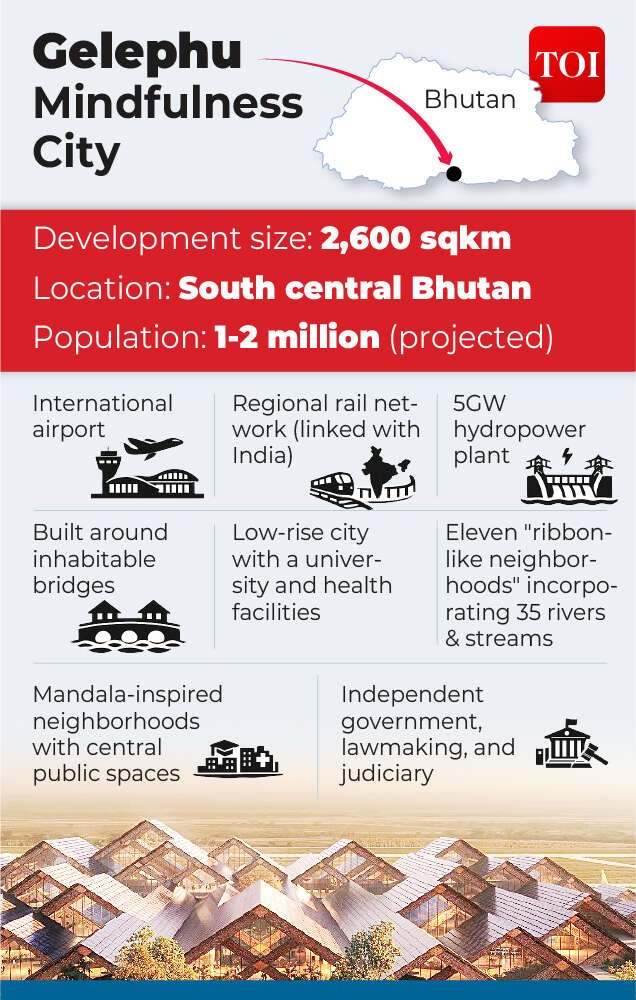
Gelephu Mindfulness City.
Crucially, it anchors economic incentives to GNH-compatible metrics: projects will be evaluated by impact on community well-being, environmental health, and cultural continuity as much as by profit.This balanced approach is designed to answer a key question: can a small nation create a modern urban ecology that satisfies career ambition and cosmopolitan desire, while preserving the psychological and social benefits that defined its national identity?Mindfulness City is not purely hypothetical.Pilots in and around Thimphu and in planned satellite nodes show proof-of-concept: digital nomad visas tied to service provision, a climate data center employing local graduates, and a community-run eco-hospital that blends western medicine with traditional healing practices. Early hires include Bhutanese returnees with engineering and data-science backgrounds working on trans-Himalayan climate modeling—roles that didn’t exist a decade ago in Bhutan.These pilots have produced encouraging metrics: a decline in short-term out-migration from participating districts, higher local retention of graduates in those sectors, and nascent startup formation with Bhutanese founders. Yet the scale is small, and skepticism remains about whether these pilot wins can scale across diverse geographies and social strata.
Why the project matters for India
Bhutan’s choices don’t exist in a vacuum. The kingdom sits between India and China, with New Delhi being a dominant security and economic partner.For New Delhi, Bhutan is not just a friendly neighbour; it is a strategic buffer, a hydrological partner, and one of India’s closest and most trusted relationships in the Himalayas. That means any major Bhutanese development project, even one framed as cultural or urban renewal, inevitably carries geopolitical weight.
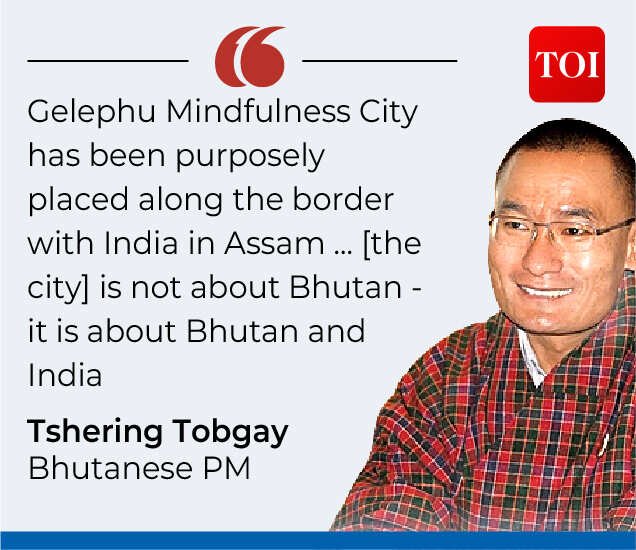
Bhutan PM Tshering Togbay
For decades, India has been engaged in Bhutan’s infrastructure and education linkages, often in a manner that preserves Thimpu’s policy autonomy.This cooperation has extended to Bhutan’s ambitious Mindfulness City, which is coming up on the border of Assam’s Chirang district.Besides an international airport, the city will also be linked via railway with India.During his trip to Bhutan in November last year, PM Narendra Modi announced the decision to establish an Immigration Check Post at Assam’s Hatisar to facilitate easy movement of investors and visitors to Gelephu.India and Bhutan also signed a Memorandum of Understanding on the establishment of two cross-border rail links — Kokrajhar (Assam)–Gelephu (Bhutan) and Banarhat (West Bengal)–Samtse (Bhutan) — to be built at a cost of ₹4,033 crore. The Kokrajhar–Gelephu line will span 69km, while Banarhat–Samtse will cover 20km.The project was virtually inaugurated by PM Modi on March 13 this year.Speaking at a programme in Thimphu marking the 70th birthday of Bhutan’s fourth King Jigme Singye Wangchuck, PM Modi said the project would deepen economic and infrastructural cooperation between the two nations.
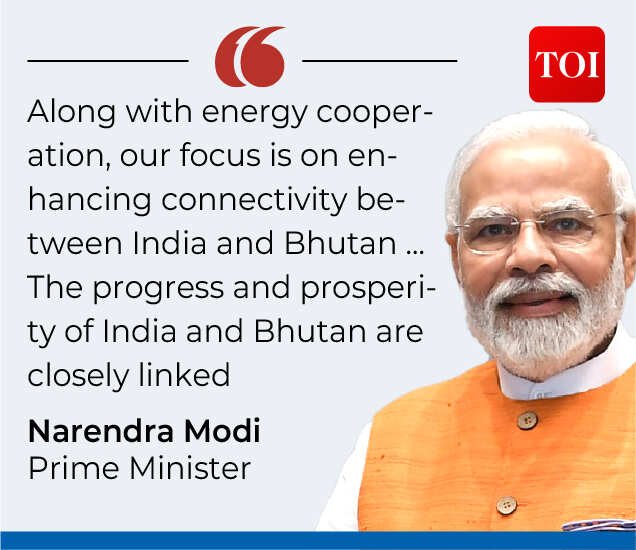
PM Modi on Gelephu
“Along with energy cooperation, our focus is on enhancing connectivity between India and Bhutan because connectivity creates opportunity and opportunity creates prosperity,” he said, adding: “The progress and prosperity of India and Bhutan are closely linked.”That is why Mindfulness City matters beyond architecture or branding.If it succeeds, it could slow youth migration, expand domestic opportunity, and reduce the pressure for Bhutanese professionals to seek futures elsewhere.For India, that is important because large-scale outmigration from Bhutan would not just weaken Bhutanese society; it could also increase the pull of India as a labour, education, and transit destination, while making Bhutan more vulnerable to external influence.A stronger Bhutan is easier for India to work with, and far less likely to become a geopolitical opening for China or other outside actors.
The big picture
Bhutan’s youth exodus is a wake-up call for any culture that assumes spiritual values alone can anchor modern generations.But the country’s challenge is not to stop youth from wanting more. That desire is natural, universal and often healthy.The real task is to make a compelling case that “more” need not mean “elsewhere”.Mindfulness City is a plan to make staying an active choice, not a fallback. It is an attempt to prove that modern urban life and spiritual well‑being can coexist — not as a marketing ploy, but as lived reality. It’s a philosophical test — can a society scale well-being as an organising principle for economic modernisation?If this works, Bhutan could take its global moral project — happiness measured against wellbeing — and show how to operationalise it where it matters most: in the daily decisions of its people. And the world will get a new template of development where the calculus of migration shifts from “where do I earn the most” to “where do I live my fullest life?”.