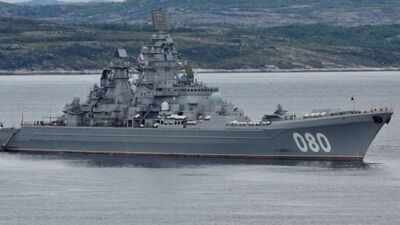
Russia’s nuclear-powered battlecruiser Admiral Nakhimov has returned to its home port after completing another round of sea trials, moving a step closer to rejoining the Russian Navy following years of extensive modernisation.The warship returned to Severomorsk, the headquarters of Russia’s Northern Fleet on the Kola Peninsula, after trials that reportedly assessed its upgraded weapons, sensors, propulsion systems and combat management equipment following a major overhaul.Originally commissioned into the Soviet Navy in 1988, Admiral Nakhimov was withdrawn from active service in the late 1990s before entering an extensive modernisation programme at the Sevmash Shipyard in 2014-15. The upgrade replaced much of its Soviet-era combat systems, sensors and weaponry, and the vessel is now expected to rejoin the Russian Navy after completing the remaining acceptance process.According to publicly available Russian defence information, the battlecruiser has been equipped to carry a new generation of precision-guided weapons, including the 3M22 Zircon hypersonic missile and Kalibr land-attack cruise missiles.The vessel has also received upgraded air defence systems, including Fort-M and Pantsir-M, along with Paket-NK anti-submarine and anti-torpedo weapons.Reports indicate the ship can carry 80 universal vertical launch cells for strike missiles and 96 long-range surface-to-air missile launchers, making it one of the most heavily armed surface combatants in service.With a full-load displacement of around 28,000 tonnes and powered by two KN-3 nuclear reactors, Admiral Nakhimov is the world’s largest nuclear-powered surface combatant.Severomorsk, located on Russia’s Kola Peninsula along the Barents Sea, serves as the headquarters of the Russian Northern Fleet and is the country’s principal naval base for operations in the Arctic and North Atlantic. The port hosts many of Russia’s nuclear-powered submarines and major surface warships, making it a key hub for Moscow’s maritime strategy and military presence in the High North.The return of Admiral Nakhimov is expected to strengthen Russia’s blue-water naval capabilities. Its twin KN-3 nuclear reactors enable extended deployments without frequent refuelling, allowing the battlecruiser to operate across the Arctic, North Atlantic and other distant maritime regions.