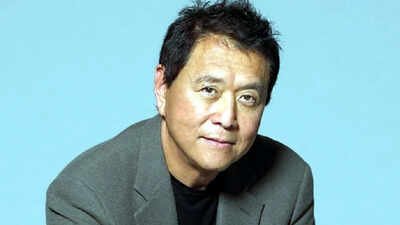
‘Rich Dad Poor Dad’ author Robert Kiyosaki says he is $1.2 billion in debt, but most of that borrowing is tied to a real-estate portfolio he owns with partners, according to reports.Kiyosaki, who has long advocated using debt to build wealth, has repeatedly cited the $1.2 billion figure while describing borrowing as a tool for acquiring income-generating assets.“So, I’m a billion two in debt,” Kiyosaki said on the “Get Rich Education” podcast, as quoted by NY Post. He cautioned that people should not copy his approach without understanding it. “If you’re going to learn to use debt, you’d better take some education.”The figure, however, does not mean Kiyosaki personally owes $1.2 billion. His former wife and business partner Kim Kiyosaki told Vanity Fair that the debt is linked to a portfolio of about 1,500 apartment units owned with partners.“We have a lot of apartment houses with our partners,” she said, adding that the borrowing is attached to the properties and that Kiyosaki’s personal share is relatively small.Vanity Fair estimated that his portion could be around $30 million to $60 million if his claim of earning roughly $3 million a year is accurate.Kiyosaki’s strategy centres on using rising property values to unlock more borrowing. As the value of his real-estate holdings increases, he can borrow against the additional equity without selling the properties. The borrowed funds can then be used to acquire more assets or provide liquidity.The approach also relies on separating investments through limited liability companies, or LLCs. Kiyosaki has described these structures as “firewalls” designed to prevent problems with one investment from automatically affecting others.“If it all comes to hell, you can talk to my attorney,” he told Vanity Fair. “Firewalls – that’s the way the rich play the game.”Real-estate investor and tax expert David A. Perez described the approach as “a great strategy”, saying substantial property-backed debt is common among multifamily investors. Borrowing against equity generally creates a loan rather than taxable income because the underlying property has not been sold, although the additional debt also brings higher interest costs, mortgage payments and pressure on cash flow.Others have warned about the risks of such heavy leverage. John Poole of JPTD Partners said borrowing can work well while property values continue rising but can become dangerous when that trend reverses.“Leverage works beautifully on the way up,” Poole said, warning that it can become “a chainsaw financially coming down” when conditions deteriorate.Kiyosaki’s investment philosophy has been central to his financial-education empire since Rich Dad Poor Dad was first self-published in 1997. The book popularised his distinction between debt used to acquire income-producing assets and borrowing used to fund expenses.