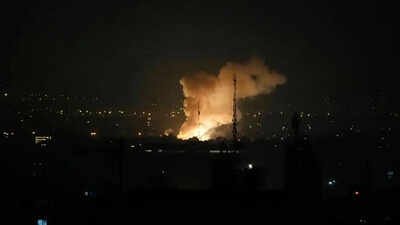
The US military escorted 40 commercial vessels carrying around 18 million barrels of oil through the Strait of Hormuz on Tuesday, marking a wartime high as Washington and Tehran exchanged a fresh round of strikes, according to two US officials familiar with the operation who spoke to CNN.The high-risk operation came as US forces simultaneously struck nearly 60 Iranian military targets around the strategic waterway, while defending the escorted vessels against waves of drone attacks and neutralising anti-ship cruise missiles.Before the war began just over six months ago, around 20 million barrels of oil passed through the Strait of Hormuz each day. But since the conflict began, shipping through the key waterway has slowed to a trickle, disrupting global energy markets and pushing up prices.The US operation involved a range of air, sea and space assets and was part of a broader strategy focused on controlling the strait, protecting commercial shipping and increasing economic pressure on Iran.The targets hit on Tuesday included air defence sites, radar systems, maritime assets, mine-laying capabilities and communications sites, the officials told CNN. US forces also continued a naval blockade of Iranian ports, with Central Command directed to focus its efforts on the strait and preventing oil exports from leaving or entering Iranian ports.The operation comes amid growing risks for commercial shipping. On Monday, a Saudi Arabia-flagged crude oil tanker came under attack and caught fire as it was preparing to cross the strait, killing two Filipino crew members. Fourteen other Filipino crew members survived.Iran has also stepped up attacks on US allies in the Gulf. Bahrain said its air defence systems intercepted several Iranian air attacks early Wednesday, while Iranian state media reported drone attacks on US bases in Bahrain and the United Arab Emirates.The escalation followed US strikes on Iranian rocket launchers on an island in the Strait of Hormuz on Sunday. Washington said Iran was preparing to use the launchers to fire mines into the waterway. Iran retaliated by launching missiles at American bases in Jordan, which were intercepted.The US military’s latest operation, however, has not eased concerns among energy companies about sending ships through the strait, even under military escort. Energy prices remain elevated, adding to turbulence in global markets.At the same time, the administration’s other priorities have taken a back seat. According to one US official, operations aimed at eliminating elements of Iran’s nuclear programme have effectively been “backburnered”, as the focus shifts towards securing the waterway and restricting Iranian oil flows.Iranian media meanwhile reported that a US strike hit a home hosting a wedding in Kuhestak, killing four people and wounding at least 68. The US military said it was aware of the report but that it “never targets civilians.”With the conflict intensifying, diplomatic efforts are continuing. Egypt and Qatar have called for Washington and Tehran to return to negotiations, while Pakistan said it remains engaged in mediation efforts. US Treasury Secretary Scott Bessent also said Washington was pressuring countries still doing business with Iran, saying, “My message to everyone is stay away.”