England cricket’s recurring off-field problems have prompted Geoffrey Boycott to urge players to “act like you’ve grown up”, with the former England opener suggesting that leaving offenders out of the side for several matches may be the most effective way of forcing the message home.
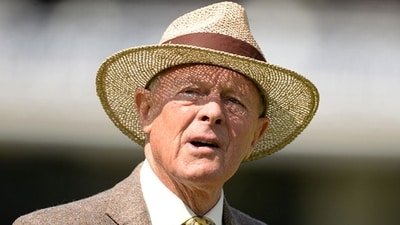
The warning comes after another turbulent stretch for England away from the field. Brydon Carse was dropped for the second Test against Pakistan at Lord’s after being detained by police following a late-night incident in Derby, where he had been celebrating Durham’s County Championship victory. Carse was subsequently released, while the episode was referred to the Cricket Regulator.
It followed the controversy involving Ben Stokes and Gus Atkinson earlier in the summer. The pair were omitted from England’s second Test against New Zealand after breaching the team’s midnight curfew while celebrating victory in the opening Test. An investigation later found neither player culpable for the violence that occurred at the nightclub, with Atkinson deemed to have been the victim of unprovoked attacks, but both received written warnings for breaching their obligations as England players.
Harry Brook had already been at the centre of another episode during England’s tour of New Zealand, when he was involved in an altercation with a nightclub bouncer in Wellington on the eve of an ODI. Jacob Bethell and Josh Tongue were also present, with Brook and Bethell subsequently cautioned over their conduct. The accumulation of incidents has revived questions over discipline within the England set-up, despite Joe Root insisting earlier this summer that the side did not have a drinking culture.
Boycott: ‘You’ve got to be smart’
Speaking on the Stick to Cricket podcast, Boycott said modern players had to understand that their status as international cricketers followed them beyond the boundary, particularly in an age when virtually every incident could be recorded.
“Everybody’s got a mobile phone, and they’re just going to video you. Everywhere you go, there’s a mobile phone taking pictures. You’ve got to be smart,” Boycott said. “You can’t just say, ‘Well, I’m a public figure when I’m playing; when I’m not playing, I’m private.’ I’m sorry, it doesn’t work like that.”
Boycott recalled advice from his mother to illustrate his point about players remaining out late into the night. “My mum used to tell me, ‘If you’re out after midnight, you’re up to no good.’ Well, I know that’s strictly not true, but what she was saying was: get to bed. Have a great night, but do you need to be there at two and three in the morning? You need some sleep.”
The 85-year-old also reflected on the drinking culture he encountered when beginning his career at Yorkshire, when abstaining could leave a player feeling separated from the rest of the dressing room. “I think in sporting teams, for a long time there was a feeling that if you didn’t drink, you weren’t sort of manly,” he said.
Boycott said he refused to smoke or drink despite being told he eventually would, admitting that such a decision could make a young player less popular among his teammates.
Also Read: Ben Stokes makes BBL comeback after nearly 12 years, signs full-season deal with Adelaide Strikers
“But I don’t want to be one of the lads. I don’t want everybody to like everybody. I want to win,” he said. “I want to know, if you’re a batsman, can you make runs? If you’re a bowler, can you take wickets?”
It was when discussing England’s current predicament, however, that Boycott delivered his sharpest message. “What you do after the end of play… Root was right: act like you’ve grown up,” he said. “Do what you want. Go home, see your wife, see the kids, go out with a girlfriend, have a nice meal. If you want a drink, have a drink, but make sure, however much you drink, the next day you can perform.”
Boycott believes punishment through selection could ultimately prove more persuasive than repeated warnings. “If they leave an England player out for a few games, let him think about that for a bit.”