Mumbai: For the Indian cricket fans, it is difficult to make sense of what happened in the two T20Is against Ireland. Playing under new captain Shreyas Iyer, a strong batting line-up studded with Indian Premier League (IPL) stars flopped miserably. Consequently, India’s brilliant run of 16 consecutive series wins in the shortest format, a period during which they also won consecutive T20 World Cups, ended with an embarrassing 0-2 whitewash.
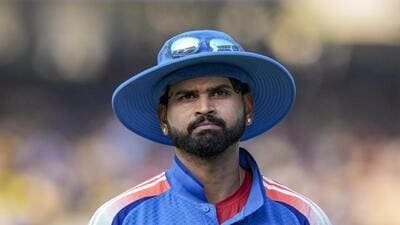
The difference proved to be how the two sides coped with the conditions as the visitors lost twice in three days at the Civil Service Cricket Club in Stormont, Belfast.
Iyer pinpointed the team’s wayward batting as one of the key shortcomings. India were all out for 148 while chasing 182 in the first game, before falling short of a 155-run target by one run in the second.
“I feel the bowlers were phenomenal in their execution. But we fell a bit short in our batting. We fell a bit short in analysing how the wicket is going to play and also converting singles into twos. I think they definitely outplayed us in that department,” Iyer said after the one-run defeat.
Barring Abhishek Sharma’s 20-ball 49 in the first game on Friday, none of the batters played with their usual authority. Tilak Varma’s fifty in the second game was laborious and he was unable to break the shackles despite batting deep into the innings.
This new chapter for India starts with quite a few questions as they move to the tougher part of the tour: a five-match series against heavyweights England.
There are many good things about the IPL from which the Indian cricket ecosystem has benefitted, but developing batters with technique against the moving ball is not one of them.
On the flat pitches during the T20 league, it’s about power hitting and muscling the ball. In conditions where the ball is moving around, it’s about tighter technique, timing the ball and building the innings. Obviously, the team’s leadership group was not alert to the challenge and that is a sign of complacency.
While the IPL has brought about a windfall for the cricketers and support staff, commercial interests take precedence over everything else. The Impact Player rule is a case in point. It has come at the cost of cricket.
As preparation for international T20 cricket, there’s no benefit for the Indian players. The rule makes the game too easy for the batters. When they encounter conditions like that in Ireland, it needs a total shift of mindset.
To make conditions easier the boundaries are also pushed in for more fours and sixes in the Indian league. At the Belfast ground, the square boundaries were big. The home team bowlers used it smartly by inviting the batters to target the square area. In the second game, powerful hitters like Shivam Dube and Suryansh Shedge, who was making his debut, fell trying to clear the leg side area.
Ireland captain Lorcan Tucker summed it up well: “We showed that cricket can be simple and you don’t need to complicate it. We have a lot of lads with very few caps but they showed great character. We are so lucky to have these games against India. It is a great time to be a professional cricket in Ireland.”
No one had heard about Ireland’s Jai Moondra and Matt Hollard before the series. After Friday and Sunday’s games, the Indian team players are not going to forget their names anytime soon. Making their international debuts for Ireland, in the two T20I wins over India, the pace duo proved to be the chief wreckers, sharing 11 wickets between them and subjecting the visitors to an embarrassing whitewash.