India began their Test journey when the country itself was still fighting for freedom. Ninety-four years later, the 600th chapter of that journey will begin on the anniversary of the day India became independent.
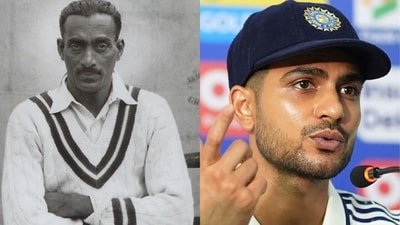
When Shubman Gill leads his side out against Sri Lanka in Galle on August 15, India will play their 600th men’s Test, becoming only the third nation after England and Australia to reach the landmark. The occasion, falling on Independence Day, gives an already significant number a deeper historical resonance. India’s Test story, however, is much more than the accumulation of 600 matches. It is the story of a country that went from merely belonging at cricket’s highest table to learning how to win, conquering overseas frontiers, producing world-record holders, and eventually becoming the world’s No.1 Test side. And perhaps the best way to understand those 600 Tests is through the firsts that changed what Indian cricket believed was possible.
1932: Where it all began
On June 25, 1932, CK Nayudu walked out at Lord’s as India’s first Test captain against England. India became the sixth nation to play Test cricket, but the beginnings came under colonial rule, 15 years before Independence. The newcomers nevertheless produced an immediate warning. Mohammad Nissar ripped through England’s top order and finished with 5/93, recording India’s first five-wicket haul in Test cricket. India eventually lost by 158 runs, but their place in Test cricket had been established.
India did not have to wait long for their first great batter. In their first home Test, against England in Bombay in December 1933, Lala Amarnath made 118. It was India’s first Test century, and remarkably came on Amarnath’s debut. Indian cricket was beginning to acquire heroes. Victories, however, remained elusive.
1952: Twenty years of waiting ends
India endured what the BCCI describes as a “baptism by fire” during their first two decades in Test cricket. Then came Madras in February 1952.
Vinoo Mankad took eight wickets in England’s first innings and four more in the second, while Pankaj Roy and Polly Umrigar struck centuries. India won by an innings and eight runs.
Nearly 20 years after Lord’s, India finally had their first Test victory. The psychological barrier had been broken. Later that year, India defeated Pakistan in their inaugural Test series against each other, winning 2-1. It was India’s first Test series triumph.
The next challenge was obvious: could India do it away from home? For another 16 years, the answer remained no.
1968 and 1971: India discover how to win abroad
Under Mansur Ali Khan Pataudi, India travelled to New Zealand in 1967-68 and won the series 3-1. The victory at Dunedin was India’s first Test win outside the country. The series itself became India’s first overseas Test series triumph. Thirty-six years after their Test debut, India had finally conquered foreign territory.
Yet it was 1971 that transformed the imagination of Indian cricket. Ajit Wadekar’s side travelled to the Caribbean having never beaten West Indies in a Test, home or away. India won at Port of Spain and eventually claimed the series 1-0.
In the middle of that breakthrough arrived Sunil Gavaskar. Making his Test debut during the series, Gavaskar embarked on one of cricket’s most extraordinary introductions, accumulating 774 runs in four Tests. India then travelled directly to England and did it again.
After draws at Lord’s and Manchester, Bhagwat Chandrasekhar tore through England with 6/38 at The Oval. Chasing 173, India won by four wickets to secure their first Test victory in England and first series victory there.
Within a matter of months, India had conquered the West Indies and England. The tourists who had once travelled hoping to compete were beginning to travel expecting to win.
From national heroes to world-record holders
The progression continued through the next two decades. At Port of Spain in 1976, West Indies set India 403 to win. Gavaskar made 102 and Gundappa Viswanath an unbeaten 112 as India reached 406/4. At the time, it was the highest successful run chase in Test history.
Eleven years later, Gavaskar created a different kind of history. During the Ahmedabad Test against Pakistan in March 1987, he became the first batter in Test cricket to reach 10,000 career runs. Then came Kapil Dev. In 1994, he overtook Richard Hadlee’s 431 wickets to become Test cricket’s leading wicket-taker, eventually finishing his career with 434.
Indian players were no longer merely setting Indian records. They were sitting at the summit of world cricket. Anil Kumble added one of the game’s rarest achievements in Delhi in 1999. Against Pakistan, he took 10/74 in the second innings, becoming only the second bowler after England’s Jim Laker to claim all ten wickets in a Test innings.
Kolkata 2001: The Test that changed modern India
If one match had to represent the moment modern Indian Test cricket discovered its defiance, Kolkata in 2001 would have a compelling claim. Australia arrived at Eden Gardens having won 16 consecutive Tests. India were dismissed for 171 and forced to follow on.
Then VVS Laxman made 281. Rahul Dravid made 180. Together they added 376. India declared on 657/7 and completed one of the greatest reversals the sport has seen, winning by 171 runs.
The Test produced another Indian first. Harbhajan Singh dismissed Ricky Ponting, Adam Gilchrist and Shane Warne in successive deliveries to become the first Indian to take a Test hat-trick.
India were learning something beyond winning: how to overturn situations that had once seemed hopeless. That mentality travelled with the next generation.
In Multan in 2004, Virender Sehwag smashed 309 against Pakistan to become India’s first Test triple-centurion. India won by an innings and 52 runs — their first Test victory in Pakistan — before going on to claim their first Test series there.
The Tendulkar era
No account of India’s Test journey can pass over the man whose career occupied nearly a quarter of it. Sachin Tendulkar made his Test debut as a 16-year-old against Pakistan in Karachi in 1989 and, by the time he walked away in Mumbai in 2013, had played an unprecedented 200 Tests. Across those 24 years, Tendulkar accumulated 15,921 runs and 51 centuries — all three remain Test records — while carrying Indian batting through vastly different ages.
nt eras.
He was the young prodigy who stood up to some of the fiercest fast-bowling attacks of the 1990s, the pre-eminent batter of a generation in which India increasingly competed abroad, and eventually the senior statesman of the side that climbed to No.1 in the world. His 200th and final Test also made him the first cricketer in history to reach that appearance landmark. Few players have been as closely intertwined with the evolution of a country’s Test identity: India changed enormously between Tendulkar’s first Test and his last, and for almost the entire transformation, he was there.
From challengers to the world’s No.1 Test team
December 2009 represented another major transition. After beating Sri Lanka 2-0 at home, MS Dhoni’s India climbed to No.1 in the ICC Test rankings for the first time. India became only the third team after Australia and South Africa to occupy the top position under the rankings system.
The achievement represented something unimaginable during those difficult first decades: India were no longer simply trying to prove that they belonged among Test cricket’s elite. Officially, they sat above everybody else.
But one enormous frontier remained.
Australia.
India had first won a Test there at Melbourne in 1977-78, but a series victory had remained out of reach for seven decades.
Virat Kohli’s side finally ended that wait in 2018-19. India won the Border-Gavaskar Trophy 2-1, becoming the first Asian team to win a Test series in Australia. Cheteshwar Pujara scored 521 runs in a triumph that became one of the defining achievements of Kohli’s captaincy.
Two years later, India somehow surpassed it.
36 all out to the Gabba
India were bowled out for 36 at Adelaide in December 2020, their lowest completed Test total. Kohli returned home, injuries ripped through the squad and Australia appeared to have control of the series.
Instead, India fought back. The climax arrived at the Gabba, where Australia had not lost a Test since 1988.
An inexperienced, injury-ravaged Indian side was asked to chase 328 on the final day. Shubman Gill made 91, Pujara absorbed everything Australia threw at him for 56, and Rishabh Pant produced an unbeaten 89.
India reached 329/7 and won the series 2-1. Australia’s 32-year unbeaten run at the Gabba was over. The distance Indian Test cricket had travelled was difficult to miss. Once, an overseas Test victory had taken 36 years to arrive. Now India had beaten Australia in consecutive series in Australia.
There was room for another unusual piece of history in Cape Town in January 2024. India beat South Africa by seven wickets for their first Test victory at Newlands. The contest lasted just 642 deliveries, becoming the shortest completed Test in history.
Test No.600: History comes full circle
And so the journey arrives in Galle. There is an almost poetic symmetry to the occasion.
India’s first Test was played in 1932, when the country was still governed by the British Empire. Their 600th will begin on August 15, the date that has represented Indian independence since 1947. Gill has described leading India in the landmark match on Independence Day as a major honour.
Between those two matches lie India’s first hundred, first win, first series triumph, first overseas victory, first conquest of England and the West Indies, the first Indian to 10,000 Test runs, a perfect ten, a triple-century, the rise to world No.1, the breakthrough in Australia and the extraordinary fall of the Gabba.
That is what 600 Tests really represent. Not merely the number of matches India have played, but the steady expansion of what Indian cricket believed it could achieve.
At Lord’s in 1932, India were beginning.
At Galle in 2026, they arrive carrying 94 years of Test history with them.