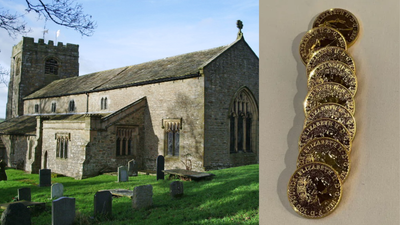
For centuries, St Wilfrid’s Church has stood above the village of Melling, near Lancaster, serving generations of worshippers while its medieval stonework quietly weathered the passing years. But by 2026, the future of the historic church looked increasingly uncertain. Its tiny congregation was struggling to raise the money needed for major repairs, with the estimated cost reaching around £750,000. Then, while preparing the church for what could have been one of its final Easter services, Reverend Jane Lee noticed something unexpected beneath the altar. A plastic bag was protruding from underneath the wedding kneeler. Inside was a box containing nine gold Britannia coins, accompanied by a handwritten note from an anonymous donor. The coins, minted by the Royal Mint in 1999, were eventually sold for almost £30,000, providing an extraordinary lifeline for the struggling church.
Anonymous gold coin discovery gives 700-year-old St Wilfrid’s Church a chance to survive closure
St Wilfrid’s is not simply an old parish church. The site has a history stretching back many centuries, with evidence suggesting that Christian worship took place there before the present medieval building was constructed. The church itself dates to around the 14th century and stands in the village of Melling in Lancashire. Its weathered stone walls, historic windows, bell tower and surrounding churchyard have made it an important part of the local landscape. Yet preserving such an old building comes with enormous costs. The small congregation, reported to number only five people, had been unable to raise the estimated £750,000 required for urgent repairs, including major work to the roof and other parts of the structure. By Easter 2026, closure appeared increasingly likely. Reverend Lee and a lay minister were preparing for morning prayers and what could have been the church’s final Easter services when they began removing the altar frontal. That ordinary preparation would lead to an extraordinary discovery.
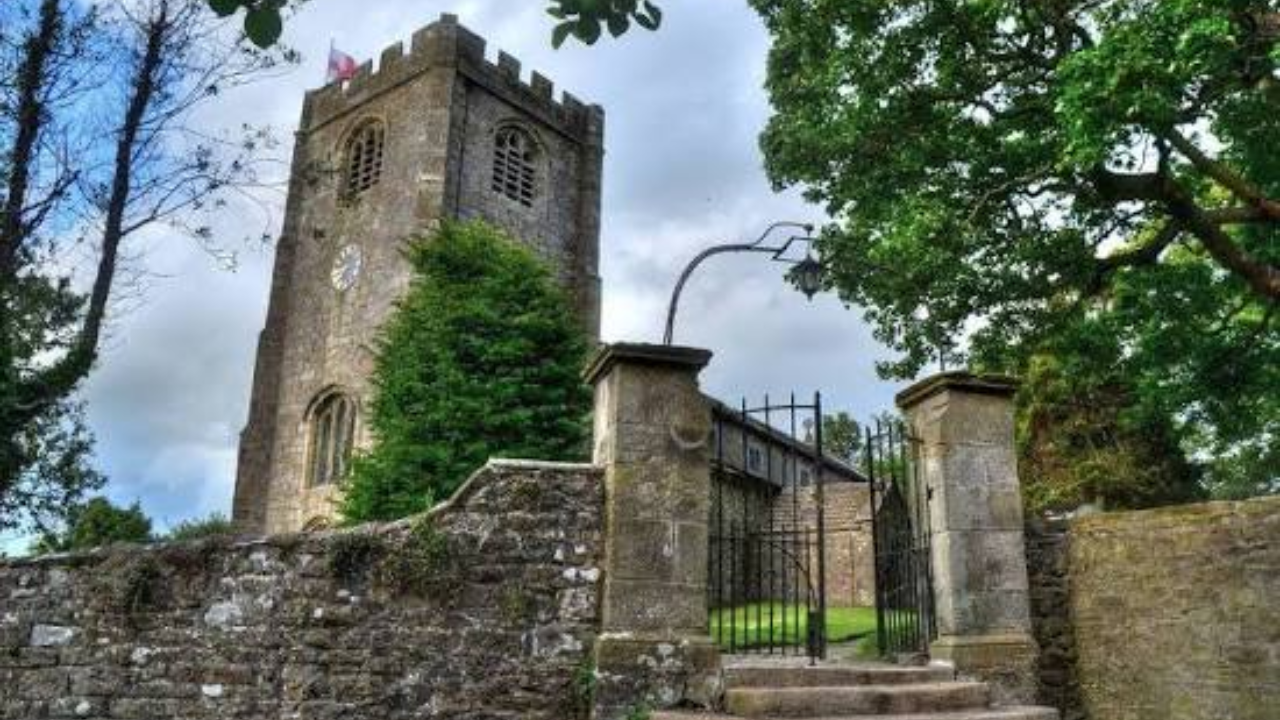
Anonymous gold coin discovery gives 700-year-old St Wilfrid’s Church a chance to survive closure (Image: St Wilfrid’s Church Melling/Facebook)
Nine gold Britannia coins were hidden beneath the altar amongst other things in the box
As the altar frontal was removed, Lee noticed a plastic bag tucked beneath the wedding kneeler. Inside was a box and, more remarkably, a note explaining that the contents were intended as a donation to Melling church. According to BBC, the box contained nine gold Britannia coins, produced by the Royal Mint in 1999. Its worth had risen dramatically with the value of gold. When the church eventually sold the coins, they fetched just under £30,000. The accompanying note was dated 16 July 2022 and was written on Salvation Army stationery. It was signed by someone calling himself “James, servant of the living God”, but offered no further identifying information. The mystery deepened because church officials discovered that similar anonymous gifts had been made to other churches and a school in the surrounding area around the same period. Lee has said the identity of the donor remains unknown. The BBC also reported that the coins had apparently been hidden for several years before being discovered on Good Friday, 3 April 2026.
How the unexpected money became a seed for saving the church
The £30,000 windfall cannot come close to covering the church’s estimated £750,000 repair bill, but its significance goes far beyond the amount itself. For a congregation already struggling to keep the building open, the unexpected donation provided money that could be used as a starting point for larger fundraising efforts and grant applications. Lee described the discovery as arriving at precisely the moment the church needed hope. Rather than spending the money simply on everyday running costs, the congregation hopes to use it as a foundation for securing the much larger investment required to repair the historic building. The discovery has also changed the wider community’s response. A heritage group has formed to help raise funds and build support for preserving St Wilfrid’s, while the church’s historic importance has attracted renewed attention. The building is known for its historic features, including a clock associated with Edward Dent, the clockmaker who later won the commission for the clock at the Houses of Parliament, better known as Big Ben. What began as a tiny congregation facing closure has therefore become a much broader campaign to save a piece of Lancashire’s history.
A mystery donation gave a medieval church another chance
The discovery beneath the altar has left St Wilfrid’s with an intriguing mystery as well as a financial lifeline. Nobody knows exactly why the anonymous donor chose the church, why the coins were hidden beneath the altar or why the donation was made in 2022 but remained undiscovered until 2026. The note’s simple signature, “James, servant of the living God”, has offered few clues. Other churches and a school in the area reportedly received similar anonymous gifts, suggesting that St Wilfrid’s was one part of a wider act of generosity rather than an isolated donation. Yet for the people trying to preserve the church, the identity of the benefactor may ultimately matter less than what the gift has set in motion. The nine coins have already done something far more valuable than simply raise £30,000: they have drawn attention to a building that was quietly approaching closure and encouraged the wider community to fight for its survival. After roughly seven centuries of history, St Wilfrid’s was facing the possibility that its doors would close because the cost of keeping the building standing had become too great. Instead, a box of gold left beneath its altar has given the church something it desperately needed, time, attention and a renewed reason to believe that its story is not yet over.