Kolkata Knight Riders’ win over Sunrisers Hyderabad turned on one moment in the 11th over, when Rovman Powell completed a miraculous catch to remove Heinrich Klaasen off Cameron Green. SRH were 117/2 after 10.3 overs at that point, with the innings still shaped for a 200-plus finish.
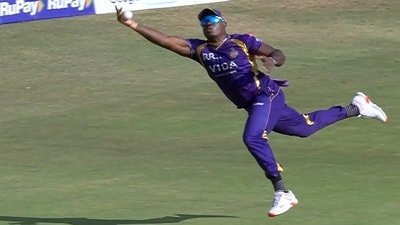
On the scorecard, it was one crucial dismissal. In the our impact model, it was far bigger: a base ₹12.21 lakh catch that rises to a projected value of around ₹1.5 crore once Klaasen’s form, SRH’s position and the damage prevented are taken into account.
Powell’s catch caused the SRH collapse
The timing of the effort is the entire story.
SRH were cruising along when Klaasen offered the chance. They had already reached 117 with only two wickets down. There were 57 balls left in the innings. The run-rate was already above 11 an over. KKR had not broken the innings open yet. They were trying to stop SRH from converting a strong first half into a brutal second half.
That is where Klaasen changes the value of the moment.
He was 11 off 7 before the wicket ball. In isolation, that looks like a small contribution. In context, it was a warning. The two previous balls had gone for six and four. Klaasen had moved from entry mode into launch mode. SRH had a platform. Their most dangerous middle-order batter had just found rhythm. The wicket came before the real damage.
That is why Rovman Powell’s catch carries a larger projected value than its basic fielding number.
The base catch value in the model is ₹12.21 lakh. That reflects the direct fielding impact of completing the dismissal. But Klaasen was not an ordinary wicket in an ordinary position. He was the batter most likely to turn SRH’s 117/2 into something closer to 200 or 210.
That prevented continuation is where the valuation expands.
Klaasen’s form makes the projection stronger
The ₹1.5 crore valuation is not built on reputation alone. It is built on form, role and match situation.
Heinrich Klaasen came into the KKR match as one of SRH’s most reliable high-impact batters of the season. He had already been among the leading run-makers in the tournament and had carried SRH through difficult phases more than once. His value was not just that he scored runs. It was that he scored them from positions where SRH needed either rescue or acceleration.
That is a crucial distinction.
Klaasen’s value for SRH has been that he has been their insurance policy and their launch weapon at the same time. When the top order has slowed, he has rebuilt. When the top order has given a start, he has converted that platform into a far more dangerous total.
That role matters because SRH were in exactly that zone against KKR. They were not in a hole. They were in a position from which one Klaasen burst could have changed the match.
At 117/2 in 10.3 overs, SRH were already ahead of the curve. A normal finish could have taken them close to 190. A Klaasen finish could have pushed them beyond 200. That difference is not cosmetic. It changes the chase. It changes bowling plans. It changes risk. It changes the psychology of the second innings.
KKR eventually chased 166 with control. A target above 200 would have been a completely different match.
Why the projected value reaches ₹1.5 crore
The model treats Powell’s catch in three layers.
The first layer is the base catch value: ₹12.21 lakh. That is the clean fielding credit for completing the dismissal.
The second layer is the Klaasen continuation value. This is the largest part of the projection. From SRH’s pre-catch position, Klaasen’s form and role made it reasonable to project a major innings extension had he survived. He had 57 balls of team time left, eight wickets behind him, and had just moved into attack mode with a six and a four.
The model therefore values the prevented Klaasen continuation at around ₹1.20 crore. This does not mean Klaasen had already made that money’s worth of impact. It means Powell’s catch prevented the most likely high-damage scenario from developing.
The third layer is the collapse trigger.
After Klaasen’s wicket, SRH did not simply slow down. They collapsed. The innings that had been travelling towards 200-plus ended at 165. That post-wicket fall gives the catch an additional value because it was not merely one wicket in a stable innings. It was the moment that shifted the innings from launch to breakdown.
That is how the final projected worth reaches around ₹1.5 crore.
Also Read: Varun Chakaravarthy, the magician: KKR have won whenever their match-winner has delivered
The dismissal changed the entire value of SRH’s innings
The sharpest way to understand the catch is this: Powell saved KKR from a late innings surge.
A scorecard only records that Klaasen made 11. It does not show that he was dismissed one ball after hitting six and four. It does not show that SRH had two wickets down and nearly half the innings left. It does not show that Klaasen had already proved through the tournament that he could take SRH from unstable or promising positions into strong ones.
That is where impact analysis becomes useful.
Powell’s catch closed the most dangerous route available to SRH. It removed the batter most capable of changing the final 57 balls. It converted a platform into pressure. It gave KKR an entry into the innings. Once Klaasen went, SRH lost control, lost wickets and finished well below where they had been heading.
On paper, it was Cameron Green’s wicket and Powell’s catch.
In value terms, it was the moment KKR prevented SRH’s innings from becoming expensive.
The base value was ₹12.21 lakh. The projected value, once Klaasen’s continuation threat and SRH’s collapse are added, rises to around ₹1.5 crore.
For KKR, that catch was not just a fielding moment. It was a high-value intervention in the match economy.
Method note
This valuation is based on a cricket impact model developed by the author. The model studies batting, bowling, fielding, match situation, phase pressure, role difficulty, manual performance rating and captaincy impact, then converts that contribution into a rupee value using the player’s auction/retention price and expected season usage. It is not an official IPL metric, salary calculation or franchise accounting figure.