The Delhi Premier League (DPL) has steadily evolved from a platform designed to showcase the city’s emerging cricketing talent into a competition that is beginning to occupy a much larger space in Delhi’s sporting landscape. With Season 3 culminating in a thrilling final at the Arun Jaitley Stadium, the league once again demonstrated why it is becoming an important platform for players, fans and the wider cricketing community in the capital.
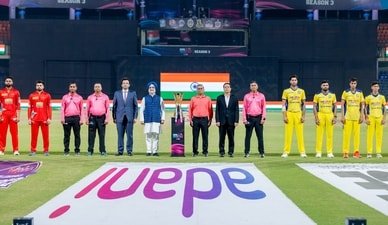
At its core, DPL was created with a clear purpose: to give young cricketers from Delhi the opportunity to compete at a higher level and put their performances in front of coaches, selectors and the larger cricketing ecosystem. But as the league has grown, so has its ambition. DPL is increasingly seeking to bring together competitive cricket, local identity, fan engagement and the atmosphere of a major sporting event.
Season 3 offered another illustration of that evolution. Across the competition, established names shared the platform with emerging players, creating an environment in which young cricketers could learn from experienced campaigners while testing themselves against players operating at a higher level.
For a player coming through local and grassroots cricket, the transition to professional cricket can often be the biggest challenge. Talent alone does not guarantee opportunity. DPL seeks to address that gap by providing a competitive stage where young players can perform under pressure, gain exposure and demonstrate that they are ready for the next step.
That pathway is among the league’s most significant contributions to Delhi cricket. A strong performance in DPL can bring a previously lesser-known player into the spotlight, potentially changing the trajectory of a young cricketer’s career. The league’s broader ambition is therefore not simply to provide matches, but to create opportunities and connect local cricket with the professional domestic ecosystem.
The presence of experienced players adds another dimension. For youngsters, sharing a dressing room and competing alongside established cricketers offers lessons that extend beyond statistics. Preparation, fitness, discipline, handling pressure and understanding the mindset required to compete at a higher level are all part of the experience. The exchange between experience and youth has consequently emerged as one of DPL’s defining strengths.
But DPL’s growth is not limited to what happens on the field.
The league is also attempting to create a stronger connection between cricket and the city itself. With teams carrying the identities of different parts of Delhi, supporters have a more personal reason to connect with the competition. Fans are not merely backing a team; they are able to identify with their area, their players and their community. That local connection has the potential to create rivalries, traditions and a genuine fan culture around the league.
This is particularly relevant at a time when the sporting audience is looking for more than the result of a match. DPL’s vision is to make match day an experience—with entertainment, music, fan activities and an atmosphere that encourages families, young supporters and cricket lovers to spend time at the stadium and become part of the occasion.
In that sense, the league is moving towards becoming more than a conventional cricket tournament. The larger ambition is to create a sporting festival that belongs to Delhi.
South Delhi Superstarz Crowned DPL 2026 Champions
Season 3’s conclusion provided the perfect competitive finale to that ambition.
South Delhi Superstarz produced a commanding performance in the men’s final at the Arun Jaitley Stadium, defeating Central Delhi Kings by seven wickets to lift the Delhi Premier League 2026 title.
Chasing 183 for victory, South Delhi Superstarz reached 186/3 in just 18.2 overs, completing a memorable run chase and securing the coveted DPL trophy.
The chase was built around an impressive performance from Anmol Sharma, who scored 64 off 42 deliveries, including six fours and three sixes. He provided the foundation before Ankit Dabas delivered one of the defining knocks of the final, remaining unbeaten on 61 off just 33 balls with five fours and four sixes.
Captain Tejasvi Dahiya then added the finishing impetus with a rapid 33 off 18 deliveries, hitting three fours and three sixes, while Ekansh Dobal remained unbeaten on seven from three balls and sealed the championship with a six.
Earlier, Central Delhi Kings had posted 182/8 after being asked to bat first. Samarth Singh top-scored with a fluent 51 off 27 balls, while captain Jonty Sidhu contributed a quick 36 from 19 deliveries, including three sixes. Yugal Saini added 32 off 29 balls, with Money Grewal providing a late burst of 18 from just seven deliveries.
South Delhi Superstarz’s bowling attack played an important role in keeping the total within reach. Divansh Rawat led the attack with three wickets for 17 runs, while Vision Panchal picked up two wickets. Ankit Dabas, Pranshu Vijayran and Anshuman Hooda claimed one wicket each.
Ultimately, however, the final belonged to South Delhi’s batters. Their ability to maintain the scoring rate throughout the chase ensured that Central Delhi’s competitive total was overhauled with ten balls to spare.
The result also underlined one of the central features of DPL: providing a stage where performances under pressure can create defining moments for players and teams.
Building a Cricket Culture That Belongs to Delhi
The significance of DPL extends beyond a single season or a single trophy. Its larger value lies in creating an ecosystem in which Delhi’s young cricketers can see a pathway from local cricket to professional opportunities.
The response from young players has highlighted the demand for such a platform. They are looking for opportunities to prove themselves, and DPL provides a stage where performances can translate into recognition and potentially open doors within the wider cricketing structure.
The women’s competition forms another important part of this ecosystem. By giving women cricketers a major platform in their own city, DPL can help make cricket more accessible and aspirational for young girls across Delhi. Seeing players from their own city compete at a significant level can provide both role models and a tangible sense that cricket can be pursued as a professional career.
Over time, it is these individual stories that can give a sporting league its identity. A young player who arrives relatively unknown, earns an opportunity and produces a breakthrough performance can become one of the competition’s most memorable narratives.
That is ultimately what makes a league sustainable—not merely the number of matches it stages, but the memories, rivalries, players and communities it creates around them. The energy inside the stadium, the emergence of local rivalries and the recognition earned by young players are among the signs that DPL is beginning to establish that emotional connection with Delhi.
DPL’s ambition is to build precisely that connection with the city. The long-term vision is for the league to be recognised among India’s leading domestic cricket competitions, while developing talented players, building strong local rivalries and creating an experience that supporters genuinely look forward to.
South Delhi Superstarz’s championship victory has now added another chapter to that story.
For the players, it is a title won after a memorable final. For Delhi’s cricketing ecosystem, it represents something broader: another season in which local talent received a prominent stage, established and emerging cricketers shared the same platform, and fans were given another reason to connect with cricket and with their city.
As DPL looks ahead, its biggest opportunity may be to retain that original purpose even as the league grows—to remain a pathway for young cricketers while becoming an increasingly important part of Delhi’s sporting calendar.
That is where the league’s future lies: not simply in becoming a bigger cricket tournament, but in becoming a cricket festival that Delhi can call its own.