Kolkata: When Lucknow Super Giants’ paddle was raised to bid ₹27 crore for Rishabh Pant last season, it wasn’t merely a transaction but an act of faith — a declaration of hope that the most chaotic, exhilarating batter of this generation could lead the charge of a franchise impatient for a title. But in a league of excess, the burden of that extravagance sometimes rests heavily on a single pair of shoulders. On Sunday, Pant looked less like the future of a franchise and more like a man searching for fragments of himself.
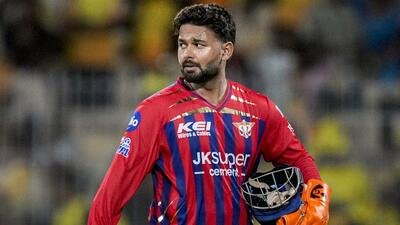
The defeat to Chennai Super Kings wasn’t merely another loss in a long, uneven season for Lucknow — it felt symbolic. More palpable was the despondency in Pant’s innings, a kind of creative exhaustion that has become increasingly difficult to ignore. He scratched around, second-guessing lengths he once devoured instinctively before loosely poking at Jamie Overton. Pant-like innings used to come with Pant-like dismissals, but this one was as soft as it could get.
And it has been like this for some time now. The daring angles are disappearing. The fearless dance down the pitch now arrives half a second late. Bowlers no longer appear startled by him. Instead, they seem patient, almost comforted by his predictability. Everything points to a steady erosion of Pant’s aura. This is unfortunate because Pant once represented cricket’s rebellion against caution.
He was untidy and magnificent at once, a player who seemed to operate on instinct alone. Coaches tolerated the madness because genius often arrived disguised as recklessness. A falling sweep, a one-handed six over long-off, a ridiculous charge to fast bowlers—Pant’s cricket possessed a joyous irresponsibility. Even his failures carried energy. This version, however, feels emptied out.
At Chepauk, Pant looked tired. Not just physically, although the endless cycle of wicketkeeping and captaincy must be grinding. It was mental fatigue, the kind that reveals itself in hesitant footwork and uncertain decision-making. Pant appears burdened by calculation now. Every innings seems to begin with negotiation rather than conviction. That is perhaps the cruelest transformation of all. From the 150s in 2024 to the 130s now at LSG, his strike rates are in freefall. Also questionable are decisions like picking Aiden Markram over Shahbaz Nadeem for the last over on Sunday, or how he floated the need “for a break” right after five losses in a row last month.
The IPL has an unforgiving relationship with price tags. A record bid is celebrated for a night and weaponised thereafter. Every low score becomes an accounting exercise. Every dropped catch or tactical error carries the echo of auction-room numbers. Pant was picked by LSG not simply as a wicketkeeper-batter but as a saviour, leader and a commercial centrepiece. And in India’s loudest sporting carnival, such emotional investments are expected to yield immediately.
But the thing is that Pant’s cricket was never built for such scrutiny. His brilliance was conditional on freedom from orthodoxy, from structure and most importantly, from the fear of consequence. At Delhi Capitals, even through inconsistency, there remained a sense of emotional familiarity. Pant was theirs long before he had become valuable. Which is why the stint with Lucknow feels more transactional. A new dressing room, a new ownership group, a new tactical environment—and looming over everything, the price.
The tragedy is sharpened because everyone remembers exactly what Pant was. This is, after all, the same cricketer who had dismantled Australia at the Gabba, who turned impossible run chases into theatre, who survived a horrific road accident and returned to professional sport in what should have been one of Indian cricket’s great redemption stories. For a while, his comeback itself felt miraculous. Every boundary carried emotional force. Every smile looked defiant. But comebacks too have expiry dates, because sport rarely allows sentimental endings.
The post-accident Pant initially played with gratitude; the current Pant appears trapped by expectation. The swagger allows itself in flashes, but the spontaneity has undoubtedly faded. The slumped walk, the distant stare beneath the helmet—Pant’s own body language at Chepauk screamed of a player carrying too much internal noise. In the shadow of yet another limp defeat, Pant looked like a man trying desperately to remember how he once played the game.
No cricket career is always rosy. Yet there is undeniably something symbolic about Pant appearing so emotionally bankrupt. Perhaps this is temporary. Pant is still only in his late twenties. Players of his talent have reinvented themselves before. Greatness rarely vanishes neatly. But there is also the uncomfortable possibility that the version of Pant who once made cricket feel anarchic and alive is receding faster than anyone imagined. And that is what made the sight so unsettling.